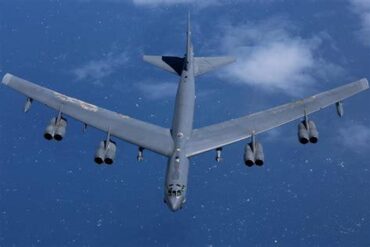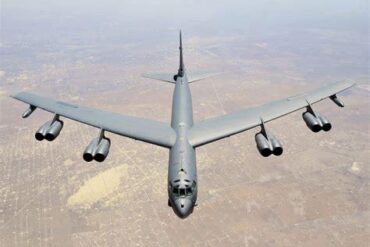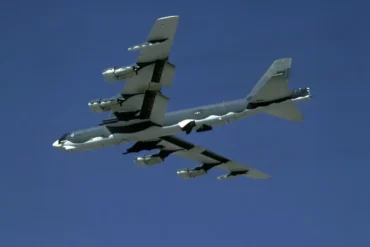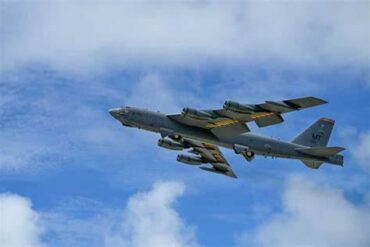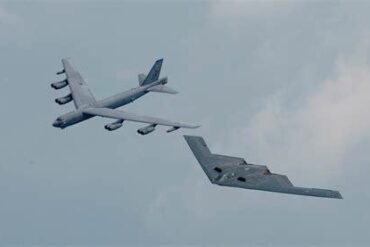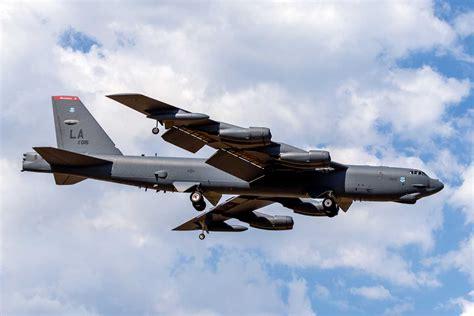
The Boeing B-52 Stratofortress has survived a remarkable number of attempts to retire it. Designed in the early years of the Cold War and entering United States Air Force service in 1955, the eight-engine bomber was originally intended to deliver nuclear weapons against the Soviet Union. More than seven decades later, the same basic airframe remains a central part of America’s long-range strike force. What began as a Cold War deterrent has evolved into a flexible conventional weapons platform that has repeatedly received new engines, avionics, weapons, and mission systems.
That longevity is especially striking because the B-52 has spent much of its life competing with newer aircraft that appeared better suited to the future. The B-1B Lancer arrived with greater speed and a larger payload, while the B-2 Spirit introduced stealth technology designed to penetrate sophisticated air defenses. Yet both younger bombers are now scheduled to leave service before the B-52. Instead of retiring the Stratofortress, the USAF is investing billions of dollars in a new modernization program that will transform today’s B-52H fleet into the B-52J.
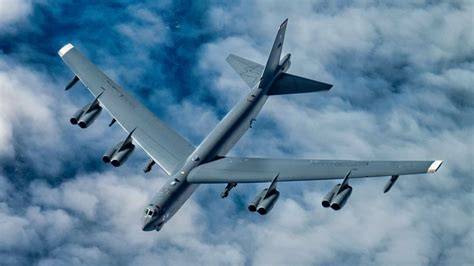
The decision reflects a simple but important reality: the B-52 continues to perform missions the Air Force needs. Its combination of long range, heavy payload capacity, large weapons bay, and enormous external weapons capability gives it unusual flexibility. It does not have the speed of the B-1 or the stealth of the B-2, but it does not necessarily need either characteristic for every mission. When operating in environments where enemy air defenses have been suppressed or against opponents without dense integrated defenses, the Stratofortress remains a highly useful long-range strike aircraft.
The B-52 Stratofortress Was Built for a Different Era
The B-52 emerged from a post-World War II requirement for a new American long-range bomber. The concept changed substantially during development. Early thinking involved a propeller-driven aircraft, but advances in aviation technology pushed the design toward jet propulsion. The cockpit also changed from a tandem arrangement to a more conventional side-by-side configuration, while the aircraft adopted an unusual bicycle landing gear system.
That landing gear arrangement was closely connected to the B-52’s enormous wing design. The main landing gear is arranged along the fuselage centerline, while smaller outrigger wheels beneath the wings help stabilize the aircraft on the ground. The Stratofortress therefore looks unlike almost any other heavy bomber, particularly when viewed from the front or rear.
Between 1952 and 1962, Boeing produced 744 B-52s across multiple variants. Only a small fraction remain operational today, with the current B-52H fleet consisting of 76 aircraft. Those surviving aircraft represent the final production version, introduced in 1961, and they have benefited from decades of modifications that have kept their systems relevant even as the basic airframe has aged.
The B-52H uses a crew of five: two pilots, a weapons systems officer, a navigator, and an electronic warfare officer. Its original mission centered heavily on nuclear deterrence, but the aircraft has progressively become a sophisticated conventional strike platform. Its stated combat range of approximately 7,600 nautical miles, or around 14,200 kilometers, provides the reach needed for missions far from its home base.
Eight Engines Became a Defining Feature
The B-52’s eight-engine configuration was partly a product of the technology available when the aircraft was designed. Early jet engines did not provide the thrust of modern turbofans, so a large bomber carrying substantial fuel and weapons required multiple powerplants.
The result was an aircraft with four engines mounted in pods beneath each wing. Although an eight-engine bomber would be unusual to design today, changing the configuration would involve much more than simply replacing the engines. The wings, systems, structural arrangements, and aerodynamic characteristics were all developed around the existing configuration.
This is why the forthcoming B-52J modernization will retain eight engines rather than turning the aircraft into a four-engine design. The goal is to preserve the proven airframe while replacing major systems that have become outdated or expensive to maintain.
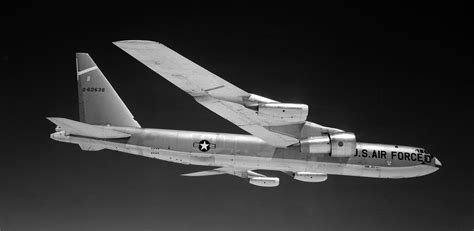
The B-52’s evolution can be seen through its many variants. The B-52B became the first operational version, while the C introduced greater fuel capacity and increased gross weight. The D was extensively adapted for conventional bombing during the Vietnam War. Later variants received avionics improvements, stronger engines, additional fuel capacity, aerodynamic changes, and eventually the Pratt & Whitney TF33 turbofans used by the B-52H.
The B-52 Survived Years of Retirement Proposals
For much of its history, the B-52’s age appeared to be its greatest weakness. By the 21st century, the aircraft had already been flying for decades longer than most military aircraft are expected to remain operational. Retirement proposals repeatedly appeared as the USAF looked toward newer bombers and changing strategic requirements.
Yet the Stratofortress continued to survive because its basic capabilities remained valuable. The aircraft could travel long distances, carry a substantial weapons load, remain airborne for extended missions, and launch weapons from outside the immediate reach of many enemy defenses.
The experience of the post-Cold War period also worked in the B-52’s favor. Much of America’s combat activity after the collapse of the Soviet Union involved opponents without the kind of dense, sophisticated air-defense networks that originally drove the development of advanced penetrating bombers. In those circumstances, the B-52’s lack of stealth was less limiting than it would be in a heavily defended environment.
That does not make the Stratofortress universally suitable. The aircraft is large, comparatively slow, and not designed for maneuvering against modern fighter aircraft or advanced surface-to-air missile systems. Instead, its usefulness increasingly depends on stand-off weapons, electronic warfare, intelligence support, and control of the surrounding airspace.
From Nuclear Deterrent to Conventional Strike Workhorse
During the Cold War, the B-52 became one of the most visible components of America’s nuclear deterrent. One of the most famous examples was Operation Chrome Dome, under which B-52s conducted continuous airborne missions and patrolled near Soviet territory.
The emergence of increasingly capable surface-to-air missiles eventually made high-altitude penetration more dangerous. The USAF responded by changing the Stratofortress’s employment, including the adoption of low-altitude tactics intended to reduce exposure to radar-guided defenses.
The aircraft subsequently played a major role in the Vietnam War, where its enormous bomb load made it a powerful conventional strike platform. Its vulnerabilities were also exposed. B-52s faced North Vietnamese fighters and surface-to-air missile systems, and 17 aircraft were shot down during the conflict.
The B-52 was not completely defenseless. Its original rear-facing gun provided a final layer of protection against attacking fighters, and B-52 tail gunners were credited with two air-to-air kills during the Vietnam War. The aircraft’s combat experience also produced valuable lessons that influenced subsequent improvements in weapons, electronic countermeasures, and avionics.
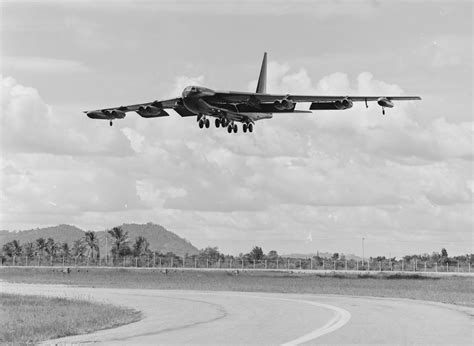
The bomber later served extensively during Operation Desert Storm and continued operating in major American conflicts during the 21st century, including the Iraq War. These deployments demonstrated how the B-52 could remain relevant without being redesigned from the ground up.
Its most important advantage was not that the aircraft itself had become technologically revolutionary. Instead, the USAF repeatedly made the weapons and mission systems carried by the aircraft more capable.
Why the B-52J Is Replacing Retirement
The turning point came in 2018, when the USAF chose to proceed with re-engining the B-52 rather than preparing the fleet for retirement. The modernization eventually received the B-52J designation in 2023, and the program completed its Critical Design Review on May 4, 2026.
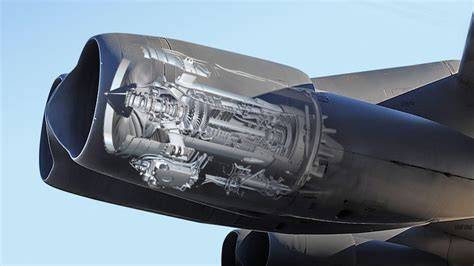
The centerpiece of the B-52J program is a new set of Rolls-Royce F130 turbofan engines. These engines are derived from the Rolls-Royce BR700 family and are expected to address one of the most important problems associated with the aging aircraft: its original-generation propulsion technology.
The modernization will go beyond engines. The B-52J is planned to receive a full-authority digital engine control system, an AN/APQ-188 AESA radar, and major avionics improvements. New digital displays will modernize the flight deck and reduce dependence on equipment designed around much older technology.
These changes are significant because aging aircraft are not automatically obsolete. The age of an airframe is only one part of the equation. Flight hours, operating cycles, structural condition, maintenance history, and remaining service life can matter more than the calendar age of an individual aircraft.
The B-52J program therefore takes a pragmatic approach. Rather than replacing an airframe that still has useful structural life, the Air Force is replacing the systems that most directly affect operating costs and mission effectiveness.
The B-52J Program Will Cost Billions
The modernization is expected to cost the USAF more than $18 billion when the various B-52J upgrades are considered together. All 76 B-52H aircraft are planned for conversion.
The first B-52Hs are expected to begin arriving at Boeing’s San Antonio facility in 2026, with the first flight of a converted aircraft scheduled for 2029. Entry into USAF service is currently projected for 2033, approximately three years later than the program’s earlier target of 2029.
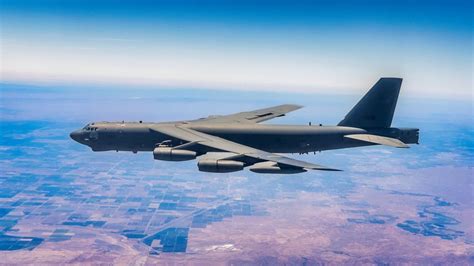
The new engines should also improve the aircraft’s long-term operating economics. The B-52’s TF33 engines are themselves products of a much earlier generation of aviation technology. Modern turbofans can provide improvements in fuel efficiency, reliability, maintenance requirements, and other aspects of aircraft operation.
This creates an unusual situation. The USAF is spending billions on an aircraft whose basic design dates back to the early Cold War, but the investment is not intended to preserve the B-52 exactly as it was. Instead, it is intended to transform an old airframe into a modern weapons carrier capable of remaining relevant for another generation.
Why Younger B-1 and B-2 Bombers Are Leaving First
The B-52’s survival becomes even more remarkable when it is placed beside the planned retirement of younger bombers.
The B-1B Lancer entered service in 1986 and provides a larger payload and much higher speed than the B-52. However, its variable-geometry wings and high-performance design impose greater structural and maintenance demands. Its range is also shorter than that of the Stratofortress in the referenced figures.
The B-2A Spirit, meanwhile, entered service in 1997 and introduced a completely different approach to long-range strike. Its flying-wing design and stealth characteristics were intended to allow it to penetrate heavily defended airspace. But the aircraft is extraordinarily complex and expensive to maintain, and only 19 B-2s remain in service.
The B-2 is therefore being replaced by the Northrop Grumman B-21 Raider, a new-generation stealth bomber intended to provide a larger and more sustainable penetrating strike capability.
The B-52 occupies a different part of the future bomber structure. Rather than replacing it with another identical large bomber, the USAF plans to operate the B-52J alongside the B-21.
The Future USAF Bomber Force Will Be Smaller in Type Count
The planned bomber fleet is increasingly centered on two aircraft: the B-52J Stratofortress and B-21 Raider. The B-1B and B-2A are expected to leave service, creating a more streamlined force built around complementary capabilities.
The B-21 will provide the stealth and penetrating capabilities required for heavily defended environments, while the B-52J will offer long endurance, substantial weapons capacity, and stand-off strike capability.
That division helps explain why the B-52 has repeatedly escaped retirement. It does not need to perform every bomber mission. Instead, it can concentrate on missions where its strengths remain useful while newer aircraft handle missions that demand characteristics the B-52 does not possess.
Could the B-52 Really Fly Into the 2050s?
If current plans remain on schedule, the B-52 could continue operating into the 2050s. That would place the Stratofortress at roughly a century of service with the USAF, although the individual aircraft flying at that point will not themselves be a full century old.
Such longevity would be extraordinary even by military aviation standards. It would also represent the culmination of an unusual philosophy: instead of replacing the platform every few decades, the Air Force has repeatedly replaced its engines, electronics, weapons, sensors, and other systems.
The USAF is nevertheless studying what comes after the B-52. Its current long-range strike analysis is examining future requirements involving weapons, aircraft size, performance, and other capabilities. That study could eventually lead to an entirely new bomber design, additional B-21 purchases, or potentially another modernization of the B-52 if the airframes retain sufficient structural life.
The answer will ultimately depend on the condition of the aircraft and the missions the Air Force expects to face in the future. The B-52’s age alone does not determine its usefulness.
The B-52’s Greatest Advantage Is Its Adaptability
Few military aircraft have demonstrated the B-52’s ability to change roles across generations. It began as a Cold War nuclear bomber, adapted to low-level operations, became a major conventional bomber during Vietnam, supported later conflicts, and evolved into a stand-off weapons platform equipped for modern long-range strike.
Its survival is therefore less about nostalgia than adaptation. The aircraft that entered service in 1955 is not the same operational system represented by the planned B-52J. The airframe is descended from that original design, but its engines, radar, avionics, weapons, communications, and mission systems have continually evolved.
That is why more than 15 years of retirement proposals have failed to remove the Stratofortress from America’s long-range strike plans. The B-52 does not have to be the fastest bomber, the stealthiest bomber, or the newest bomber. It has to remain useful.
With the B-52J program moving forward and the B-21 Raider preparing to define the next generation of American penetrating strike, the Stratofortress is entering perhaps its strangest chapter yet. A bomber conceived before the commercial jet age could ultimately remain in frontline service until the 2050s, making the B-52 one of the longest-serving and most extensively modernized combat aircraft in aviation history.