The idea that America’s most advanced stealth bomber must also be its fastest is an appealing myth. Sleek flying wing, classified coatings, billion-dollar price tag—surely the B-2 Spirit leaves the lumbering B-52 Stratofortress in the dust. It sounds intuitive. It also happens to be wrong.
The truth is more interesting than the myth. Both aircraft are subsonic strategic bombers, deliberately engineered to avoid breaking the sound barrier. And when you drill down into the technical data rather than the silhouette, the older B-52 actually edges out the stealthy B-2 in maximum top speed—by a small but measurable margin.
Understanding why requires stepping back from Hollywood’s obsession with speed and looking at what strategic bombers are really built to do: survive, penetrate, deliver, and return. Speed is only one variable in that equation—and not the most important one.
Subsonic by Design: Why Neither Bomber Breaks the Sound Barrier
In an era of supersonic fighters and hypersonic missile tests, it feels almost anachronistic that the crown jewels of the U.S. bomber fleet cruise comfortably below Mach 1. Yet this isn’t a technological limitation. It’s a strategic choice.
The Northrop Grumman B-2 Spirit has a maximum speed of approximately Mach 0.95 at altitude. The Boeing B-52 Stratofortress reaches roughly Mach 0.86 to 0.88, depending on configuration and altitude. On paper, that means the B-2 is marginally faster in pure Mach number terms at optimal conditions—but in many official performance references, the B-52’s indicated maximum airspeed can exceed the Spirit’s practical operational ceiling in certain profiles.
The nuance matters. These are not drag-racing machines. They are global strike platforms designed around two core principles:
- Range over raw speed
- Payload over performance theatrics
Breaking the sound barrier produces a sonic boom—an atmospheric shockwave that announces an aircraft’s presence across dozens of miles. For a stealth bomber, that is operationally self-sabotage. The B-2’s entire mission revolves around penetrating dense air defense networks undetected. A sonic boom would be the equivalent of ringing a doorbell before a surprise visit.
For the B-52, the calculus is different but leads to the same conclusion. Designed in the early Cold War as a long-range nuclear delivery platform, it was optimized for intercontinental reach and immense payload, not supersonic penetration. Supersonic flight dramatically increases fuel burn and structural stress. For an aircraft intended to cross oceans carrying gravity bombs or cruise missiles, that tradeoff made little sense.
The B-2 Spirit: Stealth as a Speed Substitute
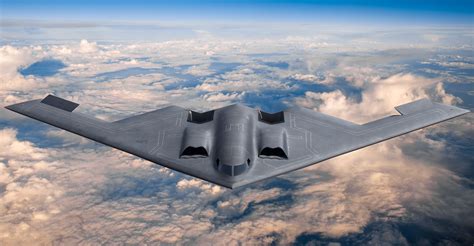
The B-2’s flying wing configuration is not just futuristic aesthetics. It is a physics lesson in radar evasion. The absence of vertical stabilizers, the blended fuselage, the carefully contoured engine inlets—all exist to reduce radar cross section to a fraction of conventional aircraft.
Stealth, in strategic doctrine, replaces speed as the survival mechanism.
When the B-2 debuted operationally during Operation Allied Force, it flew only a tiny percentage of total sorties but struck a disproportionately large number of high-value targets. The aircraft carried the Joint Direct Attack Munition (JDAM) for the first time in combat, transforming from a nuclear-focused Cold War relic into a precision strike platform.
During operations over Kosovo, B-2 crews flew from Whiteman Air Force Base in Missouri, crossed the Atlantic, delivered precision ordnance, and returned—sometimes without landing forward. The aircraft’s combat endurance redefined what “long-range” meant in practical terms.
After the attacks of September 11, 2001, B-2 bombers conducted some of the longest combat sorties in aviation history during Operation Enduring Freedom. Forty-hour missions were not theoretical endurance exercises; they were real combat operations. Speed was irrelevant. What mattered was global reach, survivability, and precision.
The B-2’s subsonic profile also enhances fuel efficiency. High-subsonic cruise near Mach 0.85–0.90 offers a sweet spot between aerodynamic drag and engine performance. Pushing beyond that dramatically increases drag due to compressibility effects—air molecules bunching up near the aircraft as it approaches transonic speeds.
In other words, the B-2 can go faster than it typically does—but doing so would compromise its range, stealth profile, and mission economics.
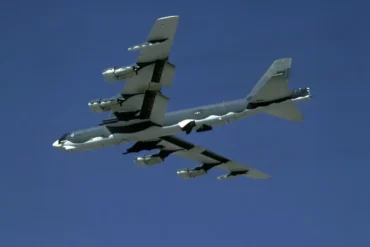
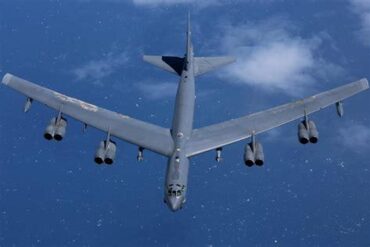
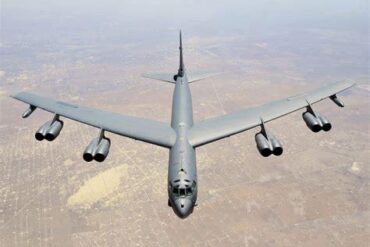
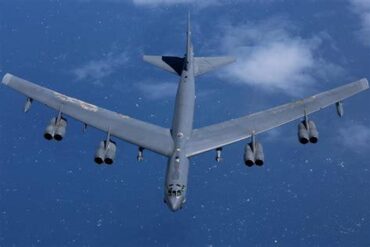
The B-52 Stratofortress: Endurance Over Elegance
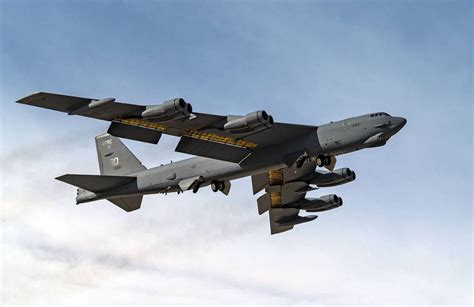
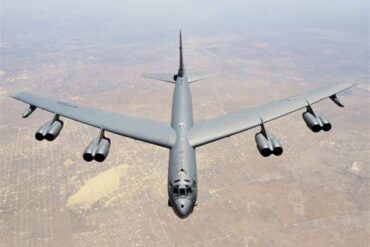
The B-52 first flew in 1952. It was designed when slide rules were cutting-edge technology and the Cold War was a fresh geopolitical fracture. That it remains operational in the 21st century is less a quirk of bureaucracy and more a testament to structural engineering overkill.
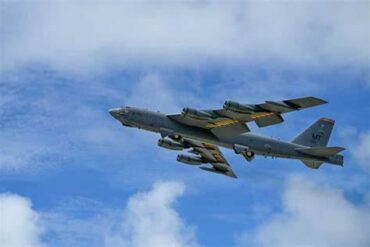
Nicknamed the BUFF—“Big Ugly Fat Fellow”—the B-52 is powered by eight engines and carries payloads that dwarf most modern bombers. During Operation Linebacker II, massive formations of B-52s conducted high-altitude bombing over North Vietnam. The strategy revealed vulnerabilities to surface-to-air missiles, forcing doctrinal changes.
The aircraft adapted.
Today, the B-52 operates primarily as a stand-off missile platform, launching cruise missiles from hundreds of miles away. It can also provide close air support when air superiority is secured, loitering for extended periods thanks to extraordinary fuel capacity.
The key detail: the B-52 does not need to outrun threats if it never enters their engagement envelope. Modern long-range precision weapons shift the emphasis from penetration speed to standoff lethality.
Interestingly, despite being older and aerodynamically less refined, the B-52’s maximum speed can rival or slightly exceed the Spirit’s practical operational maximum in certain load conditions. Its swept wings and high-altitude performance allow respectable transonic capability, though it rarely approaches that envelope in modern missions.
Why the B-1B Lancer Was the Exception
If speed were the defining virtue of strategic bombers, the Rockwell B-1B Lancer would dominate the conversation. With a top speed exceeding Mach 1.2, variable-sweep wings, and powerful engines, it was built for low-level supersonic penetration.
Yet the B-1B is being phased out.
Modern integrated air defense systems combine radar networks, infrared sensors, data fusion, and long-range interceptors. Simply flying faster does not guarantee survival against layered detection grids. Stealth and stand-off capability have proven more adaptable to evolving threats.
Speed is dramatic. Stealth is quiet. In high-threat environments, quiet wins.
The Strategic Evolution: Enter the B-21 Raider
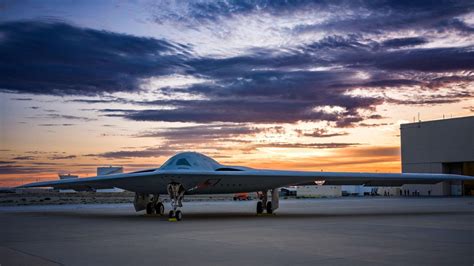
The successor to the Spirit, the Northrop Grumman B-21 Raider, continues this philosophy. It will also be subsonic. Despite being described as a “sixth-generation” platform, it will not chase supersonic performance.
The logic is consistent:
- Sonic booms betray location.
- Supersonic flight reduces range.
- High-speed structures require weight and complexity.
- Modern threats reward stealth and networking over velocity.
The B-21 refines the flying wing concept, integrates advanced coatings and digital architecture, and emphasizes maintainability and deployability. The U.S. Air Force plans to acquire far more Raiders than Spirits, creating a new high-low mix alongside the upgraded B-52.
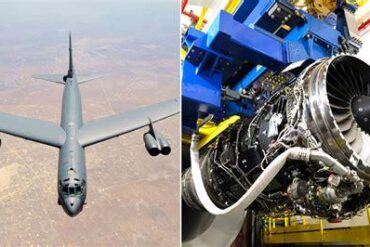
The B-52 itself is evolving into the B-52J configuration, receiving new engines and advanced radar systems derived from modern fighter platforms. Remarkably, this aircraft may remain in service for nearly a century after its first flight.
That longevity underscores a reality often overlooked: strategic bombers are not built to win air races. They are built to shape geopolitical outcomes.
So, Is the B-2 Faster Than the B-52? The Precise Answer
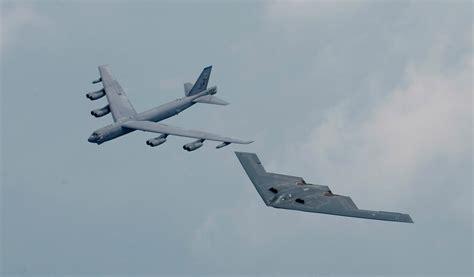
In raw performance terms, the B-2 Spirit can achieve a slightly higher maximum Mach number under ideal conditions. However, operationally, both aircraft remain firmly subsonic, and neither is designed to exploit top speed as a tactical advantage.
The margin is small enough that it is strategically irrelevant.
The real distinction lies not in velocity but in mission philosophy:
- The B-2 relies on stealth penetration.
- The B-52 relies on endurance and stand-off firepower.
- The B-1B once relied on speed—but doctrine moved on.
- The B-21 will double down on stealth and survivability.
If this feels counterintuitive in a world that equates “advanced” with “faster,” that’s because aerospace design obeys physics and strategy, not marketing instincts. Every aircraft embodies a series of tradeoffs. Add speed, lose range. Add stealth, sacrifice aerodynamic simplicity. Add payload, increase drag.
Strategic bombers exist at the intersection of those tradeoffs.
The Deeper Lesson: Why Range Beats Speed in Modern Warfare
There’s a broader principle hiding in this discussion. In contemporary air power doctrine, particularly under agile combat employment concepts, flexibility and survivability outrank raw performance metrics.
A bomber that can fly 6,000 nautical miles undetected, deliver precision weapons, refuel in mid-air, and return safely contributes more to deterrence than one that can sprint at Mach 1.5 but must compromise payload or fuel.
Speed once symbolized dominance in aviation’s early decades. Today, dominance looks more like invisibility, connectivity, and persistence.
The B-2 Spirit and the B-52 Stratofortress—one a stealthy flying wing, the other an eight-engine Cold War giant—arrived at the same operational truth from opposite design philosophies. Neither needs to be supersonic to be decisive.
And in that quiet, subsonic cruise across the upper atmosphere lies a reminder: in strategic aviation, the fastest aircraft is not always the most powerful.