Air New Zealand’s Economy Skycouch has evolved from a quirky aviation experiment into one of the airline industry’s most talked-about long-haul products. After helping the carrier secure the title of World’s Best Economy Class for 2026, the Skycouch is no longer viewed as a novelty. It is now a serious alternative for travelers who want more comfort without paying the punishing cost of business class.
The real debate, however, is not whether the Skycouch is clever. It is whether paying hundreds of dollars extra for a convertible economy row makes more sense than simply booking Premium Economy instead.
That answer depends heavily on who is flying, how tall they are, how much they value sleep, and how painful the fare difference becomes on a given route. On some flights, the Skycouch is a bargain that transforms a brutal overnight journey into a manageable experience. On others, Premium Economy quietly offers the smarter overall package.
Air New Zealand has essentially created two completely different approaches to comfort. One focuses on horizontal rest. The other focuses on enhanced personal space and service. Understanding the difference between those philosophies is the key to spending your money wisely.
The stakes are particularly high on ultra-long-haul routes such as Auckland to Los Angeles, Tokyo to Auckland, or New York to Auckland, where passengers may spend more than 12 hours trapped in a seat. In those situations, even small improvements in comfort can dramatically affect jet lag, fatigue, and overall trip enjoyment.
By 2026, travelers are also paying substantially higher international airfares than they did before the pandemic-era disruptions. Fuel prices, aircraft shortages, and intense long-haul demand have pushed premium cabin prices upward across the Pacific market. That reality has made products like the Skycouch increasingly attractive to passengers searching for a middle ground between standard economy and luxury travel.
How Air New Zealand’s Skycouch Actually Works
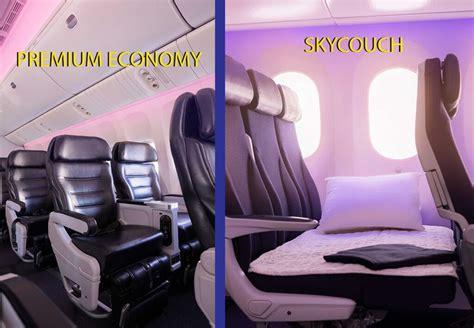
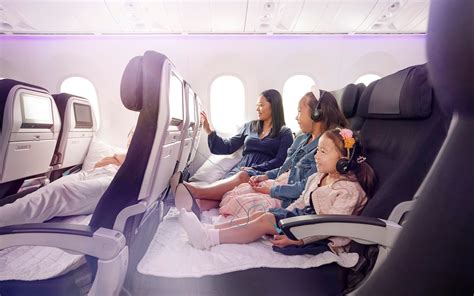
Unlike Premium Economy, which simply provides a larger and more reclined seat, the Skycouch transforms an entire row of economy seats into a flat lounging surface.
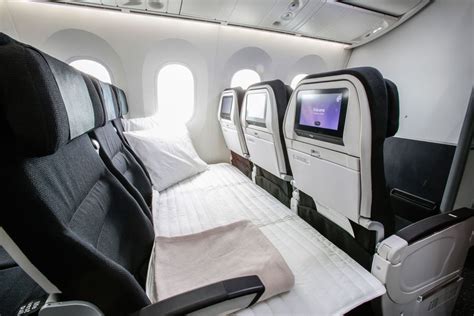
The mechanism itself is surprisingly simple. Each of the three seats includes an extended leg-rest platform that folds upward to create a continuous padded surface. Once raised, the row effectively becomes a small couch or narrow bed measuring approximately 5 feet 1 inch (1.55 meters) long and 29 inches (74 centimeters) wide.
Passengers receive additional bedding accessories including:
- A mattress overlay
- Large pillows
- Blankets
- A specialized “cuddle belt” safety restraint for lying down during turbulence
The transformation can be completed in seconds, allowing passengers to alternate between standard seating and lounge mode throughout the flight.
This setup fundamentally changes the economy experience because it allows passengers to lie fully horizontal. Even many premium economy products cannot offer that capability. For travelers whose biggest priority is genuine sleep, the Skycouch immediately becomes appealing.
Still, there is an important catch: the bed dimensions are limited by the physical size of an economy row. At 5’1″ long, taller travelers cannot fully stretch out. Many adults must sleep diagonally with bent knees or curled positions.
That limitation explains why reactions to the product vary dramatically between passengers. Some describe it as revolutionary. Others compare it to sleeping on a padded shelf.
The Real Cost of Booking a Skycouch
One of the most confusing aspects of the Skycouch is its pricing structure. Unlike Premium Economy, which is sold as a dedicated fare class, the Skycouch is technically an add-on purchased on top of a standard economy ticket.
The pricing is dynamic and fluctuates according to:
- Route demand
- Travel season
- Aircraft type
- Passenger count
- Remaining inventory
For solo travelers, the cost can become surprisingly expensive because they are essentially purchasing the unused seats in the row. On high-demand long-haul flights, that surcharge can reach NZD $1,200 or more.
That creates an awkward situation where the Skycouch occasionally costs nearly as much as Premium Economy itself.
For couples and families, however, the economics shift dramatically.
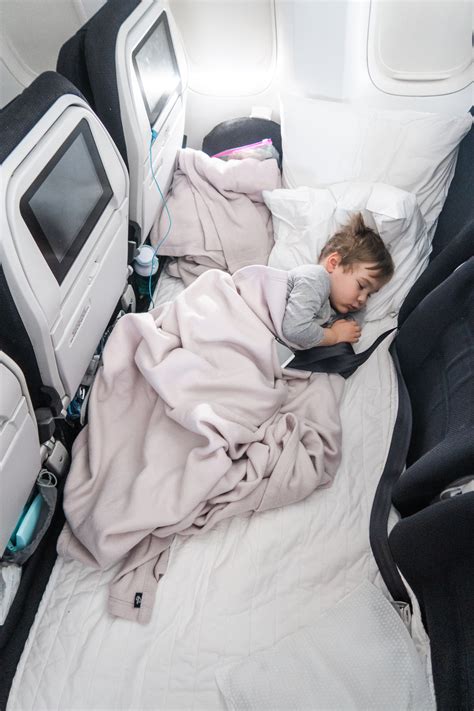
A pair of travelers can often secure the Skycouch for a relatively moderate additional fee because the airline discounts the unused third seat. Parents traveling with toddlers also benefit significantly because the flat area functions as both a play space and sleeping platform.
Many families report paying around NZD $700 extra for Skycouch access on trans-Pacific routes. Compared with purchasing three Premium Economy seats, the savings can be enormous.
This pricing structure explains why the product has become especially popular among:
- Young families
- Budget-conscious couples
- Solo travelers prioritizing sleep
- Travelers avoiding business class prices
Meanwhile, Premium Economy remains more predictable. Travelers pay a fixed fare premium in exchange for larger seats and upgraded services.
Why Solo Travelers Often Love the Skycouch
For a single passenger, the Skycouch can feel like a private cocoon hidden inside economy class.
Instead of fighting for armrests or struggling to sleep upright, solo travelers gain enough space to stretch out, rotate positions, and avoid constant body compression during overnight flights.
The experience becomes especially valuable on routes exceeding 10 hours.
Passengers under approximately 5 feet 9 inches (175 cm) often report the highest satisfaction levels because they can comfortably curl into the available length. Taller passengers may still benefit from side sleeping positions, but complete extension becomes difficult.
The psychological effect is equally important. Traditional economy seating forces passengers into a rigid upright posture for long periods. The Skycouch allows movement and flexibility that dramatically reduce physical fatigue.
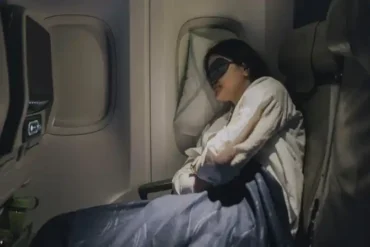
Reviewers frequently mention sleeping for six or seven uninterrupted hours — something many travelers never achieve in conventional economy seating.
There is also a privacy advantage. While the Skycouch does not include partitions or premium cabin exclusivity, the ability to occupy an entire row naturally creates a stronger sense of personal territory.
That matters on crowded overnight flights where constant shoulder contact and limited movement become exhausting.
Still, the experience is not luxurious in the traditional sense. The cushioning remains standard economy-grade padding. Unlike business class lie-flat beds, the surface is relatively firm and narrow.
Passengers seeking plush bedding, thick mattresses, or hotel-like softness may feel underwhelmed.
Premium Economy Delivers a Different Type of Comfort
Air New Zealand’s Premium Economy targets a completely different traveler profile.
Instead of prioritizing flat sleep, Premium Economy focuses on creating a more spacious seated environment with upgraded dining and service.
The seats themselves are significantly wider than economy at approximately 19.3 inches (49 cm), paired with an impressive 41-inch pitch that offers dramatically improved legroom.
Passengers also receive:
- Greater recline depth
- Larger entertainment screens
- Enhanced meal service
- Premium beverages
- Priority boarding
- Improved luggage allowances
- Quieter cabin sections
This creates a much more refined overall journey.
For travelers who work during flights, eat full meals comfortably, or dislike crowded cabins, Premium Economy frequently feels superior despite lacking a flat sleeping surface.
The difference becomes particularly obvious during waking hours. A Premium Economy passenger enjoys better posture support, easier tray-table use, and more personal storage throughout the flight.
By contrast, Skycouch passengers still spend part of the journey inside the main economy cabin environment with standard meal carts, crowded aisles, and tighter upright seating whenever the bed mode is not in use.
That distinction matters more than many travelers initially expect.
The Biggest Weakness of the Skycouch
Despite the clever engineering, the Skycouch has one unavoidable limitation: width.
At just 29 inches across, the surface is narrower than many domestic single beds. Two adults sharing the space often struggle to sleep comfortably side-by-side for long periods.
Couples usually end up alternating positions or partially sitting upright with legs elevated rather than both lying fully flat.
This is where marketing images can sometimes create unrealistic expectations.
Photographs often show smiling couples lounging effortlessly together, but in reality, sleeping arrangements become cramped for average-sized adults. Smaller travelers tend to fare better, while taller Western passengers frequently find the dimensions restrictive.
The issue becomes even more noticeable during turbulence or meal services, when passengers must frequently transition back into seated positions.
Premium Economy avoids these compromises by offering consistently comfortable upright seating throughout the flight.
That consistency is valuable. Travelers never need to rearrange bedding or negotiate shared sleeping positions.
Why Families See Massive Value in the Skycouch
The Skycouch truly shines for parents traveling with young children.
Long-haul flights with toddlers can quickly become exhausting endurance tests involving constant movement, crying, and failed sleep schedules. The flat surface gives children a secure space to nap, play, or sit comfortably without balancing awkwardly on standard seats.
Japanese travelers, in particular, have embraced the concept on routes connecting Auckland with Tokyo and other East Asian hubs.
Several factors explain the strong popularity in that market.
First, East Asian passengers often place enormous value on sleep quality during overnight travel. Second, the average passenger height in those markets aligns better with the Skycouch dimensions. Third, Japanese travelers frequently appreciate compact, multifunctional designs that maximize limited space efficiently.
Air New Zealand has effectively carved out a niche between economy and business class by offering a partially horizontal sleeping solution at a fraction of premium cabin pricing.
Competing airlines such as Japan Airlines and ANA deliver world-class service standards but lack a direct equivalent to the Skycouch concept.
That differentiation has helped Air New Zealand stand out on intensely competitive Pacific routes.
Service Differences Matter More Than People Expect
One of the biggest misconceptions about the Skycouch is that it functions like a premium cabin upgrade.
It does not.
Passengers still receive standard economy treatment in nearly every operational category.
That means:
- Economy meals
- Standard boarding groups
- Standard baggage allowances
- Economy amenity kits
- Economy drink service
This creates an unusual contrast. Travelers may have enough space to lie flat while simultaneously eating from the same economy trays as the rest of the cabin.
For some passengers, that tradeoff is perfectly acceptable because sleep is the primary goal.
For others, the lack of elevated service significantly reduces the value proposition.
Premium Economy creates a noticeably more polished journey from airport check-in through arrival. The quieter cabin atmosphere alone can dramatically improve long-haul comfort.
Travelers who value attentive service, premium wines, upgraded catering, or faster boarding often find Premium Economy more emotionally satisfying even if actual sleep quality is lower.
Aircraft Type Can Make or Break the Experience
Not every Air New Zealand aircraft includes the Skycouch.
The product is primarily available on selected:
- Boeing 777-300ER aircraft
- Boeing 787-9 Dreamliners
Some leased aircraft lack the specialized seat hardware entirely.
That creates an important booking risk. Travelers must carefully verify aircraft configurations during reservation selection rather than assuming Skycouch availability across all long-haul services.
Seat maps become especially important because Skycouch rows are limited in number. Popular routes can sell out quickly, particularly during holiday periods.
Once those rows disappear, passengers are left with standard economy seating.
Premium Economy availability is generally more predictable because it exists as a dedicated cabin rather than a specialized seat modification.
Which Option Is Actually Worth the Money?
The smartest choice ultimately depends on fare differences.
If Premium Economy costs only a few hundred dollars more than the Skycouch surcharge, the superior service, larger seats, and enhanced airport experience often justify spending extra.
However, if the gap widens beyond $500, the Skycouch becomes far more compelling.
For solo travelers capable of sleeping curled or diagonally, the ability to lie flat can outweigh nearly every other comfort factor. Sleep quality often determines how miserable or manageable a 12-hour flight feels.
For families with toddlers, the Skycouch may be one of the best-value upgrades in commercial aviation.
For couples, the decision becomes more complicated. Some love the cozy shared space. Others quickly realize that two adults attempting to sleep on a 29-inch-wide surface requires Olympic-level cooperation.
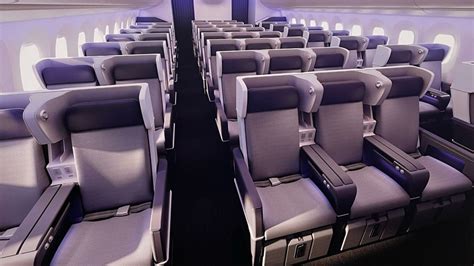
Premium Economy remains the safer all-around option for travelers seeking consistency, spacious seating, superior meals, and a less stressful airport experience.
The Skycouch, meanwhile, rewards travelers willing to sacrifice luxury service for the rare opportunity to stretch out horizontally without entering business class pricing territory.
Air New Zealand Created a New Category of Flying
The brilliance of the Skycouch lies in its ability to bridge the enormous comfort gap between economy and premium cabins.
Traditional airline seating forces travelers into binary choices: suffer through economy or pay dramatically more for business class. Air New Zealand inserted an entirely new middle option into that equation.
That innovation has proven especially powerful during an era of rising airfare costs.
Many travelers simply cannot justify business class prices exceeding several thousand dollars on Pacific routes. The Skycouch offers partial relief from economy discomfort without crossing into luxury pricing territory.
Its success may influence future cabin designs industry-wide.
As airlines search for ways to monetize economy cabins creatively, flat-space concepts could become increasingly common. The demand clearly exists, particularly among younger travelers and families prioritizing rest over premium dining.
Air New Zealand recognized something many competitors overlooked: passengers often care more about sleeping horizontally than receiving fancy cutlery.
That insight helped transform a mechanical leg-rest system into one of modern aviation’s most influential economy innovations.