In 2026, the battle for the world’s most desirable business class experience no longer revolves around a single winner. For years, Qatar Airways’ QSuite dominated the conversation with its private doors, clever cabin design, and suite-like atmosphere that redefined what passengers expected from business class. But Emirates has spent the last several years aggressively modernizing its premium cabins, pouring billions into fleet retrofits and transforming one of its biggest weaknesses into a far more competitive product.
The result is that travelers now face a genuinely difficult choice. Both airlines deliver exceptional long-haul experiences, both operate some of the most recognizable premium cabins in commercial aviation, and both target passengers willing to pay a substantial premium for comfort, privacy, and service. Yet despite similar pricing on many routes, the actual experience can feel dramatically different depending on the airline, aircraft type, and even the exact seat configuration operating that day.
What makes the comparison fascinating is that Qatar Airways and Emirates are not trying to achieve luxury in the same way. One prioritizes privacy and control. The other prioritizes spectacle and atmosphere. One feels like entering a private room in the sky. The other feels like joining one of aviation’s most glamorous social spaces.
For travelers spending thousands of dollars on a long-haul ticket in 2026, understanding those differences matters more than ever.
The smartest premium travelers are no longer simply booking an airline. They are booking a specific aircraft and a very specific onboard experience.
After all, an Emirates Airbus A380 experience is entirely different from flying on one of the carrier’s older Boeing 777 cabins, just as Qatar Airways without QSuite feels significantly less groundbreaking than its flagship product.
Choosing correctly can mean the difference between a genuinely world-class journey and a merely good one.
Qatar Airways Built QSuite Around Privacy And Personal Space
When Qatar Airways launched QSuite, it fundamentally changed how airlines approached business class design. Before QSuite, many premium cabins focused on improving seats, adding better bedding, or refining food service. Qatar Airways instead focused on psychology. The airline recognized that premium travelers increasingly valued isolation, privacy, and personal control over their environment.
That philosophy remains the defining characteristic of QSuite in 2026.
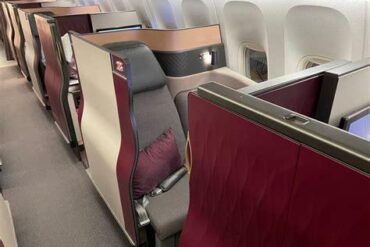
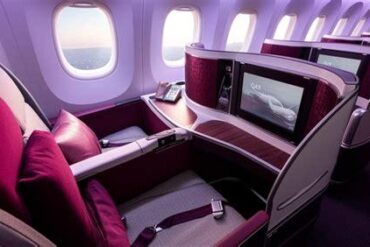
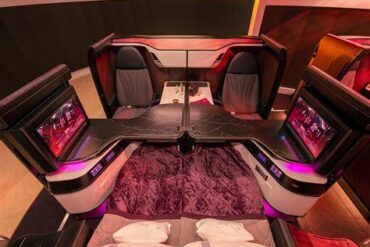
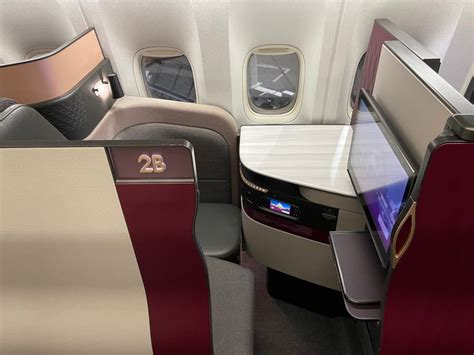
The cabin feels intentionally secluded. Sliding privacy doors shield passengers from the aisle, high walls create a cocoon-like atmosphere, and the overall layout minimizes exposure to neighboring travelers. For solo passengers, especially on overnight flights, the experience feels remarkably close to a compact first-class suite.
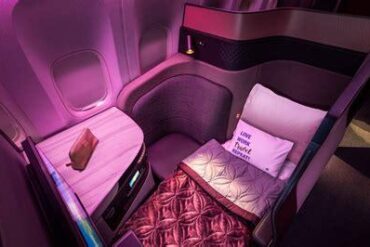
The newest QSuite Next Gen configuration pushes this concept even further. Taller motorized privacy doors increase enclosure without making the cabin feel claustrophobic. Enhanced storage areas allow travelers to organize laptops, headphones, charging cables, and personal items more naturally. The upgraded 4K OLED entertainment screens are sharper and more immersive than previous versions, while modern USB-C charging capabilities reflect how heavily business travelers now depend on multiple connected devices during long-haul journeys.
More importantly, the seat itself remains exceptionally comfortable.
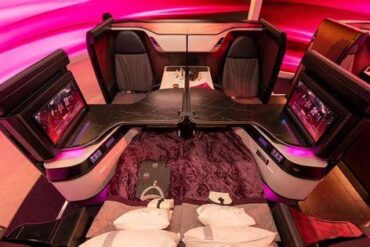
At approximately 23 inches wide in upright mode and converting into a nearly 79-inch fully flat bed, QSuite continues to rank among the roomiest business class seats flying internationally. The sleeping experience is particularly impressive because the suite structure blocks much of the cabin movement and visual distraction that often prevent quality rest onboard aircraft.
That advantage becomes especially noticeable on ultra-long-haul routes between Europe, Asia, Australia, and North America, where passengers often prioritize uninterrupted sleep above every other luxury feature.
QSuite’s biggest innovation, however, is flexibility.
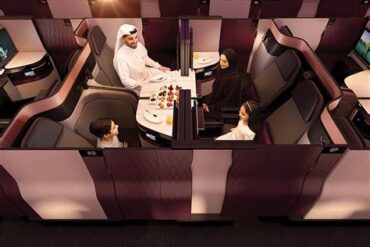
Couples traveling together can lower center dividers and create a shared double suite that feels dramatically more intimate than traditional paired business class seating. Families or groups of four can transform adjacent center suites into the famous Quad Suite arrangement, effectively creating a semi-private shared cabin space unlike anything most competitors offer.
That adaptability gives Qatar Airways a unique advantage because the cabin can shift from deeply private to surprisingly social depending entirely on the traveler’s preference.
Emirates Business Class Is About Experience, Atmosphere, And Scale
Emirates approaches premium travel from a very different perspective.
Historically, Emirates built its reputation less around seat privacy and more around creating an extravagant overall journey. Even when the airline’s older Boeing 777 business class cabins lagged badly behind competitors in seat design, Emirates continued attracting premium travelers through the strength of its broader experience.
The airline understood something many competitors overlooked: luxury travel is emotional.
Passengers remember the enormous entertainment screens, the glowing cabin mood lighting, the chauffeur-driven airport transfers, the polished lounge network, the prestige associated with Dubai, and of course the iconic Airbus A380 onboard lounge bar.
Those elements transformed flying into an event rather than simple transportation.
For years, though, Emirates carried a major weakness. Many Boeing 777 aircraft still featured outdated 2-3-2 business class layouts that lacked direct aisle access and forced some passengers into awkward middle seats. In an era where competitors increasingly offered enclosed suites and direct access for every traveler, Emirates’ hard product began feeling increasingly dated.
That is precisely why Project Phoenix matters so much in 2026.
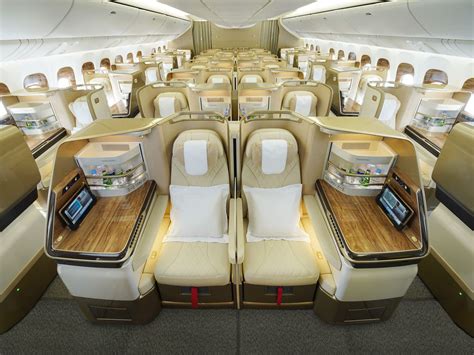
The airline’s multibillion-dollar retrofit initiative is finally replacing those older cabins with modern 1-2-1 configurations featuring significantly improved privacy, contemporary finishes, and direct aisle access throughout the cabin.
The new Emirates Boeing 777 business class seat is a massive improvement over its predecessor. Seats now convert into fully flat beds measuring nearly 79 inches long, privacy dividers are substantially higher, and cabin aesthetics feel far more aligned with modern premium expectations.
Still, Emirates deliberately avoids replicating QSuite directly.
Rather than creating fully enclosed suites, Emirates continues emphasizing openness, spaciousness, and visual luxury. The result feels less cocooned and more theatrical. Travelers remain connected to the atmosphere of the aircraft instead of disappearing into fully private pods.
That distinction is intentional.
Qatar Airways wants passengers to retreat inward. Emirates wants passengers to feel immersed in the grandeur of the journey itself.
The Emirates A380 Still Delivers One Of Aviation’s Greatest Luxury Experiences
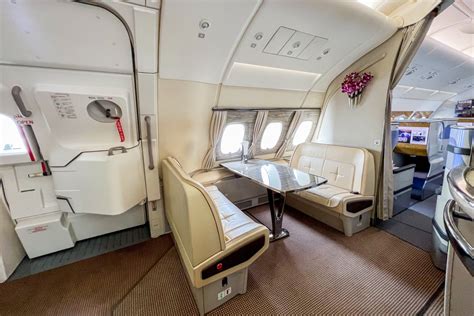
Even in 2026, no discussion about Emirates business class is complete without mentioning the Airbus A380 upper deck lounge.
The onboard bar remains one of commercial aviation’s most recognizable premium features because it changes how passengers experience long-haul flying. Instead of remaining confined to a seat for 12 or 14 hours, travelers can walk to the rear lounge area, stretch, socialize, enjoy cocktails, and temporarily escape the repetitive rhythm of long-haul cabin life.
That matters more than many travelers initially expect.
On ultra-long-haul flights, movement becomes psychologically important. The ability to stand comfortably, converse with fellow passengers, or casually enjoy champagne at 40,000 feet creates an atmosphere few airlines can replicate.
For leisure travelers, honeymooners, or first-time premium passengers, the A380 lounge often becomes the defining memory of the entire flight.
It gives Emirates something Qatar Airways fundamentally lacks: theater.
QSuite may offer better privacy, but Emirates often delivers a more emotionally memorable experience.
The upper deck itself also contributes heavily to that feeling. Emirates’ A380 business class cabin feels spacious, airy, and distinctly premium in a way many twin-engine aircraft struggle to replicate. The quieter environment of the A380 further enhances passenger comfort during long-haul sectors.
That combination of space, movement, and spectacle explains why Emirates continues maintaining such intense loyalty among leisure-focused premium travelers even as competitors introduce technically superior seats.
For many passengers, flying is not simply about maximizing sleep efficiency. It is about enjoying the journey.
And very few airlines make long-haul flying feel more enjoyable than Emirates aboard the A380.
Dining Philosophies Reveal The Biggest Difference Between These Airlines
The contrast between Qatar Airways and Emirates becomes especially obvious during meal service.
Qatar Airways structures dining around personalization and privacy. The dine-on-demand model allows passengers to control meal timing almost entirely according to their preferences. Travelers can eat immediately after takeoff, delay dinner for several hours, skip courses, or request lighter meals depending on work schedules, sleep strategies, or jet lag considerations.
Inside QSuite, this flexibility feels natural because the environment supports it perfectly.
Closing the suite door transforms the seat into something resembling a miniature private restaurant booth. Meals arrive individually paced, cabin distractions largely disappear, and passengers can focus entirely on dining, working, or relaxing without interruption.
The service rhythm feels quiet, refined, and deeply individualized.
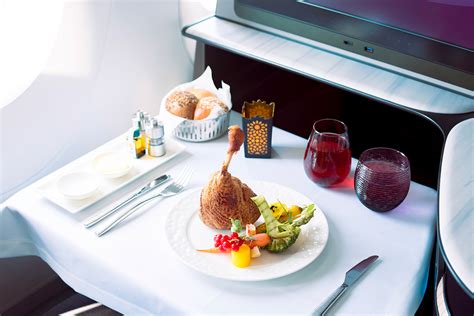
Emirates delivers luxury differently.
Its meal service tends to feel grander and more hospitality-driven. Presentation is polished, portions are generous, and menus frequently showcase destination-inspired dishes tied to regional culinary identities. Rather than emphasizing isolation, Emirates embraces abundance and occasion.
Passengers often move fluidly between dining at their seat and enjoying drinks at the onboard lounge, particularly aboard the A380. That creates a more social and dynamic premium experience.
Neither approach is objectively better.
They simply cater to different priorities.
Business travelers trying to maximize rest before morning meetings often prefer Qatar’s privacy-focused structure. Leisure travelers celebrating vacations or special occasions frequently gravitate toward Emirates’ more energetic atmosphere.
The distinction perfectly reflects each airline’s broader identity.
Qatar Airways feels like controlled luxury.
Emirates feels like experiential luxury.
Ground Experience Matters More Than Most Travelers Realize
The inflight product attracts most attention, but premium travelers are also paying for everything surrounding the flight itself.
That includes lounges, airport transfers, check-in efficiency, connection convenience, and the overall door-to-door experience.
Qatar Airways excels at refined tranquility.
Its Al Mourjan lounges in Doha’s Hamad International Airport feel calm, polished, and intentionally understated. Large seating areas, quiet zones, showers, dining spaces, and elegant architecture create an atmosphere closer to a luxury hotel than a crowded international terminal.
The lounge experience mirrors QSuite itself: sophisticated, quiet, and privacy-oriented.
Emirates, meanwhile, dominates through sheer scale.
Dubai International Airport Terminal 3 effectively functions as an Emirates ecosystem. Massive dedicated business class lounges stretch across huge portions of the terminal, allowing travelers to remain immersed in the airline’s premium environment throughout connections.
The experience feels less intimate than Qatar’s lounges but exceptionally efficient.
Emirates also benefits from one major advantage many travelers consider highly valuable: chauffeur-drive service.
Eligible business class passengers in many cities receive complimentary airport transfers, dramatically improving convenience and reducing total trip stress. In expensive global cities, that service alone can represent substantial practical value.
Qatar Airways counters with the strength of the oneworld alliance.
While Emirates operates more proprietary lounges worldwide, Qatar passengers gain access to hundreds of partner lounges globally through alliance partnerships. For travelers frequently connecting between different carriers, that broader ecosystem can become extremely useful.
Ultimately, the better ground experience depends entirely on traveler priorities.
Passengers wanting quiet sophistication may prefer Doha and Al Mourjan.
Passengers wanting seamless scale and convenience may prefer Dubai and Emirates’ integrated premium infrastructure.
Aircraft Type Is The Single Most Important Factor In 2026
The most critical detail in this entire comparison is surprisingly simple.
Not every Emirates flight offers the new business class.
Not every Qatar Airways flight offers QSuite.
That reality changes everything.
Emirates is still mid-transition through its Boeing 777 retrofit program. Many aircraft now feature the new 1-2-1 configuration, but older 2-3-2 cabins remain active across parts of the network. Travelers booking blindly based on the Emirates brand alone risk ending up with an outdated seat lacking direct aisle access and modern privacy features.
The same issue exists with Qatar Airways.
QSuite is available on all Airbus A350-1000 aircraft and selected Boeing 777s and Airbus A350-900s, but not across the airline’s entire long-haul fleet. Certain Boeing 787, Airbus A330, and Airbus A380 aircraft operate with older business class products that feel noticeably less revolutionary.
That means seat maps matter enormously.
Experienced premium travelers now research aircraft registrations, retrofit schedules, and cabin layouts before purchasing tickets. In many cases, the exact aircraft operating a route matters more than the airline itself.
An Emirates A380 with the onboard lounge may provide a dramatically superior leisure experience compared with a non-QSuite Qatar Airways aircraft.
Conversely, a Qatar Airways QSuite-equipped Airbus A350-1000 may easily outperform an older Emirates Boeing 777 configuration.
The gap between best-case and worst-case scenarios within each airline remains surprisingly large.
That is why informed travelers increasingly book products rather than brands.
Which Airline Offers Better Value For Business Class Travelers?
Value in premium travel is rarely about finding the cheapest ticket.
It is about maximizing the experience most aligned with your priorities.
For travelers who prioritize sleep, privacy, personal space, and quiet productivity, Qatar Airways QSuite still sets the benchmark in 2026. The combination of enclosed suites, customizable layouts, dine-on-demand flexibility, and exceptional bedding creates one of the most complete business class products in the world.
It remains particularly dominant for overnight flights where uninterrupted rest matters most.
For travelers seeking excitement, luxury atmosphere, social energy, and memorable experiences, Emirates continues delivering something uniquely compelling — especially aboard the Airbus A380.
The onboard lounge, grand cabin aesthetics, chauffeur transfers, and immersive premium ecosystem make Emirates feel spectacular in a way few airlines can replicate.
In many ways, the comparison comes down to personality.
Qatar Airways appeals to travelers who want the aircraft to disappear around them.
Emirates appeals to travelers who want the aircraft itself to become part of the adventure.
Both approaches work brilliantly.
And in 2026, for the first time in years, the gap between them is narrower than ever.