The Middle East has quietly engineered the modern gold standard of business class travel, turning what was once a functional cabin into a competitive theater of design, privacy, cuisine, and psychology. Emirates, Qatar Airways, and Etihad Airways are not merely airlines; they are national statements with wings, each projecting a different philosophy of luxury at 40,000 feet. Choosing between them is less about price or loyalty and more about how you want to feel while crossing continents.
Business class today is no longer a compromise between economy and first. On these three carriers, it is the product. These airlines court corporate travelers, entrepreneurs, diplomats, creatives, and frequent flyers who treat long-haul time as something to be optimized rather than endured. The question is not which airline is good. All three are excellent. The real question is which one aligns best with your priorities: privacy, consistency, atmosphere, sleep quality, or spectacle.
This rivalry plays out across multiple layers. The hard product defines the seat, the door, the bed, and the screen. The soft product shapes how food arrives, how service flows, and whether the cabin feels restorative or theatrical. The ground game determines whether the journey begins with friction or calm. Together, these elements form a flying ecosystem, and small differences matter enormously at altitude.
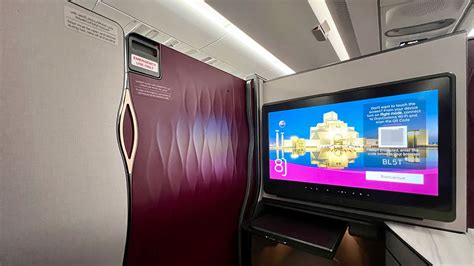
Qatar Airways Business Class: Precision, Privacy, and Control
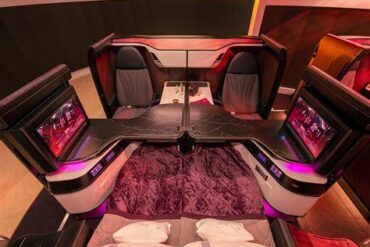
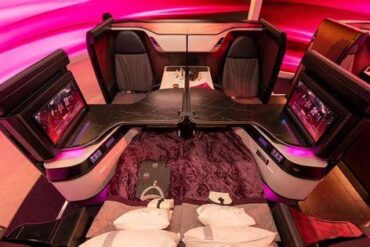
Qatar Airways built its modern reputation on a single revolutionary idea: business class should feel like a suite, not a seat. The Qsuite remains the reference point against which all other business cabins are judged. It is not simply enclosed; it is intelligently enclosed, designed to give passengers control over their space, their time, and their interactions.
The Qsuite offers a fully closing door, adjustable ambient lighting, and a generous side console that functions equally well as a workspace or nightstand. The lie-flat bed is long, wide, and complemented by a dedicated turndown service that includes a mattress pad and plush bedding. On overnight flights, the effect is genuinely hotel-like rather than symbolic.
What truly differentiates Qatar Airways is flexibility. The “Dine Anytime” model allows passengers to eat when hunger strikes rather than when the airline dictates. This is especially valuable on ultra-long-haul routes where circadian rhythms are already compromised. The cabin design supports this autonomy, with forward- and rear-facing seats arranged to maximize both privacy and social options.
In the center section, four Qsuite seats can be transformed into a shared quad, ideal for families or colleagues traveling together. This modular approach is rare and surprisingly effective. Solo travelers still enjoy exceptional seclusion, while pairs can dine face-to-face without compromising personal space.
Soft product refinement reinforces the hardware. Sleepwear from The White Company, amenity kits from Diptyque, and thoughtfully plated meals elevate the experience without tipping into excess. Service is polished and anticipatory, particularly on long-haul routes where Qatar deploys its most experienced crews.
The main caveat is availability. Not every Qatar Airways aircraft features Qsuite, and last-minute equipment swaps can replace it with an older seat. Checking the seat map before booking is not optional; it is essential. When everything aligns, however, Qatar Airways delivers the most controlled, private, and sleep-optimized business class experience in the sky.
Emirates Business Class: Scale, Spectacle, and Social Energy
Emirates approaches business class from an entirely different angle. Where Qatar emphasizes restraint and privacy, Emirates leans into grandeur and abundance. The airline’s business class is designed to impress through scale, entertainment, and a sense of occasion, particularly on its flagship Airbus A380.
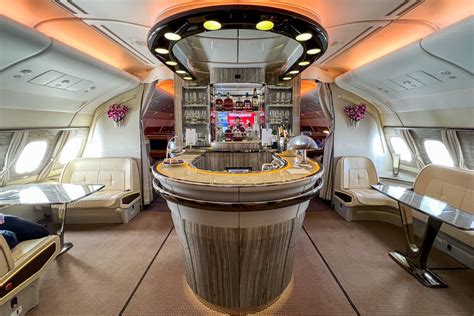
On the A380, Emirates offers a 1-2-1 layout with direct aisle access for every passenger. The seats convert into fully flat beds and are supported by generous storage and large entertainment screens. The real star, however, is not the seat itself but the atmosphere surrounding it. At the back of the upper deck sits the iconic onboard lounge and bar, a social space that transforms long flights into something resembling a high-altitude cocktail hour.
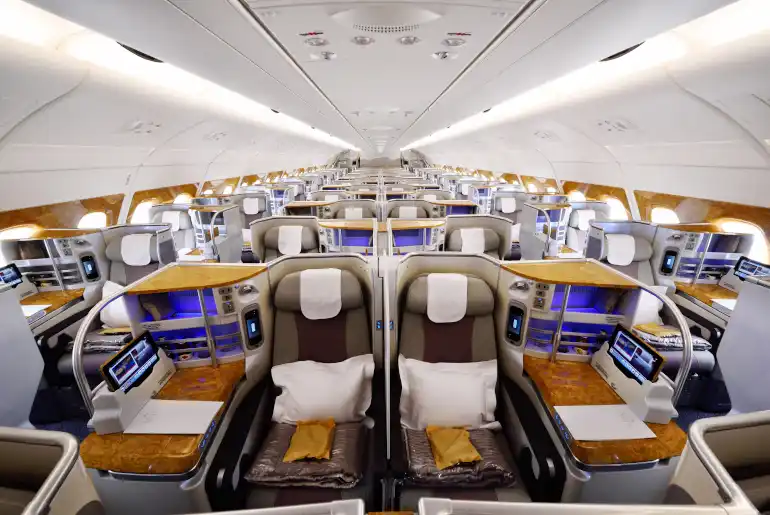
This social dimension is unique. Passengers stretch, mingle, and interact in ways that simply do not happen on other airlines. For travelers who dislike feeling confined, this feature alone can redefine the long-haul experience. Add to that Emirates’ ICE entertainment system, offering thousands of channels, and the cabin becomes a self-contained world of distraction and indulgence.
Dining and beverages are consistently strong, with an emphasis on premium spirits and well-presented meals. Emirates does not push avant-garde cuisine; instead, it focuses on reliability and choice, ensuring that almost every passenger finds something appealing.
Consistency, however, is the Achilles’ heel. On certain Boeing 777 aircraft, Emirates still operates a 2-3-2 business class configuration, a layout that feels dated and compromised in a market that now expects direct aisle access as standard. Retrofitted 777s are addressing this gap, but the fleet remains mixed.
Ground services are a strength. Dubai International Airport functions as a global hub designed around Emirates’ schedule, and the airline’s lounges are expansive and well-equipped. Chauffeur-driven transfers, where available, further smooth the journey.
Emirates business class is best understood as luxury through scale and stimulation. It excels for travelers who value entertainment, sociability, and a sense of movement over cocoon-like isolation.
Etihad Airways Business Class: Boutique Calm and Sleep Science
Etihad Airways positions itself as the quiet sophisticate of Middle Eastern aviation. Its business class is not designed to dazzle the senses but to lower the volume of travel itself. This philosophy is most clearly expressed in the Business Studio found on the Airbus A350.
The Business Studio offers a fully flat bed, generous storage, and, crucially, a sliding privacy door. The aesthetic is muted and modern, with design choices that favor calm over drama. Screens are large, tables are stable, and personal space feels well-contained. For solo travelers, this cabin is deeply appealing.
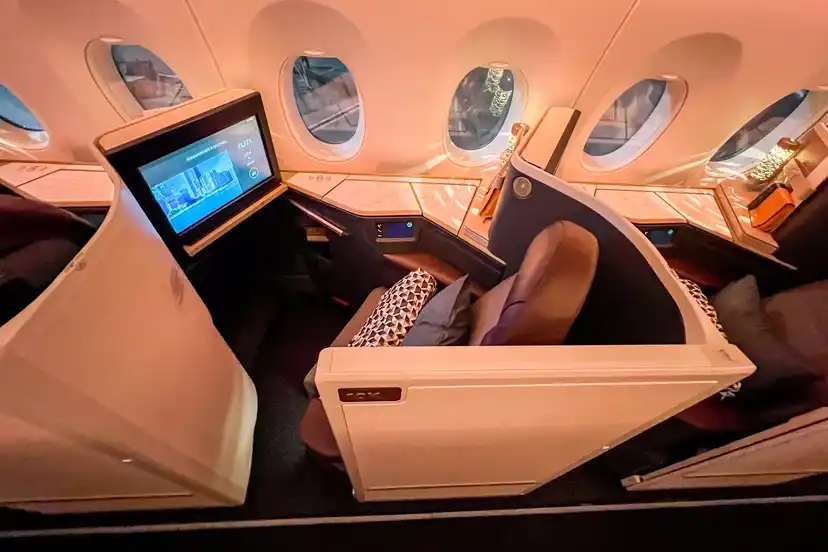
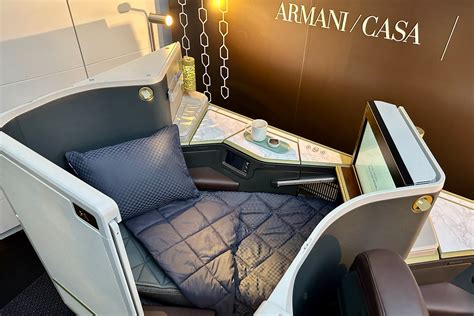
Etihad’s focus on sleep is not marketing fluff. Memory foam mattresses, Armani-branded bedding, and a flexible dining concept all support rest. Meals can be ordered on demand, and service pacing is intentionally unhurried. The cabin encourages passengers to eat, sleep, and arrive without unnecessary stimulation.
Recent updates to the Boeing 787 fleet have brought features such as Bluetooth audio pairing and wireless charging, reinforcing Etihad’s reputation for thoughtful innovation rather than headline-grabbing gimmicks.
One practical consideration is fare structure. Etihad has experimented with lower-priced business class tickets that exclude lounge access or other perks. Reading fare conditions carefully is essential to avoid surprises. When fully included, the ground experience in Abu Dhabi complements the inflight calm, with lounges designed for space and quiet rather than spectacle.
Etihad business class is ideal for travelers who see flying as a necessary transition rather than an event. It offers privacy, serenity, and consistency, particularly on overnight sectors.
Hard Product Analysis: Seats, Space, and Physical Design
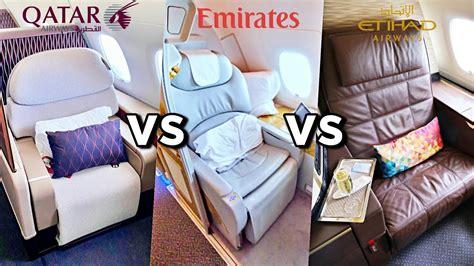
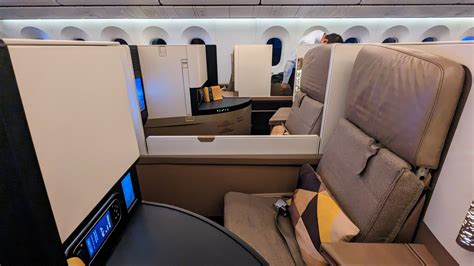
When isolating the hard product, philosophical differences become structural realities. Qatar Airways’ Qsuite remains the most versatile and advanced seat in business class today. Its combination of privacy, flexibility, and spatial intelligence gives it a clear edge, provided it is actually installed on the aircraft.
Etihad’s Business Studio on the A350 is a close second, particularly for solo travelers who value enclosure without visual clutter. The seat footprint is efficient, and the addition of a door enhances perceived personal space.
Emirates’ A380 seat is solid but less innovative. It delivers comfort and access but lacks the intimacy of enclosed suites. On older 777s with 2-3-2 seating, the hard product falls significantly behind its competitors.
From a purely physical standpoint, Qatar Airways wins, Etihad follows closely, and Emirates depends heavily on aircraft type.
Soft Product Analysis: Service, Dining, and Emotional Experience
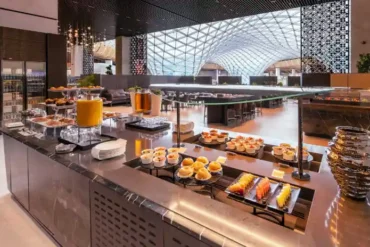
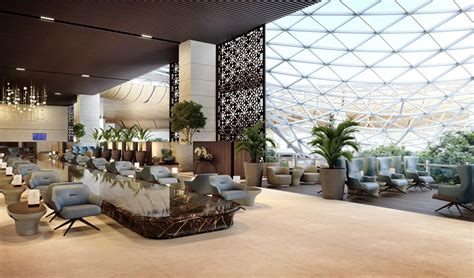
Soft product is where Qatar Airways extends its lead. The ability to control one’s schedule, combined with refined service and premium amenities, creates a seamless flow that feels modern and respectful of passenger autonomy. The Al Mourjan Garden lounge in Doha reinforces this narrative, offering space, light, and calm.
Emirates excels in entertainment and sociability. The onboard bar, extensive media library, and energetic service style create a sense of movement and engagement that many travelers love, especially on ultra-long-haul flights.
Etihad delivers the most emotionally quiet experience. Its service style is discreet, its dining flexible, and its amenities deliberately understated. For passengers prioritizing rest, this approach can be transformative.
Final Verdict: Choosing the Right Business Class Winner
Declaring a single winner oversimplifies a nuanced landscape. Qatar Airways offers the most complete and technically advanced business class when Qsuite is guaranteed. Emirates provides the most entertaining and socially dynamic experience, particularly on the A380. Etihad delivers the most serene and sleep-focused journey, excelling in understated luxury.
The real victory belongs to travelers, who can now choose a business class experience that aligns precisely with their priorities. In this rarefied segment of aviation, there are no wrong choices, only different definitions of what premium truly means.