When analyzing ultra-long-haul aviation, two Middle Eastern titans dominate the skies: Emirates and Qatar Airways. Both have carved global reputations as leaders in stretching the boundaries of long-distance travel, connecting continents with unmatched ambition. But as we dive into the ultra-long-haul battlefield—defined as routes exceeding 7,000 miles or 14+ hours of flight time—it becomes clear that while both airlines excel, their strategies are remarkably different.
Capacity vs. Coverage: Defining the Strategic Divide
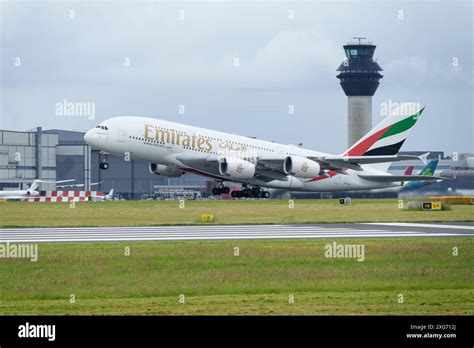
Emirates leans heavily on the Airbus A380 and Boeing 777-300ER, deploying these giants from its Dubai hub to handle massive traffic loads on trunk routes such as Dubai–Sydney (DXB–SYD) and Dubai–Los Angeles (DXB–LAX). With ASMs (available seat miles) soaring beyond 326 million per month in some cases, Emirates’ scale is undeniable.
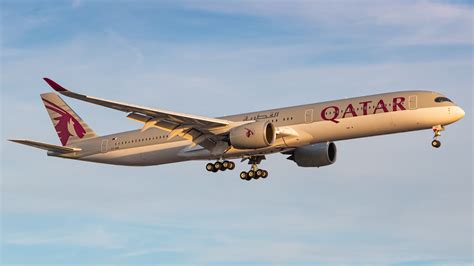
In contrast, Qatar Airways from Doha takes a fleet-diversification approach. The airline efficiently mixes the Airbus A350-900, A350-1000, and Boeing 777-200LR to reach cities across Oceania, Asia, and the Americas. Rather than high capacity on fewer routes, Qatar spreads its reach across more city pairs—often with smaller aircraft but greater frequency.
ASM Dominance: Emirates’ Trump Card
Emirates leads in raw ASM volume. This metric, which multiplies available seats by miles flown, reflects a strategy grounded in mass movement. With A380 configurations ranging from 489 to 615 seats, Emirates can pump enormous capacity into each flight.
- DXB–SYD: 326.8 million ASMs/month
- DXB–MEL: 208.3 million ASMs/month
- DXB–LAX: 121 million ASMs/month
These figures highlight Emirates’ emphasis on hub concentration: fewer destinations, but maximum volume.
Network Breadth and Fuel Efficiency: Qatar’s Tactical Edge
Qatar Airways’ strength lies in its fleet adaptability. Its A350-1000, capable of flying over 8,000 miles with reduced fuel burn, serves markets like Doha–Melbourne (DOH–MEL) and Doha–Auckland (DOH–AKL) with strategic precision.
- DOH–MEL: 157.7 million ASMs/month
- DOH–SYD: 119.2 million ASMs/month
- DOH–DFW: 77.7 million ASMs/month
Though lower in ASM than Emirates, Qatar wins in average route length per seat and load flexibility, using its nimble fleet to match demand, especially on thinner long-haul markets.
Fleet Comparison: Size, Age, and Focus
A side-by-side review of both fleets tells the story of two differing philosophies:
- Emirates: 269 aircraft, average age ~11.1 years
- 94 A380s, 118 777-300ERs, 13 A350-900s
- Qatar Airways: 235 aircraft, average age ~10.2 years
- 34 A350-900s, 25 A350-1000s, 57 777-300ERs, 7 777-200LRs
Where Emirates focuses on high-capacity, widebody-only operations, Qatar uses a blend of wide and narrow-body aircraft, providing more route elasticity and scalability.
Leadership Philosophy: Clark vs. Al Baker
Tim Clark, President of Emirates, has long defended the A380’s economics. “When I fly an A380 from Dubai to Los Angeles with 515 people, it burns 13 tons of fuel an hour… the cost per seat is cheaper than a 787,” he told Airline Ratings. His vision remains volume-centric, pushing to keep 110 operational A380s by 2026.
Akbar Al Baker, CEO of Qatar Airways, champions the A350’s environmental and efficiency profile, calling the A350-1000 “our long-haul flagship.” He’s publicly noted its 20% lower emissions per block-hour compared to the A380.

Their contrasting views perfectly mirror their airlines’ operating models.
The ASM Puzzle: Quality or Quantity?
A direct comparison between DOH–DFW (Qatar) and DXB–LAX (Emirates) illustrates the difference:
- Qatar: Uses A350 and 777 mix, 77.7M ASMs/month
- Emirates: Uses A380 only, 121M ASMs/month
Where Emirates pumps more seats into fewer flights, Qatar distributes smaller but efficient aircraft across more routes. This grants Qatar more agility during demand shifts or political disruptions.
Fuel Economics and Sustainability
The ultra-long-haul game is inherently tied to fuel economics. While Emirates benefits from A380 economies of scale, rising fuel costs could shift the balance in favor of Qatar’s leaner A350s. Airbus’ next-generation engines or Boeing’s future 777X could swing the pendulum again.
Qatar’s average route length per long-haul sector ranges from 7,300 to 9,000 miles, often exceeding Emirates’ sector averages. The A350-1000 and 777-200LR are key enablers of this range, with lower emissions and modern interiors enhancing both efficiency and passenger appeal.
Global Market Reach and Operational Agility
Qatar’s ultra-long-haul routes offer more geographic diversity. While Emirates concentrates on mega markets like LAX, SYD, and LHR, Qatar deploys its fleet to serve secondary markets with long-range aircraft—cities like Auckland, Dallas, and São Paulo.
This strategy provides Qatar with a competitive edge when market conditions shift or demand softens in one region. Emirates, by contrast, is more exposed to macro shocks, particularly if a few high-volume markets decline.
Comparisons to Non-Gulf Airlines
It’s essential to note that neither Emirates nor Qatar operates the single longest routes on Earth. Airlines like Singapore Airlines (SIN–JFK) and Qantas (SYD–LHR via PER) push the extreme edge of endurance flying. But their niche ultra-long-haul strategies—often relying on aircraft like the A350-900ULR—are less scalable.
Qatar and Emirates dominate in terms of frequency and multi-market penetration, using hub-and-spoke models to generate consistent volume across dozens of destinations.
Challenges and Vulnerabilities
Both airlines are vulnerable in unique ways:
- Emirates: Aircraft size restricts flexibility; the A380 can’t economically serve thinner markets
- Qatar: Legal and geopolitical tensions (such as the A350 paint dispute with Airbus) can disrupt fleet continuity
Emirates’ 777-300ER fleet adds cargo versatility, supporting long-haul profitability even when passenger loads soften. Qatar’s A350-900s, while more efficient, offer less cargo volume.
The Verdict: Emirates vs. Qatar on Ultra-Long-Haul
The winner in the ultra-long-haul arena depends on your metric of choice:
- Want raw capacity? Emirates wins, hands down.
- Value efficiency and reach? Qatar dominates in average sector length and geographic diversity.
While Emirates prepares to transition into the 777X era, Qatar expands its A350-1000 operations, reinforcing its future with sustainability and flexibility. Should global travel demand continue booming, Emirates’ mega-hub model may thrive. But if fuel costs or environmental scrutiny rise, Qatar’s agile fleet will gain even more ground.
In this high-altitude contest, both carriers redefine what long-haul travel can be. And neither shows any sign of slowing down.