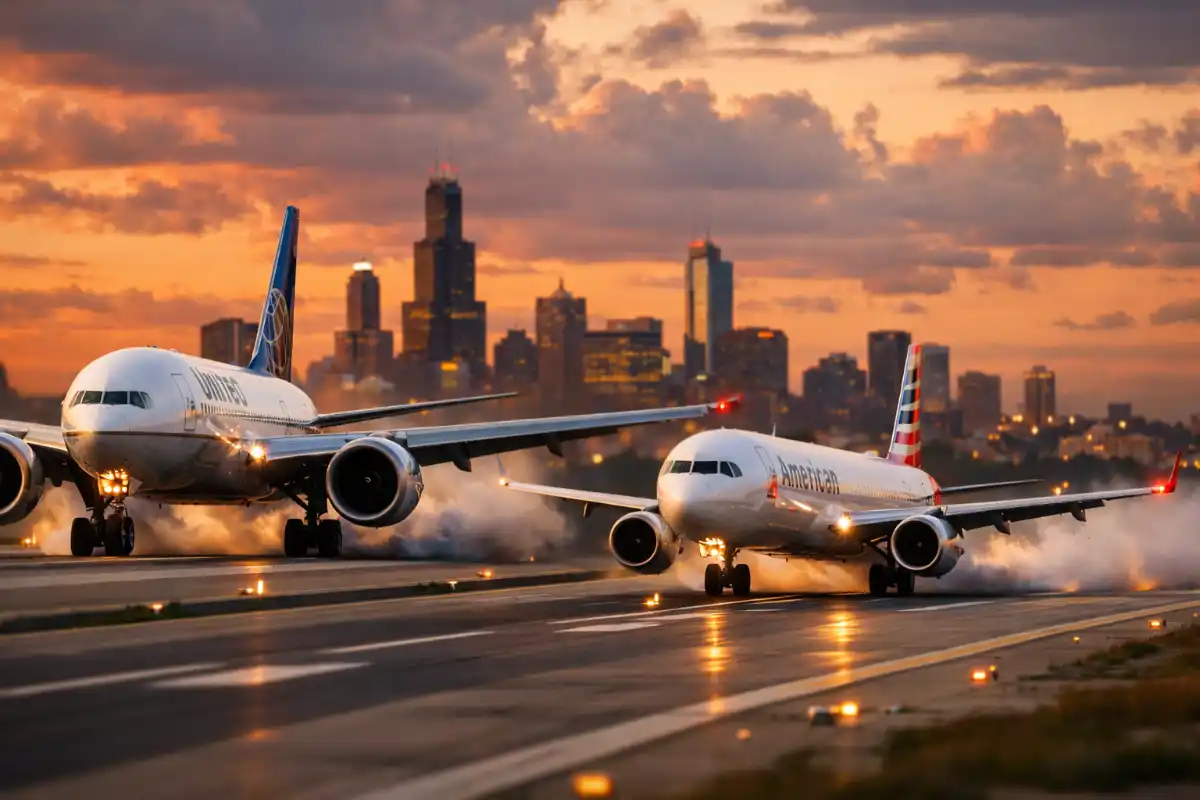
Chicago O’Hare International Airport is not merely a transportation hub; it is a proving ground. At this sprawling crossroads of global aviation, two legacy titans—American Airlines and United Airlines—are locked in a contest that blends strategy, infrastructure, and corporate ambition. Few airports in the United States can sustain two full-scale hub operations at once, and fewer still can turn that coexistence into open rivalry. O’Hare does both, and the consequences ripple far beyond Chicago.
For United, the fight is personal. Headquartered in the city it serves, the airline views O’Hare as both home turf and strategic crown jewel. For American, the airport is a vital pillar of a nationwide network, its third-largest hub and a gateway to the Midwest’s corporate economy. What is unfolding is not a marketing skirmish or a seasonal schedule tweak, but a deeply structural struggle over gates, frequencies, and the premium passengers who anchor airline profitability.
The timing makes the conflict sharper. Post-pandemic recovery has been uneven across the industry, but O’Hare has emerged as a focal point for aggressive rebuilding. Billions in airport modernization, new gate allocations, and a surge in planned flights have transformed routine scheduling decisions into high-stakes maneuvers. Every added departure is a signal. Every gate is leverage. Every delay or advantage compounds across years.
A Rivalry Forged in Scale and Geography
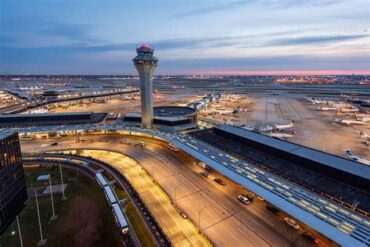
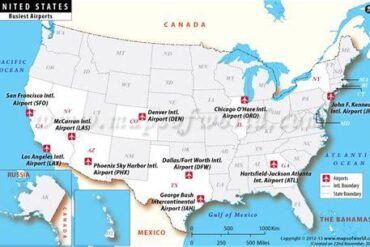
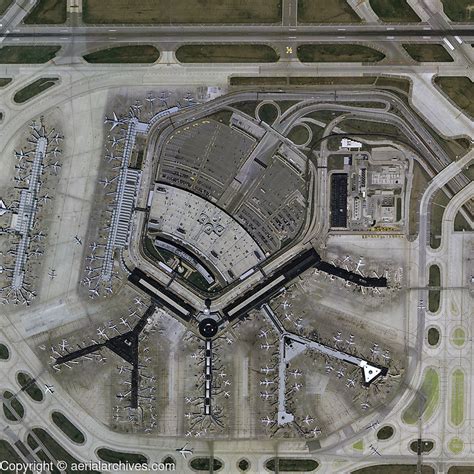
O’Hare’s geography explains why this rivalry matters. Sitting near the geographic center of the continental United States, the airport functions as a natural connector between coasts, regions, and international markets. That centrality has long made it indispensable to airline networks, but it also imposes limits. Runways, taxiways, and terminals are finite, and when two airlines pursue dominance simultaneously, friction is inevitable.
United has leaned heavily into its hometown narrative while executing a rapid post-pandemic rebuild. By 2026 planning cycles, the airline is averaging roughly 650 daily flights to nearly 200 destinations, a scale that reflects both confidence and intent. American, refusing to cede ground, has responded with its largest-ever spring schedule at O’Hare, adding about 100 peak-day flights to exceed 500 daily departures. The numbers tell a story of escalation rather than equilibrium.
This escalation is not about vanity metrics. Frequency wins contracts. Corporate travel managers value reliability and choice, and at a hub like O’Hare, that translates directly into market power. The airline that controls the most usable gates and the densest banks of departures can shape traveler behavior almost invisibly, through convenience rather than price.
Gates as the Currency of Power
In Chicago, supremacy is measured less in slogans than in square footage. Gates are the airport’s most valuable currency, dictating how many aircraft can be turned efficiently and how resilient an airline’s operation can be during disruptions. United’s recent gains—beginning operations from four additional gates, with a fifth on the way—have been a strategic windfall, enabling tighter schedules and higher utilization.
American’s counterattack has been equally concrete. After pushing back legally against gate reallocations, the airline moved decisively to purchase two Spirit Airlines gates for $30 million, a transaction approved through bankruptcy court proceedings. This was not opportunistic expansion but a calculated recovery of lost capacity, framed internally as essential breathing room for growth.
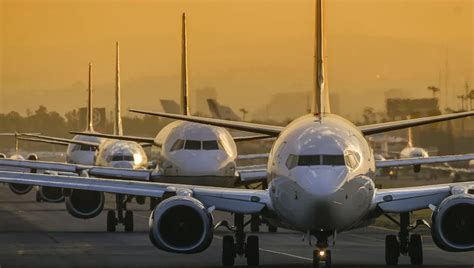
The battle over gates underscores a deeper truth: at congested mega-hubs, growth is no longer about adding destinations but about controlling access. An airline without sufficient gates cannot fully exploit demand, no matter how strong its brand or network may be. O’Hare’s layout turns this reality into a zero-sum game, intensifying every allocation decision.
The $8.5 Billion Backdrop Reshaping the Battlefield
Hovering over the rivalry is O’Hare’s $8.5 billion modernization program, one of the most ambitious airport rebuilds in North America. New satellite concourses, reconfigured terminals, and expanded airside infrastructure promise long-term relief from congestion, but they also introduce short-term disruption. Construction phases inevitably strain operations, testing airline resilience and operational discipline.
One of the most consequential projects is a new satellite extension of Concourse C, slated to add 19 gates with an expected opening around 2028. These future gates cast a long shadow over today’s turf war. Decisions made now—who grows fastest, who secures interim capacity, who maintains corporate loyalty—will influence how that new space is ultimately divided.

For both airlines, the modernization program is both opportunity and risk. Expanded capacity could dilute today’s advantages, but it could also reward the carrier best positioned to scale into it. The current fight is therefore as much about future optionality as present dominance.
Passengers, Profits, and the Quiet Strain on Infrastructure
In the near term, travelers often benefit from such rivalry. Increased competition typically produces more flight options, improved schedules, and early-stage fare pressure as airlines vie for share. Both American and United have sharpened their premium offerings at O’Hare, recognizing that business travelers—rather than bargain hunters—ultimately decide the balance of power.
Yet beneath these benefits lies strain. O’Hare already ranks among the most complex airports in the world, and layering aggressive schedules onto aging infrastructure magnifies operational risk. Delays cascade. Taxi times stretch. Weather disruptions become more punishing when margins for recovery shrink. Modernization aims to solve these problems, but until projects are complete, tension between growth and reliability remains unresolved.
Chicago’s aviation ecosystem amplifies the stakes. The region’s airports collectively serve over 100 million passengers annually and generate an estimated $67 billion in economic activity. What happens at O’Hare influences not just airline balance sheets but regional competitiveness, corporate investment decisions, and global connectivity.
A Contest That Will Define O’Hare’s Next Era
The turf war between American and United is not a temporary flare-up; it is a defining chapter in O’Hare’s evolution. Gates, schedules, and construction cranes have become instruments in a larger contest over what kind of hub Chicago will be in the next decade. Will one airline emerge with structural dominance, or will enforced coexistence persist, keeping competition fierce and margins thin?
What is clear is that O’Hare remains one of the last true battleground hubs in American aviation. As modernization reshapes the airfield and airlines recalibrate for a post-pandemic world, the decisions being made now will echo for years. In Chicago, the fight for supremacy is not about who flies the most planes today, but about who controls the future pathways through one of the world’s most important airports.