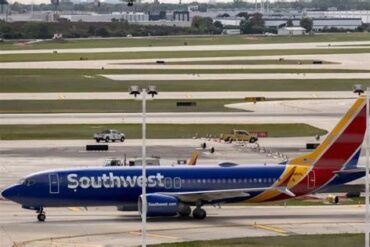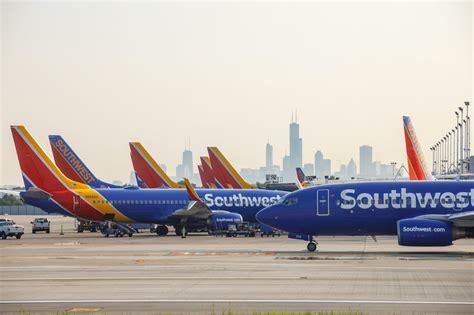
Chicago’s aviation landscape is shifting once again as Southwest Airlines prepares to end its brief experiment at Chicago O’Hare International Airport (ORD). The Dallas-based carrier confirmed it will discontinue all flights from O’Hare beginning June 4, 2026, redirecting its Chicago operations entirely to Chicago Midway International Airport (MDW).
For observers of airline strategy, the decision feels less like a surprise and more like a return to the company’s traditional playbook. Southwest built its reputation around strong “fortress hubs” at secondary airports, where lower costs and operational control allow the airline to maintain reliable schedules and competitive fares. O’Hare, by contrast, represents one of the most competitive and congested airports in the United States.
Why Southwest Airlines Is Leaving Chicago O’Hare
Southwest’s official explanation frames the move as part of an effort to refine its network and strengthen service in markets where it operates most efficiently. The airline acknowledged that operating at O’Hare has proven “challenging,” while emphasizing its ability to serve the Chicago region effectively through Midway.
In practical terms, those challenges largely come down to economics and competition. O’Hare is dominated by two legacy giants—United Airlines and American Airlines—both of which maintain massive hub operations at the airport. These carriers operate hundreds of daily flights, giving them unmatched scheduling flexibility, extensive loyalty programs, and global connectivity.
Southwest, by comparison, runs a much smaller operation at O’Hare, serving roughly a dozen destinations. Routes currently include major leisure and business markets such as Austin, Dallas Love Field, Denver, Las Vegas, and Phoenix, along with seasonal flights like Fort Myers in Florida.
Competing against entrenched network carriers at their primary hub is notoriously difficult. Airlines like United and American can bundle international connections, corporate contracts, and elite loyalty perks into their offerings. Southwest’s model, while highly successful in many markets, doesn’t revolve around these features.
A Pandemic-Era Strategy That Didn’t Last
The story of Southwest at O’Hare begins during one of the most unusual periods in modern aviation. In 2021, during the COVID-19 recovery, airlines across the industry were experimenting with new routes and airports as travel demand shifted dramatically.
Southwest seized the opportunity to test a new idea: operating from large international airports where it historically had little presence.
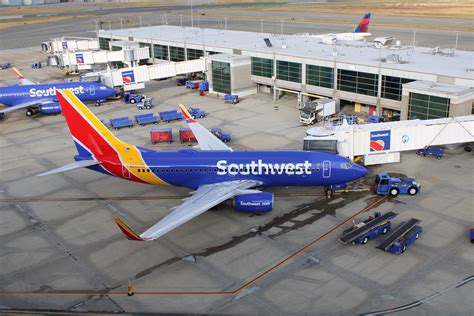
The strategy also appeared in Houston, where Southwest launched service to George Bush Intercontinental Airport (IAH) while maintaining its long-standing base at Houston Hobby Airport (HOU).
The thinking behind these moves was simple. With travel patterns changing, perhaps Southwest could tap into a new pool of customers—travelers who typically fly through major airports and might not consider smaller secondary fields.
However, the Houston experiment ended first. Southwest pulled out of Intercontinental Airport in 2024, returning its focus entirely to Hobby. Chicago now appears to be following the same pattern.
The Strategic Strength of Chicago Midway
Chicago Midway has long been one of Southwest Airlines’ most important hubs. Unlike O’Hare, where competition is fierce and operational constraints are common, Midway offers a far more favorable environment for the airline’s business model.
Midway allows Southwest to control a large portion of the airport’s traffic, creating what the industry calls a fortress hub—a location where one airline dominates operations and benefits from scale.
At such hubs, airlines gain several advantages:
- More efficient aircraft scheduling
- Lower operating costs compared with larger international airports
- Stronger brand presence among local travelers
- Better reliability due to simplified operations
For Southwest, which relies heavily on quick aircraft turnarounds and dense domestic networks, these operational efficiencies are crucial.
Midway also aligns with the airline’s historic identity. For decades, Southwest built its network around secondary airports near major metropolitan areas, including Dallas Love Field, Oakland, Burbank, and Baltimore.
Search Visibility and Booking Behavior
Another subtle factor may have influenced Southwest’s experiment with major airports: how travelers search for flights online.
Many booking tools, including Google Flights, default to searches based on specific airport codes. For example, a traveler searching flights from Miami (MIA) to Chicago O’Hare (ORD) might never see results for Chicago Midway (MDW).
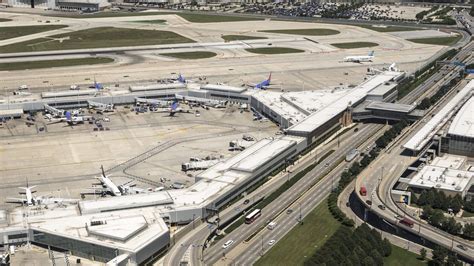
This search behavior could theoretically reduce Southwest’s visibility when it operates primarily from secondary airports. By adding flights to major hubs like O’Hare, the airline may have been testing whether presence in these search results would boost bookings.
The results apparently did not justify the operational complexity.
The Reality of Competing at Mega-Hubs
Airline networks are deeply shaped by geography and competition. Large airports like O’Hare function as global aviation ecosystems, with alliances, connecting passengers, and corporate contracts all intertwined.
Breaking into that environment requires either enormous scale or ultra-low prices. Southwest fits neither category in this specific context. The airline offers competitive fares and a customer-friendly brand, but it does not operate the ultra-low-cost model used by carriers that aggressively undercut competitors.
Without a schedule comparable to United or American, Southwest’s ability to attract business travelers at O’Hare was inherently limited.
A Return to Core Strategy
Southwest’s withdrawal from O’Hare after roughly five years of service underscores a broader lesson in airline economics: network focus often beats expansion into hostile territory.
By concentrating resources at Midway, Southwest can strengthen its existing routes, improve aircraft utilization, and maintain the operational reliability that has long been a hallmark of the airline’s brand.
The decision also reflects a wider industry truth. Airlines consistently perform best when they double down on airports where they already hold a strong competitive advantage.
In other words, aviation strategy sometimes resembles chess more than expansion. The winning move is not always to occupy more squares—it is to control the ones that matter most.