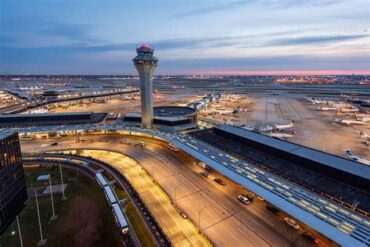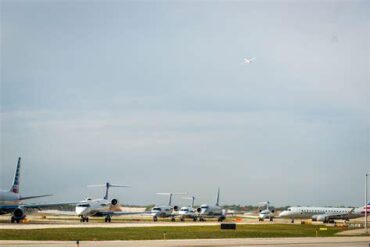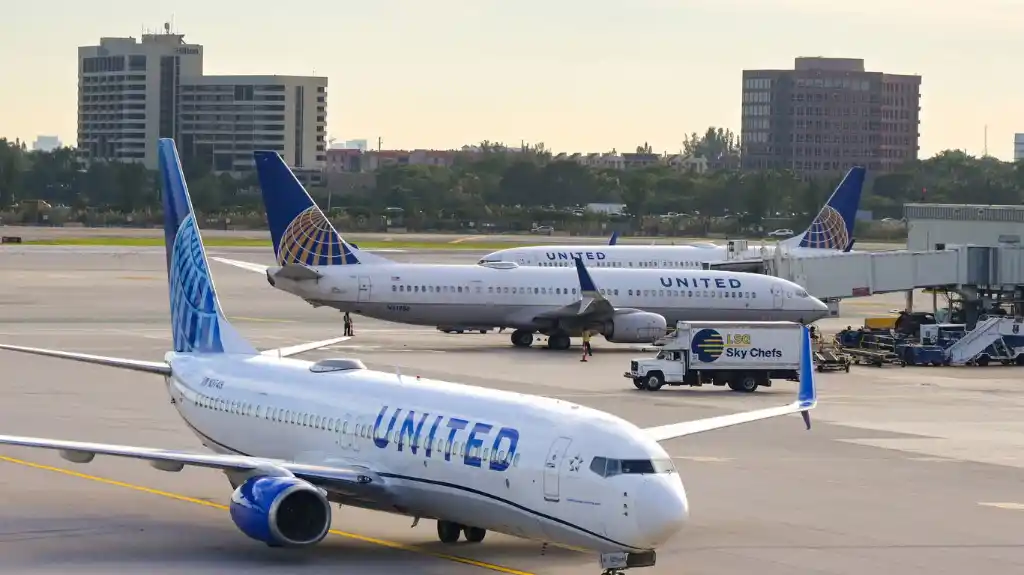
United Airlines is executing one of the most aggressive hub expansions seen in modern U.S. aviation, dramatically increasing its footprint at Chicago O’Hare International Airport in 2026. A detailed review of the carrier’s latest schedule submission to Cirium Diio shows 20,655 additional departures added between March and November, representing a 12% surge in capacity compared with prior plans. The scale of the expansion cements O’Hare not only as United’s largest hub, but as the most intensively utilized airport in the airline’s global network.
This growth is not incremental tinkering. It is a structural bet on Chicago as the airline’s central domestic engine, driven by newly secured gate access, network optimization, and a sharpening competitive posture against American Airlines, which also treats O’Hare as a crown jewel. United’s strategy is clear: saturate the market with frequency, dominate connectivity, and make O’Hare unavoidable for travelers across the Midwest and beyond.
O’Hare Becomes United’s Most Intensively Operated Hub Ever
At peak, United now plans to operate up to 750 daily departures from Chicago O’Hare, equivalent to 1,500 aircraft movements per day. That figure exceeds every previous record in the airport’s long operational history. While this maximum level will occur on only 25 high-demand dates between early June and mid-August, including periods tied to summer travel peaks and World Cup-related demand, the overall trend points to a fundamentally larger hub.
Historically, United’s prior high-water mark at O’Hare was 700 daily departures on December 1, 2019. Before the latest revision, the airline’s 2026 schedule topped out at 658 daily flights. The jump to 750 represents a decisive escalation, not a seasonal anomaly.
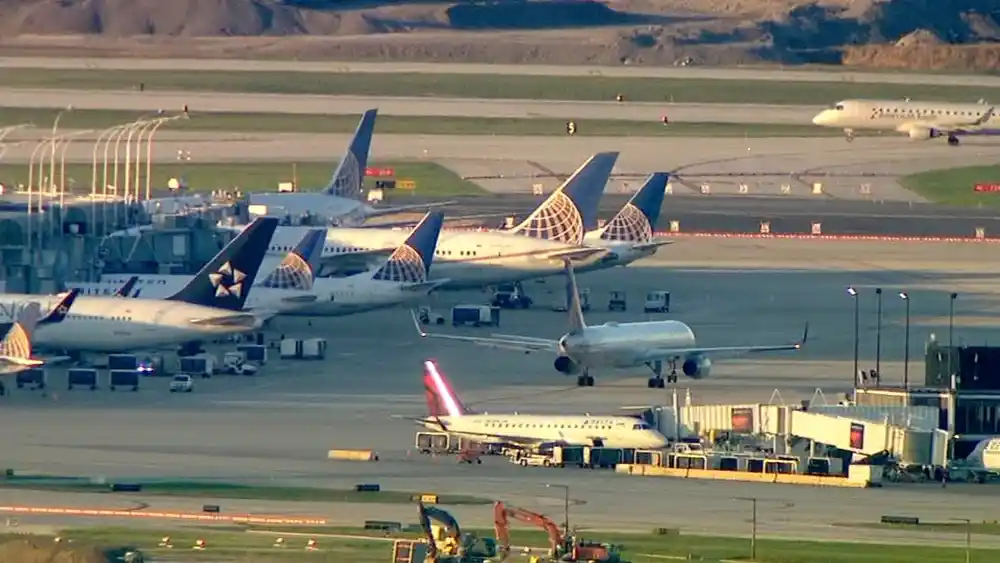
Dozens of Routes See Double-Digit Frequency Growth
The expansion is broadly distributed across the network. Compared with schedules published just one week earlier, 80 routes from O’Hare now feature additional flights. More notably, 72 domestic routes have grown by at least 10%, a threshold that underscores meaningful capacity additions rather than marginal adjustments.
In several leisure and secondary markets, growth is far more dramatic. Destinations such as Myrtle Beach, Norfolk, Panama City, Florida, and Pensacola now show near-doubling of departures during certain months. These increases reflect United’s willingness to deploy frequency aggressively where demand elasticity and competitive positioning align.
Even routes touching rival hubs are expanding. United has raised its planned service to Philadelphia to seven daily departures, up from five, signaling a readiness to compete head-to-head in high-volume, business-heavy corridors where schedule density often outweighs aircraft size.
Short-Haul Routes Quietly Drive the Numbers
One of the clearest examples of how regional flying underpins this expansion is the Chicago O’Hare–Appleton, Wisconsin route. Covering just 139 nautical miles, the sector is operationally unglamorous but strategically potent. United has increased capacity on the route by 38%, lifting the maximum from seven to nine daily flights, a level that will persist through winter.
Three aircraft types will rotate through the schedule: the CRJ200, CRJ550, and occasional Embraer E175, operated by United’s regional partners. The result is a frequency-rich shuttle that now ranks as United’s 17th most-served route from O’Hare, climbing ten positions in a single week. This pattern illustrates how regional routes, when scaled across dozens of markets, materially reshape a hub’s profile.
Regional Jets Power the Expansion—With Tradeoffs
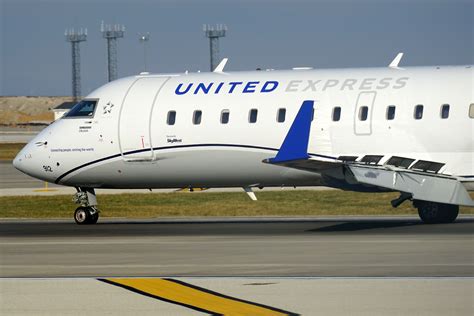
The data reveals that regional jets are the backbone of United’s Chicago growth. Between March and November 2026, RJ departures rise from 80,894 to 98,211, an increase of more than 20%. The most striking contributor is the 50-seat CRJ200, which alone posts a 56% jump in activity.
As a result, regional aircraft will operate 51% of all United departures from O’Hare, up four percentage points year over year. This shift enables high-frequency schedules and tighter bank connectivity, but it also reduces average aircraft size. United’s seats per departure fall from 119 to 114, a clear signal that frequency, not capacity per flight, is the priority.
A Strategic Message to the Market
United’s 2026 Chicago expansion is a calculated assertion of dominance. By flooding O’Hare with flights, the airline strengthens its appeal to both time-sensitive business travelers and connection-heavy itineraries. The combination of record-setting departures, route-level frequency growth, and regional jet deployment transforms O’Hare into a precision-tuned connectivity machine.
For competitors, the message is unmistakable. United is not defending its Chicago hub—it is expanding it at scale, reshaping traffic flows across the Midwest, and redefining what maximum utilization looks like at one of the world’s busiest airports.