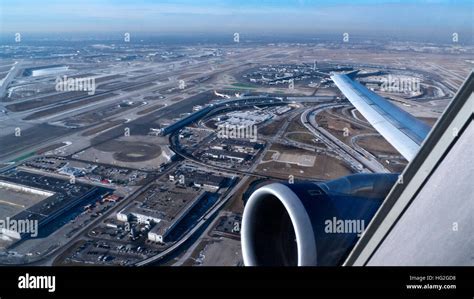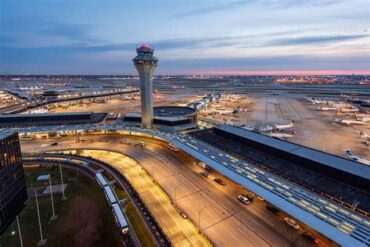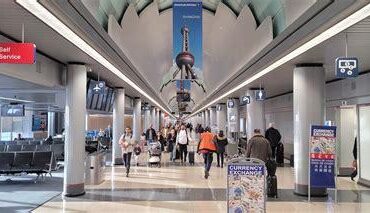
Chicago O’Hare International Airport (ORD) stands as one of the world’s busiest and most strategic aviation hubs. It is a fortress for both United Airlines and American Airlines, yet a definitive winner in dominance has remained elusive—until now. A new phase of reshaping control and redefining growth is underway at ORD. With gate reallocations, shifting capacity strategies, and a changing competitive dynamic, the airport is witnessing a tectonic shift in leadership.
Gate Reallocations and Structural Shifts at ORD
Since 2018, the Chicago Department of Aviation (CDA) restructured its gate allocation policy to create a more balanced and competitive operational environment. Gates were reclassified into two categories: Preferential Use gates, granted to long-term signatory airlines, and Common Use gates, managed directly by the city for use by all carriers.
This reallocation framework became active in October 2021, with annual reassessments based on performance metrics including:
- Daily average scheduled seats and departures per unit of Linear Frontage
- Existing gate utilization
- Projected demand and new entrant requirements
- Terminal modification impacts
- Passenger experience and operational efficiency
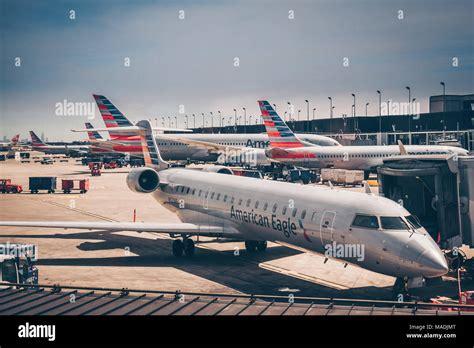
By January 2023, following the Terminal 5 expansion, the CDA’s updated gate report showed United Airlines controlling 39.2% of Linear Frontage, compared to 32.2% for American Airlines. The remaining gate access included 15.7% for international common use, while minor players like Delta, Spirit, and JetBlue carved out smaller footprints.
United Airlines’ Strategic Gate Gains
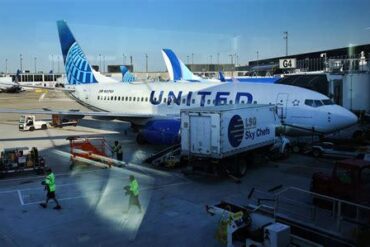
In a landmark move announced on February 20, United Airlines Cargo secured six additional mainline gates by invoking the AULA’s “use it or lose it” clause. These gates will be fully integrated into United’s operations by October 1, boosting their gate total to 94.
United had been operating over 52% of ORD departures while holding just 48% of the gates in 2023. This disparity triggered strategic action. As Omar Idris, United’s VP at ORD, noted, these additional gates are vital for enabling United to keep pace with mega-hubs like Atlanta (ATL) and Dallas/Fort Worth (DFW) in terms of destinations, seat capacity, and aircraft size.
American Airlines’ Slower but Profitable Rebuild
American Airlines has not remained passive. Chief Strategy Officer Steve Johnson emphasized that while United is expanding, it’s not at American’s expense. In fact, American has posted market share gains and continues to capitalize on a robust AAdvantage loyalty program and strong co-branded card performance.
American acknowledges its “second place” role in Chicago but views it as a profitable position. According to Johnson, the post-pandemic market rebound resembles being in the “fourth or fifth inning.” Chicago’s slower return has not deterred the airline; instead, it sees value in staying lean and focused.
Nevertheless, American has not remained silent. It appealed the CDA’s reallocation decisions, even taking legal action. The carrier asserts that its current gate footprint can support growth through next summer, and it anticipates new capacity benefits in 2026.
Capacity Data: United Soars While American Shrinks
According to Cirium Diio Mi data, the evolution of flight volumes and seat availability offers critical insights into each carrier’s strategy:
- American Airlines (AA): From 2019 to 2023, annual flights dropped 33.9%, and 2024 schedules show a 25.5% decline. Available seat kilometers (ASKs) fell 18.3% from 2019 levels.
- United Airlines (UA): Flights declined 23.9% between 2019 and 2023, and another 18.6% by 2024. However, UA’s departing seats are only 7.7% below pre-pandemic levels, and ASKs actually rose 0.1% by 2024.
Looking forward into 2025:
- United projects departing seat growth of 8.2% (1.8 million additional seats) and ASK growth of 6.4%.
- American forecasts a 7.5% decline in seats (1.3 million fewer), with ASKs down by 5%.
The divergence underscores United’s offensive expansion, contrasted with American’s conservative retrenchment amid economic uncertainties and federal spending constraints.
Shifting Passenger Share and Origin Demand
Perhaps the most telling indicator of market momentum lies in passenger origination. At United’s Q1 2025 earnings call, Chief Commercial Officer Andrew Nocella highlighted a 22-point lead in local origin passenger share over American—a surge from a 6-point lead in 2019, and a complete reversal from a negative gap in 2015.
This seismic shift is more than symbolic. It represents United’s increased brand pull, route diversity, and scheduling power in a city where proximity and convenience drive consumer choices.
Network Retraction and Route Recovery Post-COVID
Both carriers faced route attrition during the pandemic, but the recovery paths have diverged:
- American Airlines has failed to resume 21 pre-2019 routes, including long-haul destinations such as Narita (NRT) and Venice (VCE).
- United Airlines has not reinstated 33 pre-2019 routes, including Hong Kong (HKG) and Shanghai Pudong (PVG), constrained by Russian airspace closures.
As of 2025, only three previously overlapping routes—Erie (ERI), Durango (DRO), and Narita (NRT)—remain unshared. The Tokyo market is now exclusively served by ANA and Japan Airlines.
However, the forward schedules reveal optimism:
- United will introduce 26 new routes from ORD.
- American is adding 20 new routes.
Terminal and Gate Expansions: Future Infrastructure Outlook
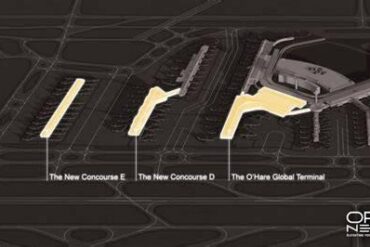
ORD’s 200 active gates as of July 2023 are set to grow further, with three new gates (L25–L27) coming online at Concourse L in 2024. The city’s dual-gate model remains under annual review by the Terminal Facilities Advisory Committee (TFAC), where strategic proposals shape future assignments.
The availability of common-use gates, while smaller in footprint, gives new entrants and regional players opportunities to penetrate the market, ensuring ORD remains dynamic and inclusive. Yet, the lion’s share of gate growth continues to orbit around United’s aggressive posture.
ORD’s Future: Competitive Asymmetry and Strategic Coexistence
United and American will continue to coexist at ORD, but not as equals. United Airlines’ clear capacity leadership, dominant gate access, and deeper local origin passenger penetration signal a paradigm shift in airport control. With new gates and routes fueling its climb, United’s strategy echoes a long-term bet on Chicago’s centrality in domestic and international travel.
In contrast, American’s deliberate moderation, legal resistance, and strategic focus on loyalty programs suggest a business model less about volume and more about targeted profitability.
Together, these dynamics ensure that ORD remains a battleground—one where infrastructure, policy, passenger trends, and airline strategies continually redefine the balance of power.