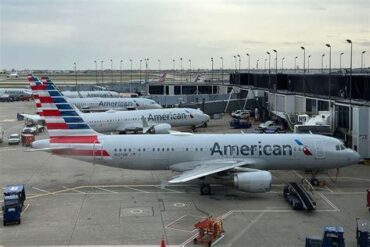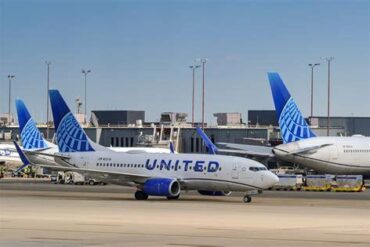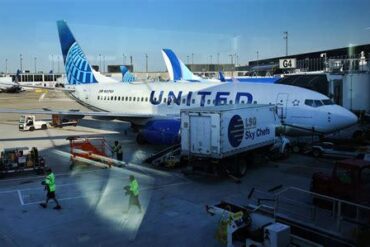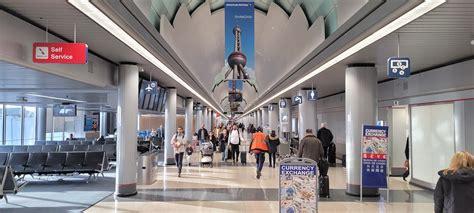
American Airlines has chosen action over rhetoric in its escalating standoff with United Airlines at Chicago O’Hare International Airport, turning a pointed executive warning into a high-stakes operational counterpunch. Less than a day after United CEO Scott Kirby publicly vowed to block American from gaining a single additional gate at O’Hare, American unveiled a slate of new routes and capacity increases that transform a war of words into a measurable contest of aircraft, frequencies, and market share.
Chicago has always been more than another dot on the route map for the nation’s largest airlines. O’Hare is a profit engine, a connector of continents, and a political chessboard where gate access determines long-term dominance. By responding with immediate expansion rather than corporate statements, American is signaling that it intends to fight for Chicago not in conference rooms or court filings, but on the departure boards.
The timing is deliberate. Gate allocations at O’Hare are recalculated annually based on flight volume, and both airlines are racing the clock toward the next major reallocation cycle. Every added departure is a vote cast for future access, and American’s move makes clear that it will not concede ground quietly.
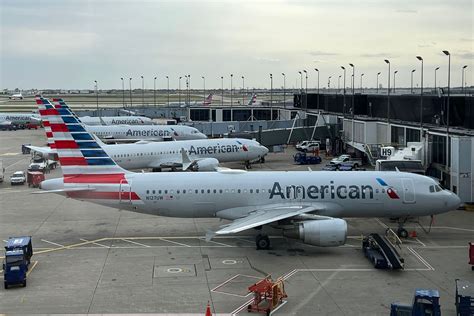
Chicago O’Hare: A Battleground Disguised as a Hub
United currently controls roughly half of O’Hare’s weekly capacity, with American holding just over thirty percent. That imbalance translates into revenue power, and United reportedly pulled in around half a billion dollars from its Chicago operation last year. For American, closing that gap is less about bragging rights and more about restoring leverage at one of the most lucrative airports in North America.
Gate scarcity fuels the conflict. O’Hare’s gate allocation system rewards volume, and last year’s reshuffle favored United with five additional gates while trimming four from American’s portfolio. Although American failed to overturn the decision in court, it mitigated the damage by acquiring two gates from Spirit Airlines, keeping its Chicago ambitions alive. Since then, both carriers have engaged in a quiet numbers game, adding flights to strengthen their case ahead of future allocations.
Kirby Draws the Line, American Crosses It
Scott Kirby’s declaration that United would add “as many flights as are required” to protect its gate count was meant to deter aggression. Instead, it became a catalyst. American’s response, rolled out within twenty-four hours, was designed to demonstrate resolve and operational muscle rather than rhetorical restraint.
By announcing new routes and emphasizing a year-over-year increase of 168 average daily flights at O’Hare, American reframed the narrative. The airline is not merely defending its position; it is actively contesting United’s assumption of inevitability in Chicago. The message is clear: any attempt to box American out will be met with capacity, not capitulation.
New Routes That Target United’s Strongholds
The first phase of American’s expansion introduces twice-daily service from Chicago to Allentown, Pennsylvania, and Columbia, South Carolina. These secondary markets were previously served exclusively by United, giving American a strategic opening to siphon demand while inflating its own flight count. Operated with Embraer 170 aircraft, the routes are calibrated for frequency rather than brute capacity, a smart play in a gate-driven competition.
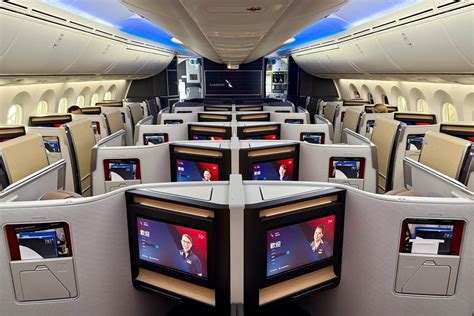
Later in the year, American will add seasonal daily service from Chicago to Kahului, Hawaii, using a Boeing 787-8. This move challenges United’s monopoly on the route and adds a premium long-haul element to American’s Chicago portfolio, complete with lie-flat business class and premium economy seating aimed squarely at high-yield leisure travelers.
Expanding the Fight Beyond Chicago
American’s strategy does not stop at O’Hare. New transcontinental flights from Los Angeles to Cleveland and Washington Dulles extend the rivalry into another shared hub environment. These routes, previously flown only by United, signal that American is willing to contest exclusivity wherever the two carriers intersect.
Los Angeles may not face the same gate pressures as Chicago, but the symbolism matters. By targeting United’s Midwest focus city and a major East Coast hub from LAX, American underscores that competitive responses will be network-wide, not geographically confined.
Fleet Scale as a Competitive Weapon
American’s confidence is rooted in scale. The airline operates the world’s largest narrowbody fleet, giving it unmatched flexibility to add frequencies without destabilizing its broader network. When mainline and regional aircraft are combined, American enjoys an advantage of more than one hundred aircraft over United, a margin that becomes decisive in a volume-based gate system.
That fleet depth allows American to pursue routes like Allentown and Columbia aggressively, padding its schedule with high-frequency services that boost flight counts while serving underserved markets. It is a methodical approach that turns operational capacity into political capital at the airport authority level.
A Rivalry with Deep Roots and Real Consequences
The Chicago feud predates the current executives, stretching back decades, but it intensified after Kirby’s move from American to United in 2016. United’s faster post-pandemic recovery at O’Hare gave it the upper hand, while American focused growth on sunbelt hubs. Now, American is recalibrating, convinced that Chicago can sustain two powerful network carriers.
For travelers, the implications are overwhelmingly positive. Competition has already pushed average fares at O’Hare down nearly four percent, a stark contrast to United-dominated hubs like Washington Dulles and San Francisco, where prices remain among the nation’s highest. As the gate war escalates, more routes, more seats, and more pricing pressure are likely to follow.
Chicago’s skies are about to get busier, louder, and far more interesting. In this contest, aircraft are arguments, gates are prizes, and the city itself is the arena.