Strategic Realignment at Chicago O’Hare: Spirit Airlines Sells Two Gates to American for $30 Million
In a pivotal development reshaping airline dynamics at Chicago O’Hare International Airport (ORD), Spirit Airlines has finalized a $30 million deal to transfer two of its four preferred-use gates to American Airlines, reinforcing American’s aggressive expansion strategy at one of the busiest airports in the United States. This asset sale, officially approved by the U.S. Bankruptcy Court for the Southern District of New York, marks Spirit’s first high-profile divestiture since its second bankruptcy filing.
The transfer of gates G8 and G10, both located in Terminal 3, underscores Spirit’s scaled-back operations in Chicago and broader cost-cutting initiatives. In contrast, the acquisition enables American Airlines to bolster its standing in a long-standing turf war with United Airlines, which currently maintains the dominant market share at ORD.
Spirit’s Restructuring: Selling to Survive
Once a growing presence at O’Hare with over 30 daily departures during peak travel seasons, Spirit Airlines has dramatically reduced its footprint. Now operating only half of its former schedule, Spirit is focusing its efforts on stabilizing its business by divesting non-essential assets.
The $30 million gate sale—valued at $15 million per gate—is not simply a liquidity play. Rather, it is a calculated move to generate cash that will be funneled directly into prepaying debtor-in-possession loans, demonstrating Spirit’s commitment to satisfying creditors and shoring up financial credibility during court-supervised restructuring. Notably, the proceeds are not earmarked for immediate operational needs, reflecting the airline’s urgent emphasis on long-term solvency.
Spirit will continue operations at gates G12 and G14, retaining a modest but critical foothold at O’Hare. However, with over a dozen airports already exited and approximately 80 aircraft leases rejected, the sale is emblematic of a carrier in retreat from its pre-bankruptcy ambitions.
American Airlines Strengthens ORD Hub Strategy
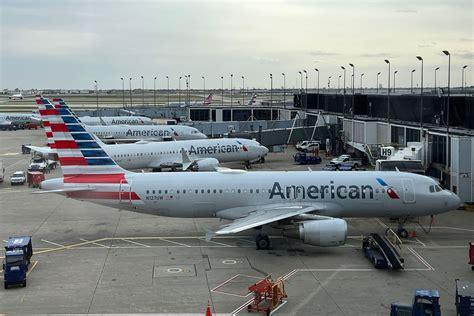
For American Airlines, the acquisition of gates G8 and G10 is a calculated offensive to regain ground at O’Hare, an airport it considers strategic despite recent setbacks. Earlier this year, American was stripped of four gates due to underutilization, with a court ruling against its legal challenge. Despite the loss, American executed its largest-ever ORD schedule, including launches to high-profile destinations such as Honolulu, Madrid, and Naples, alongside a 40% surge in premium seating capacity.
Now, with two new gates added in a familiar terminal, American is poised to expand efficiently. The proximity of gate G8 to one of its three Admirals Clubs enhances customer convenience, a crucial differentiator in a market where customer experience and gate logistics can significantly sway brand loyalty.
Data from aviation analytics firm Cirium reveals that for December, American has over 2.7 million seats scheduled at ORD, compared to United’s 3.8 million, reinforcing the intensity of the competition. The additional gates will allow American to scale its schedules, possibly recovering from earlier gate losses and fueling its ambition to make O’Hare its third-largest operational hub.
Ongoing Bankruptcy and Future Uncertainty for Spirit
Spirit Airlines’ second chapter of bankruptcy is more than a restructuring—it is a potential transformation. The airline has confirmed it is “engaged with a number of interested counterparties” regarding a possible merger or outright sale, signaling that the asset selloff may be the precursor to a broader strategic pivot or exit from the ultra-low-cost carrier model.
Chicago O’Hare was once among Spirit’s top ten airports in terms of volume. The decision to reduce operations at such a major hub hints at the extent of the crisis. Spirit’s willingness to offload critical infrastructure like O’Hare gates suggests a realignment of focus towards leaner, more sustainable operations, perhaps at secondary airports with lower competition and costs.
Adding to the speculation around Spirit’s future, American Airlines recently submitted a legal request to be listed as a ‘party of interest’ in Spirit’s bankruptcy proceedings. While an American spokesperson attributed the move to an “airport-specific agreement”, timing and context have sparked speculation about a deeper interest. Whether this involvement remains transactional or evolves into merger talks remains uncertain, but it is clear that American is carefully tracking Spirit’s every move.
Implications for the Competitive Landscape at ORD
United Airlines continues to dominate Chicago O’Hare with roughly 40% of the market share, but American’s investment could tilt the balance. While two gates might appear incremental, in the high-stakes, high-traffic environment of ORD, additional gate access translates directly into new routes, expanded schedules, and strategic leverage.
For American, the purchase not only increases gate count but also reinforces its network density and enhances its bargaining power with regulators and airport authorities. The consolidation of its operations around Terminal 3 simplifies logistics and helps optimize turnaround times and passenger transfers.
From a passenger’s perspective, American’s move could enhance connectivity, reduce delays due to gate congestion, and elevate the overall travel experience out of Chicago. For Spirit customers, the opposite may prove true—reduced presence might mean fewer options, less schedule flexibility, and potential fare increases if low-cost competition diminishes.
Looking Ahead
As the curtain lifts on this latest chapter in Chicago O’Hare’s airline drama, Spirit’s gate transfer to American is a signal of deeper transformations reverberating through the aviation industry. Airlines are no longer merely reacting to market conditions—they are strategically reshaping their operations, infrastructure, and alliances to secure long-term viability in an unforgiving post-pandemic economy.
For American Airlines, this deal is both a symbolic and tactical win. For Spirit, it is a painful but possibly necessary sacrifice. As the bankruptcy proceedings unfold and market dynamics shift, one thing is certain: Chicago O’Hare will remain a battleground, and every gate is a piece of high-stakes real estate in the fight for dominance.