Etihad Airways is preparing a significant shift in its North American strategy, and the focal point is Chicago O’Hare International Airport (ORD). Beginning June 15, the Abu Dhabi–based carrier will introduce a second daily nonstop flight between Abu Dhabi (AUH) and Chicago, transforming the Midwestern hub into Etihad’s largest gateway in the United States. The expansion signals a strategic recalibration of the airline’s U.S. network and reflects the growing importance of Chicago as a connecting point for international and domestic traffic.
For years, New York’s John F. Kennedy International Airport (JFK) held the crown as Etihad’s busiest American market. However, the addition of a second Chicago rotation will push ORD ahead in total capacity. While JFK currently sees up to 11 weekly nonstop flights, Chicago will soon operate two daily services, giving it the highest frequency and seat availability among Etihad’s U.S. destinations.
The move underscores a broader industry truth: airline networks evolve around connectivity, market demand, and partnership opportunities. Chicago offers all three in abundance, making it an increasingly valuable node in Etihad’s global route map.
New Double-Daily Schedule Between Abu Dhabi And Chicago
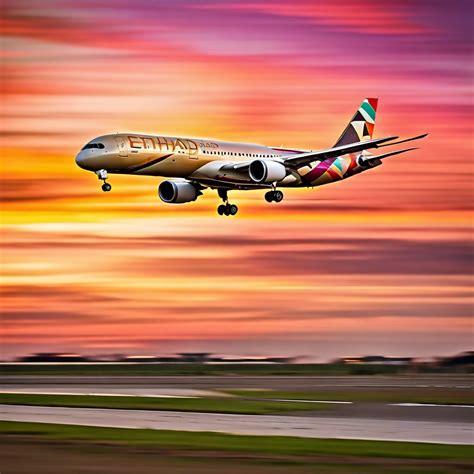
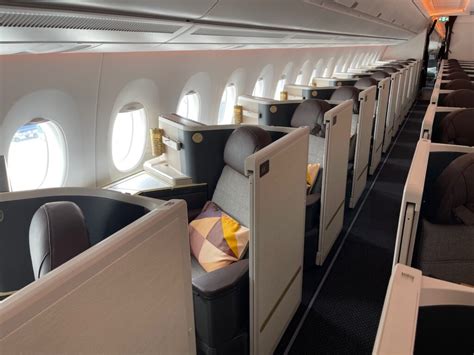
The expanded schedule introduces a carefully timed second rotation that complements the airline’s existing service. Both flights will be operated using the Airbus A350-1000, one of the most technologically advanced widebody aircraft currently flying long-haul routes.
The aircraft deployed on the route features a two-class configuration with 371 seats, including 44 business class seats and 327 economy class seats. Designed for long-haul comfort and efficiency, the A350-1000 brings lower fuel burn, quieter cabins, and improved passenger amenities—attributes that make it particularly well suited for ultra-long routes between the Middle East and North America.
Key scheduling highlights include:
- EY9 departing Abu Dhabi at 2:55 a.m., arriving Chicago at 8:35 a.m.
- EY11 departing Abu Dhabi at 10:00 a.m., arriving Chicago at 3:40 p.m.
- EY10 departing Chicago at 2:00 p.m., arriving Abu Dhabi the next day at 12:30 p.m.
- EY12 departing Chicago at 9:10 p.m., arriving Abu Dhabi the following evening at 7:40 p.m.
Flight times remain formidable. The Abu Dhabi–Chicago sector averages about 15 hours and 40 minutes, while the eastbound return benefits from tailwinds, cutting travel time to roughly 14 hours gate-to-gate.
Why Chicago Is Becoming Etihad’s Strategic U.S. Hub
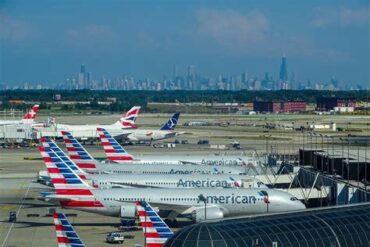
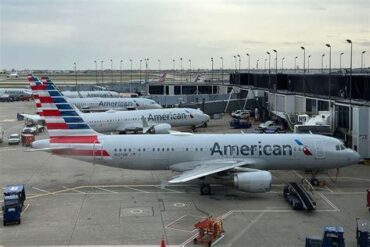
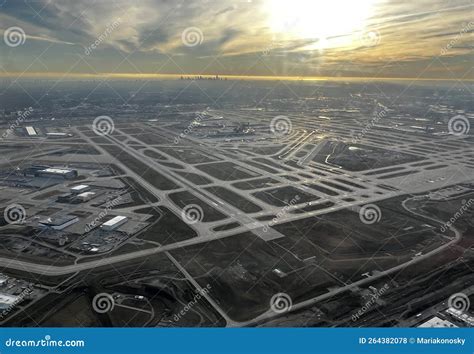
Chicago’s elevation within Etihad’s network is not simply about local demand. The city serves as one of the most powerful aviation crossroads in North America, offering vast connectivity through American Airlines, Etihad’s close partner.
American Airlines maintains a major hub at O’Hare, providing hundreds of onward connections throughout the United States, Canada, Latin America, and the Caribbean. For an international airline like Etihad, such partnerships dramatically extend network reach without the cost of launching additional long-haul routes.
This connectivity factor likely played a major role in Etihad’s decision to double capacity to Chicago instead of opening a new West Coast destination. A new city requires complex negotiations, marketing investment, and operational ramp-up. Expanding an already successful route—especially one linked to a powerful partner hub—often delivers faster returns.
Chicago also offers strong corporate travel demand, a large Middle Eastern diaspora, and significant cargo opportunities. Those ingredients make the route economically resilient even during fluctuating travel cycles.
Etihad’s Growing North American Network
Chicago’s upgrade comes within the context of Etihad’s broader footprint across the United States. The airline currently serves six American gateways from its hub at Zayed International Airport in Abu Dhabi:
- Atlanta (ATL)
- Boston (BOS)
- Charlotte (CLT)
- Chicago O’Hare (ORD)
- New York JFK (JFK)
- Washington Dulles (IAD)
Among these cities, Chicago will soon stand out as the only destination with double-daily service, joining JFK as the only U.S. airports with multiple daily flights operated by the airline.
While Etihad is often described as the smallest member of the Middle East’s “Big Three” carriers, alongside Emirates and Qatar Airways, it continues to refine its network through strategic partnerships and targeted capacity growth rather than pure scale.
The Airline Behind The Expansion
Founded in July 2003, Etihad Airways rapidly developed into a global long-haul carrier headquartered in the United Arab Emirates’ capital. Operations began just months after its founding, on November 5, 2003, and the airline has since expanded to connect 120 destinations worldwide.
Unlike many international airlines, Etihad operates outside the traditional global alliances such as oneworld, Star Alliance, or SkyTeam. Instead, it relies on a web of bilateral partnerships to extend its reach. Over the years the airline has also invested in several foreign carriers—including Virgin Australia, Air Serbia, Alitalia, and Air Seychelles—as part of a strategy once known as the “equity alliance.”
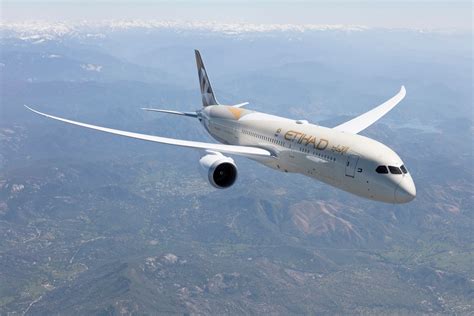
Today, Etihad’s fleet numbers around 128 aircraft, ranging from narrowbody Airbus A320 family jets to long-range widebodies such as the Boeing 787 Dreamliner, Airbus A350-1000, Boeing 777-300ER, and the iconic Airbus A380. Future deliveries include the Airbus A330-900 and the next-generation Boeing 777-9, signaling continued investment in modern long-haul capacity.
The decision to deepen its Chicago presence illustrates a calculated evolution of Etihad’s network strategy. By concentrating flights in key hubs with strong partner connectivity, the airline can maximize aircraft utilization while expanding passenger options across North America.
Chicago’s rise to the top of Etihad’s U.S. gateway hierarchy therefore represents more than a schedule tweak. It reveals how global aviation networks quietly reshape themselves—one additional flight at a time—until an entire map looks different.