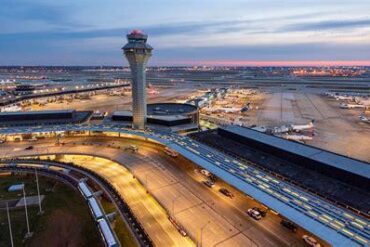
Chicago O’Hare International Airport sits at the geometric and economic crossroads of the United States, a place where geography turns into strategy. Airlines do not simply pass through O’Hare; they anchor themselves to it. With runways fanning out like spokes and terminals engineered for scale, ORD has quietly become one of the most competitive aviation markets in the world. During the first half of 2026, its scheduled departures even surpass Atlanta, reinforcing its status as a true global hub rather than a regional giant.
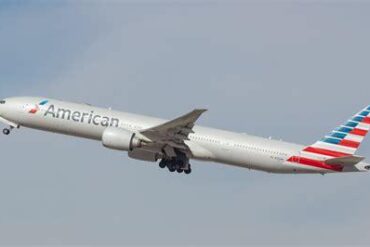
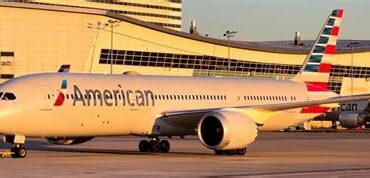
The airport’s domestic battlefield is dominated by United Airlines and American Airlines, whose sheer volume of flights defines the daily rhythm of O’Hare. Yet beneath that domestic intensity lies a fascinating international layer, where foreign airlines carve out profitable niches, compete for premium traffic, and feed global networks. These carriers may not match the raw numbers of US majors, but their strategic frequency and aircraft choices reveal how important Chicago has become to global aviation.
What follows is a close examination of the foreign airlines with the strongest presence at Chicago O’Hare, measured by scheduled departures, fleet deployment, and route focus. The story is not about quantity alone; it is about how international carriers extract maximum value from limited slots in one of the world’s most complex airports.
Air Canada’s Commanding Presence at O’Hare
Air Canada stands clearly above all other non-US airlines at Chicago O’Hare. In February 2026 alone, the Canadian flag carrier schedules 240 one-way departures, a figure that reflects both geographic proximity and deep commercial ties between the Midwest and Canada. These flights concentrate on three pillars: Montréal, Toronto Pearson, and Vancouver, each serving a different traffic profile.
Toronto Pearson dominates in frequency, peaking at five daily flights, while Montréal adds up to three daily departures. Vancouver, though important, maintains a single daily service, reflecting longer stage length and more targeted demand. At peak times, Air Canada reaches nine daily departures from O’Hare, a level unmatched by any other foreign airline.
Aircraft selection tells an equally compelling story. The Embraer E175 leads the fleet mix, ideal for high-frequency business routes, followed by the Airbus A220 and CRJ900. Larger Airbus A320 family aircraft round out the schedule, balancing efficiency with capacity. This diverse fleet allows Air Canada to fine-tune capacity without sacrificing schedule density, a decisive advantage in a slot-constrained environment.
Later in the year, Air Canada expands further with service from Toronto’s Billy Bishop Airport, strengthening downtown-to-downtown connectivity and reinforcing Chicago’s role as a financial and commercial bridge between the US and Canada.
Volaris and the Strength of the Mexico–Chicago Corridor
South of the border, Volaris emerges as the second-largest foreign airline at O’Hare and the only non-US carrier besides Air Canada to exceed 100 monthly departures. In February 2026, the Mexican low-cost carrier schedules 124 departures, peaking at five flights per day. This presence underscores the depth of Chicago’s ties to Mexico, driven by tourism, family travel, and business demand.
The Airbus A320 dominates Volaris’ O’Hare operations, closely followed by the larger A321 and their neo variants. These aircraft provide the range and seat density required to keep fares competitive while maintaining healthy load factors. Mexico City stands out as the primary destination, with up to two daily flights and a monthly total of 44 departures.
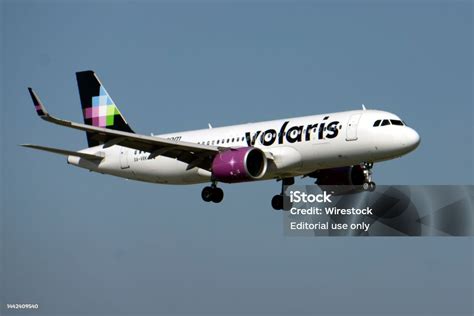
Guadalajara follows closely, while Morelia, León, and Querétaro add regional depth. This route structure shows how Volaris uses O’Hare not as a prestige gateway but as a high-volume anchor city within its US network, optimized for consistent demand rather than seasonal spikes.
Aeromexico and Viva Aerobus: Complementary Mexican Strategies
Mexico’s presence at O’Hare extends well beyond Volaris. Aeromexico ranks third among foreign airlines, scheduling 76 departures in February 2026. Its focus is narrower but more premium-oriented, with most flights serving Mexico City and a smaller number connecting Guadalajara. These routes emphasize hub-to-hub connectivity, feeding Aeromexico’s long-haul network and alliance partnerships.
Viva Aerobus follows closely with 72 departures, but its strategy diverges sharply. By balancing service between Mexico City, Guadalajara, and Monterrey, Viva Aerobus positions itself as a price-driven alternative, capturing leisure and visiting-friends-and-relatives traffic. Together, these Mexican carriers illustrate how one market can support multiple business models simultaneously at O’Hare.
Lufthansa’s Transatlantic Footprint
Among European airlines, Lufthansa stands as the strongest foreign presence at Chicago O’Hare. With 60 scheduled departures in February, the German carrier splits its operations between Frankfurt and Munich. Frankfurt leads slightly in frequency, served by Airbus A340-600 and A340-300 aircraft, while Munich sees Airbus A350-900 service.
This fleet choice reflects Lufthansa’s emphasis on long-haul capacity and premium cabins, catering to corporate travelers and global connections beyond Germany. O’Hare functions as a critical transatlantic spoke, linking the US Midwest to Europe, the Middle East, and Asia through Lufthansa’s hubs.
Why Foreign Airlines Matter at O’Hare
The foreign carriers operating from Chicago O’Hare do more than add international flavor. They shape competition, influence fares, and expand global connectivity in ways domestic airlines cannot replicate alone. High-frequency Canadian routes sustain business travel. Mexican carriers reinforce cultural and economic ties. European airlines anchor transatlantic flows.
Together, these airlines transform O’Hare from a powerful domestic hub into a globally integrated aviation ecosystem. Up to nine daily departures from a single foreign airline may seem modest compared to domestic giants, but in a market as competitive as Chicago, that level of presence speaks volumes. It signals confidence, profitability, and a long-term commitment to one of the world’s most important airports.