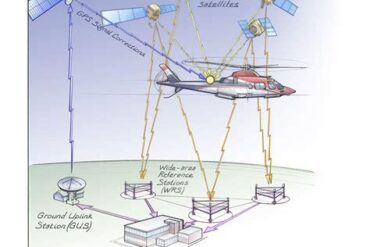
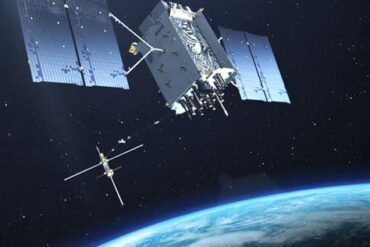
The Global Positioning System (GPS) is a satellite navigation system developed by the United States. It helps determine your location, speed, and time using satellites in space. Managed by the U.S. Department of Defense, GPS consists of three segments: space, control, and user. The space segment includes 21 satellites and three backup satellites arranged in six different orbital paths. The control segment features five monitoring stations, three ground antennas, and a master control station. Lastly, the user segment comprises antennas and receiver-processors that offer positioning, speed, and precise timing to users.
GPS satellites transmit two types of clock information. The first is the Coarse/Acquisition code, or C/A, which is available for public use. The second is the Precise code, or P-code, typically reserved for military applications. Other similar systems exist, like GALILEO, developed by the European Commission, and GLONASS, created by the former Soviet Union and currently operated by the Russian government. GLONASS serves as Russia’s counterpart to GPS.
When it comes to using GPS, the equipment can vary widely. In commercial aviation, GPS units are usually installed permanently in approved locations and integrated with other flight systems. For general aviation, many devices are portable, lightweight, and powered by batteries. However, these portable units can pose challenges, especially for inexperienced pilots. Currently, there is a lack of formal guidance or training on GPS usage. This is a significant issue for general aviation pilots who may not know the best navigation techniques. Additionally, GPS instruction manuals can often be complicated and hard to follow. This situation is even more challenging for pilots who do not own their aircraft and may encounter various GPS equipment in rented planes. To help with this, some flying clubs organize sessions where experienced GPS users can demonstrate and discuss effective navigation strategies.