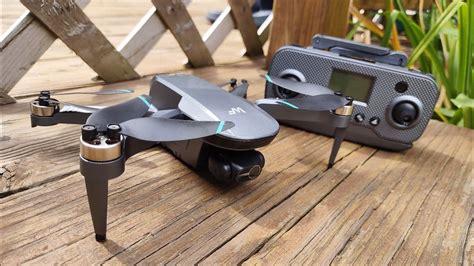
The WeFone WF40 Lightweight GPS Brushless Camera Drone emerges as a compelling choice in the rapidly expanding world of consumer drones. Combining portability, functionality, and price-conscious design, the WF40 captures attention with a unique balance of advanced features in a compact package. During our extensive field testing, we evaluated its performance across various environments, assessing not just its advertised capabilities, but its real-world reliability and usability for both amateur pilots and semi-professional content creators.
Despite the saturated drone market, the WF40 stands out by integrating features often reserved for more expensive models, such as a stabilized gimbal, GPS-assisted flight, and onboard 2.5K video recording — all while maintaining a weight that exempts it from registration requirements in most jurisdictions.
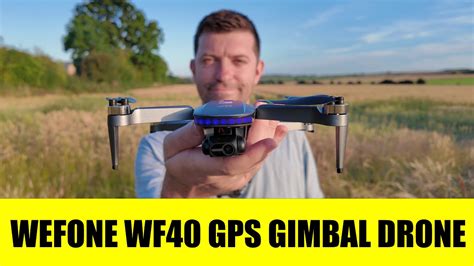
Portability and Design: Compact Power in a Foldable Frame
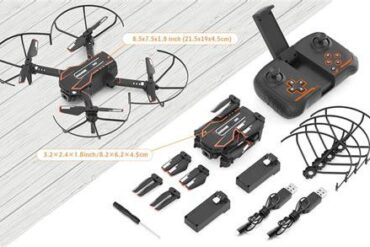
Weighing only 212 grams with the battery installed, the WF40 comfortably qualifies as a lightweight UAV, bypassing regulatory red tape in several countries. The drone’s foldable design enhances its portability significantly. Accompanied by a sleek carrying case, the WF40 is built with travelers and casual explorers in mind. We found the build quality satisfactory for its class — durable enough to withstand minor impacts while remaining light for extended carry.
The brushless motors are a noteworthy inclusion at this price point, offering greater efficiency and longevity compared to brushed counterparts. During testing, the motors delivered smooth, quiet operation and stable thrust, even in moderate winds, which speaks to the drone’s robust engineering.
Flight Performance: A Balanced Aerial Experience
Equipped with both GPS and GLONASS, the WF40 secures rapid satellite lock-on, significantly reducing pre-flight delays. Once airborne, the drone exhibited excellent hovering stability, thanks to its dual-sensor navigation system, which includes an optical flow module for precise indoor operation.
We tested the automatic return-to-home (RTH) feature under three scenarios: manual command, low battery, and lost connection. In all cases, the drone returned with commendable accuracy, landing within one meter of the takeoff point. This reliability adds a layer of confidence for users exploring new or semi-dense areas.
Flight time with the included 7.4V 1500mAh Li-ion battery averaged just under 21 minutes under moderate use, with a full recharge taking about 90 minutes. While not groundbreaking, this duration is sufficient for most amateur shoots and exploration sessions.
Camera Capabilities: Stabilized Clarity for Hobbyist Creators
The two-axis mechanical gimbal stabilizes video impressively for its class. We captured footage in 2.5K (2560 x 1440 @ 30fps), and were pleasantly surprised by the level of clarity and fluidity, even during lateral movement and light wind gusts. For photography, the WF40’s 4K resolution at 3840 x 2160 pixels allowed for detailed, vibrant stills when lighting conditions were optimal.
Crucially, both video and photos are recorded to a microSD (TIF) memory card onboard, avoiding the compression and latency of app-based recording methods. This direct-to-storage workflow maintains high fidelity and is a major advantage for those planning post-editing.
While the gimbal does not offer full three-axis stabilization, it performs well during yaw and pitch variations, keeping footage smooth for social media or casual documentary usage. For the best footage, we recommend flying under stable conditions and avoiding abrupt manual maneuvers.
Flight App Experience: VS GPS Pro Offers Solid Control With Caveats
The “VS GPS Pro” mobile application, available on both Android and iOS, enhances the WF40’s usability with advanced features such as Follow Me, Orbit, and Waypoint Flight. Setup and connectivity were straightforward, and the app interface is clean and accessible.
However, during our tests, Follow Me mode struggled to consistently center the subject. While the drone did track the user effectively from a distance, the camera’s angle often required manual adjustment via the yaw stick to achieve a cinematic frame.
The Waypoint flight feature is functional but limited by its 50-meter operational radius, restricting its utility for broader landscape exploration. This constraint reduces its usefulness for pre-mapped mission flights in expansive areas but still offers educational value for beginners looking to explore automated navigation.
Real-Time FPV and Signal Reliability
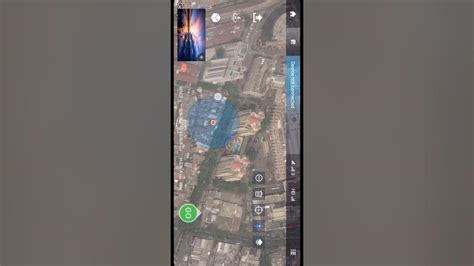
One of the drone’s strengths is its real-time FPV (First-Person View) transmission, streamed directly through the VS GPS Pro app. Our test flights showed minimal lag, and signal strength remained consistent up to 400 meters in unobstructed outdoor environments.
The WiFi-based video downlink is inherently limited compared to more advanced systems like OcuSync or Lightbridge, but it remained perfectly suitable for basic aerial framing and casual piloting. Signal dropouts were rare and mostly occurred in areas with excessive interference, such as dense urban canyons.
What It Does Well: Strengths of the WeFone WF40
The WF40 shines in multiple categories, providing value far exceeding its retail cost:
- Portability: Lightweight, foldable design ideal for travel.
- Stabilized Imaging: Two-axis gimbal with quality onboard recording.
- Flight Assurance: GPS-assisted stability and dependable return-to-home.
- Ease of Use: Simple setup, intuitive controls, and beginner-friendly features.
- Price to Performance Ratio: Advanced tech at a budget price point.
These characteristics make it a reliable starter drone and an attractive backup unit for more seasoned drone pilots seeking a travel-friendly secondary device.
Areas for Improvement: A Few Missed Opportunities
As with most drones in the budget-to-mid-tier range, there are compromises:
- Follow Me Inaccuracy: Subject centering often needs manual correction.
- Limited Waypoint Range: The 50-meter flight zone diminishes mission planning potential.
- Gimbal Restriction: A third stabilization axis would greatly improve video consistency during rotation.
Addressing these issues in future firmware updates or hardware revisions could significantly elevate the WF40’s standing within the competitive drone landscape.
Final Verdict: A Compact Contender With Big Potential
The WeFone WF40 is more than just an entry-level drone — it’s a practical, well-rounded aerial tool that provides a strong platform for learning, experimentation, and lightweight content production. For users seeking a travel-friendly UAV with credible imaging performance and core GPS features, the WF40 delivers a solid, reliable experience.
It won’t replace professional-grade drones in commercial scenarios, nor does it pretend to. But in its category, few competitors match its blend of size, power, and camera performance. Given its sub-$200 pricing and generous flight feature set, it is one of the best value drones in its class today.