The Ministry of Defence (MoD) in the UK has issued a crucial warning ahead of an important military exercise in Powys, Wales, scheduled for this week. The exercise, known as Exercise Rock Lobster, is set to involve advanced electronic warfare testing, which could have far-reaching implications on civilian and military navigation systems. Drivers, pilots, and drone operators are advised that the GPS signals could become significantly unreliable or even fail entirely within the affected zone.
A Test of New Electronic Warfare Capabilities
Scheduled to take place at the Sennybridge Training Area in Powys, the operation will run from 08:00 BST to 17:00 BST on Friday. The MoD’s testing will focus on disrupting drone navigation systems by targeting GPS signals. The electronic weapons involved in this test emit powerful radio signals designed to interfere with the satellite-based systems that support GPS-enabled devices. The signals’ range is expected to cause discrepancies in navigation for ground vehicles, aircraft, and drones that rely on GPS for positioning.
The testing zone is extensive, covering a large part of Wales, stretching into south Wales, and extending as far south as Devon and Cornwall. It includes areas where aircraft and drones typically fly, with interference potentially affecting airliners cruising at altitudes up to 40,000 feet (12,200 meters). As such, both drivers and pilots have been warned to expect disruptions to their devices’ ability to maintain accurate positioning, raising concerns over the safety of both ground and air traffic.
The Growing Threat of Electronic Warfare in Modern Conflicts
The timing of Exercise Rock Lobster is significant, considering the growing role that electronic warfare plays in modern military operations. Since Russia’s full-scale invasion of Ukraine in 2022, the global military community has witnessed a sharp uptick in the use of drones for reconnaissance, attacks, and intelligence gathering. As the demand for drone technology skyrockets, so does the need to counter these evolving threats. This exercise marks the latest in a series of tests that highlight how warfare has become increasingly reliant on technology—and how combatants are turning to advanced electronic countermeasures.
In recent years, the MoD and its industry partners have unveiled an array of new technologies aimed at neutralizing drones and other electronic threats. The directed energy weapons (DEWs) being tested are designed to incapacitate or destroy electronic devices, including drones, by sending targeted microwave beams that can fry the internal circuits of enemy electronics. One of the most notable innovations is the RF DEW (Radio Frequency Directed Energy Weapon), which works by emitting a powerful, high-frequency microwave beam that effectively disrupts or destroys the electronics it targets.
The Role of Drones and AI in Modern Military Strategy
The rapid proliferation of drones in military operations has compelled the UK to invest significantly in developing next-generation drone technologies and countermeasures. The integration of artificial intelligence (AI) and drones in modern warfare is already transforming battlefield strategies, offering unprecedented capabilities for surveillance, attack, and logistics. The MoD’s focus on developing these technologies is not limited to offensive capabilities but also extends to defensive systems to protect against enemy drones.
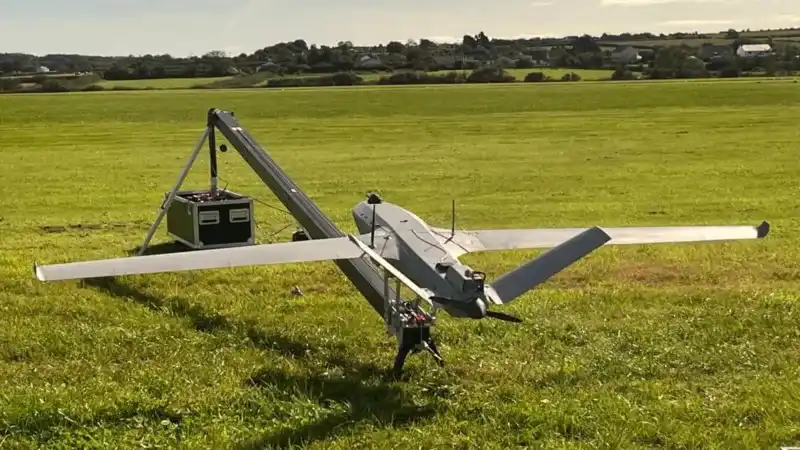
One of the most advanced drones currently under development by the UK is the StormShroud drone. A project spearheaded by the British-Portuguese defense company Tekever, this new drone is designed to provide versatile surveillance and reconnaissance capabilities for the Royal Air Force (RAF). The MoD has already committed hundreds of millions of pounds to support this development. With the drone’s enhanced capabilities, including advanced autonomous flight systems and AI-powered decision-making, the StormShroud could become a critical asset for the RAF in both offensive and defensive operations.
As technology evolves, so do the threats. Drones now present a clear and present danger on the battlefield, which has pushed military forces worldwide to develop counter-drone technologies. These technologies are essential not just for neutralizing enemy drones but for ensuring that friendly drones operate safely and effectively without interference from hostile forces. The electronic warfare testing at Sennybridge is, therefore, an essential step in preparing for future conflicts where drone usage will likely be even more prevalent.
The Impact of GPS Jamming on Civilian and Military Operations
While the primary focus of Exercise Rock Lobster is military applications, there is significant concern over the potential disruption to civilian operations as well. The GPS jamming caused by these electronic warfare tests is likely to have widespread consequences for navigation systems across multiple industries. Both drivers on the roads and pilots in the air may find their navigation systems suddenly unreliable. The interference could cause incorrect routing or even complete GPS signal failure, creating dangerous situations for unsuspecting individuals who rely on GPS for their daily operations.
It is important to note that while the tests are controlled and take place in designated areas, the effects of GPS jamming could extend well beyond the immediate zone of interference. Civilian navigation systems—such as those used in smartphones, cars, and aircraft—may experience degradation in signal quality, leading to issues with location accuracy and system functionality. These disruptions could lead to delays in travel, as drivers and pilots may need to rely on alternative navigation methods. Additionally, in more extreme cases, aviation safety could be compromised if aircraft lose their GPS signals while in flight.
The Future of Electronic Warfare and Defence Strategies
As global defense strategies continue to evolve, electronic warfare is becoming an increasingly central aspect of military planning. The MoD’s investment in testing and deploying new technologies to combat drone threats signals a commitment to maintaining a competitive edge in modern warfare. Technologies like RF DEW and DragonFire, a laser cannon capable of destroying drones at long range, represent the future of military defense systems. The laser cannon, in particular, is set to be fitted on Royal Navy frigates and destroyers by 2027, marking a new era of naval defense where directed energy weapons can be deployed against airborne threats.
The ongoing strategic defense review highlights the UK’s intent to shift towards more autonomous and AI-driven technologies for future military engagements. As the capabilities of drones continue to grow, it is clear that electronic warfare and counter-drone systems will play a critical role in ensuring national security.
In conclusion, Exercise Rock Lobster serves as a crucial demonstration of the growing role of electronic warfare in modern conflicts. While the potential disruption to GPS signals poses a temporary inconvenience for civilians and military personnel, it underscores the increasing reliance on high-tech solutions to counter evolving threats in an age where drones and AI are transforming the nature of warfare. As these technologies continue to advance, we can expect to see more sophisticated countermeasures that will shape the future of global defense strategies.