In the modern realm of sports performance analysis, high-speed cameras have transformed the precision with which we measure athletic movement, technique, and real-time decision-making. Whether for improving a sprinter’s start, a footballer’s penalty technique, or the biomechanics of a tennis serve, high-speed video capture offers unmatched visual clarity and temporal resolution.
Unlike standard cameras operating at 30 or 60 frames per second (fps), high-speed cameras can shoot at 200 fps, 300 fps, or even higher — crucial for dissecting rapid human movement or ball trajectories frame by frame. The market has matured, offering a range of systems tailored to different use cases, from recorded playback analysis to live slow-motion streaming.
The gold standard in sports has often been the Hawk-Eye Innovations system, widely used in cricket, tennis, and football for officiating and player evaluation. Though proprietary in much of its implementation, Hawk-Eye is now owned by Sony, which supplies many of the cameras that power its core technologies.
Key Features of a High-Speed Camera for Sports
When evaluating a high-speed camera system for sports analysis, one must consider specific core specifications:
- Frame Rate: Minimum 120 fps for basic sports analysis; premium setups exceed 240 fps.
- Resolution: Full HD (1920×1080) is standard, with options going up to 4K.
- Output Method: SDI, Quad SDI, NDI, and Fiber are prevalent; compatibility with ingest hardware is essential.
- Latency and Buffering: Real-time or low-latency capture is critical for live slow-motion workflows.
- Storage & Encoding: SSD-based workflows are typical, especially when using external recorders like Atomos or Blackmagic.
Phantom, IO Industries, and Sony: Top Players in the Market
Among elite-tier manufacturers, Phantom cameras by Vision Research have long been synonymous with extreme frame rate capabilities. Often used in scientific and industrial contexts, they’re also employed in sports analysis when precision trumps portability. Phantom cameras can shoot at over 1,000 fps at reduced resolutions and 240 fps or higher at Full HD, but require robust backend systems to process and store data.
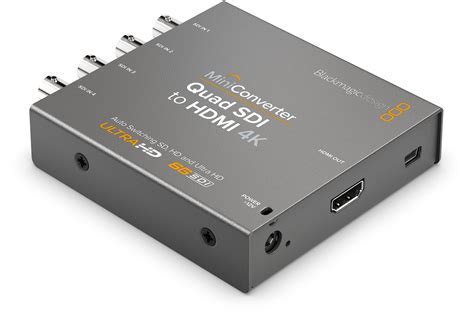
IO Industries has carved a niche by offering modular cameras like the Redwood and 4KSDI series, which provide high frame rates (130+ fps) with flexible output via quad SDI to fiber converters. These systems integrate cleanly with workstations like Mac Studio setups using Blackmagic PCIE to Thunderbolt ingest cards.
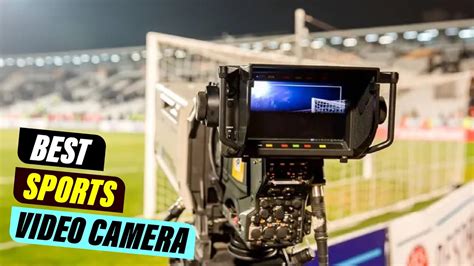
Sony, meanwhile, offers a range of solutions through its block camera division, providing customizable modules that can be housed in compact formats. Their cameras, such as those used in the Sony 4300 broadcast chain, can support up to 8x Super Slow Motion (SSM), reaching near 480 fps, and are widely compatible with replay servers used in live broadcasting.
SDI, NDI, and Data Handling in High-Speed Setups
Standard SDI connections often cap out at 60 fps per channel. However, by employing multi-phase SDI output, systems can multiplex frame feeds. For example, a 240 fps feed may be divided across four SDI channels, each outputting 60 fps staggered frames, then recombined in software or on a dedicated replay server.
Another alternative is NDI (Network Device Interface), which allows IP-based camera feeds over standard Ethernet. Cameras like those from AIDA offer up to 120 fps via NDI, useful for lower-budget but high-performance setups. While NDI simplifies cabling, it introduces network configuration complexity and depends on local infrastructure bandwidth.
Live vs. Recorded Analysis: Choosing the Right Workflow
The use-case strongly influences the best solution. If the objective is live slow-motion replay, such as in televised broadcasts or during matches, a low-latency system with live ingest capabilities is essential. These typically rely on supermotion broadcast chains, often costing upward of $200,000.
For offline analysis, where footage is reviewed post-event, more affordable options exist:
- Sony FS-700: Offers burst slow-motion at 240 fps to an Atomos Shogun recorder. Though limited to ~10 seconds real-time capture, it remains viable for episodic performance capture.
- Sony FS7: Provides continuous 180 fps at 1080p internally, or 240 fps with external raw recorder — excellent value in used markets.
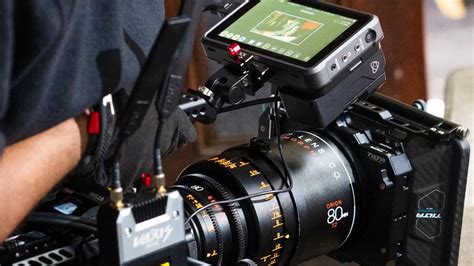
- Freefly Ember: A high-performance camera with strong slow-motion capabilities and recording to SSDs. It supports both high-speed capture and potential live workflows.
Dream Chip, Antelope, and Emerging Contenders
Smaller brands like Dream Chip and Antelope have gained visibility through demo showcases at events like NAB. Dream Chip cameras stand out for their compact footprint and broadcast integration readiness, making them suitable for space-constrained sports setups such as swimming or gymnastics arenas.
Antelope cameras, on the other hand, specialize in supporting multi-phase SDI output and phase-locked synchronization, allowing upscaling to 150 fps and beyond through 3x or 4x SDI multiplexing. These cameras are ideal for synchronized multi-angle slow-motion recording, especially in team sports.
Backend Integration: Storage, Playback, and Control Interfaces
Capturing high-speed footage is only half the battle — ingest, review, and control are equally vital. Systems such as:
- Blackmagic Design capture cards with Thunderbolt interfaces,
- Custom playback servers for real-time slow motion,
- Touchscreen controllers or programmable panels for operator flexibility,
are typically integrated to handle large video data volumes.
For field operations, a combination of quad-SDI to fiber converters, ingest on a Mac Studio, and replay managed via custom software remains a popular and scalable configuration.
Budget Considerations and Final Thoughts
While price can vary drastically, entry-level systems start around $800–$1,500 for second-hand setups (e.g., FS-700 with recorder), while professional broadcast rigs with full-featured slow-motion and networked control can exceed $150,000.
For organizations prioritizing precision, repeatability, and live playback, investing in a robust high-speed camera workflow is indispensable. Whether you’re a football analytics team, a cricket technology partner, or a research group in kinesiology, the right choice balances frame rate, resolution, cabling infrastructure, and software interoperability.
The future of sports performance evaluation is being written in super slow motion. Investing in the right tools ensures you capture every angle, every movement, and every moment — without compromise.