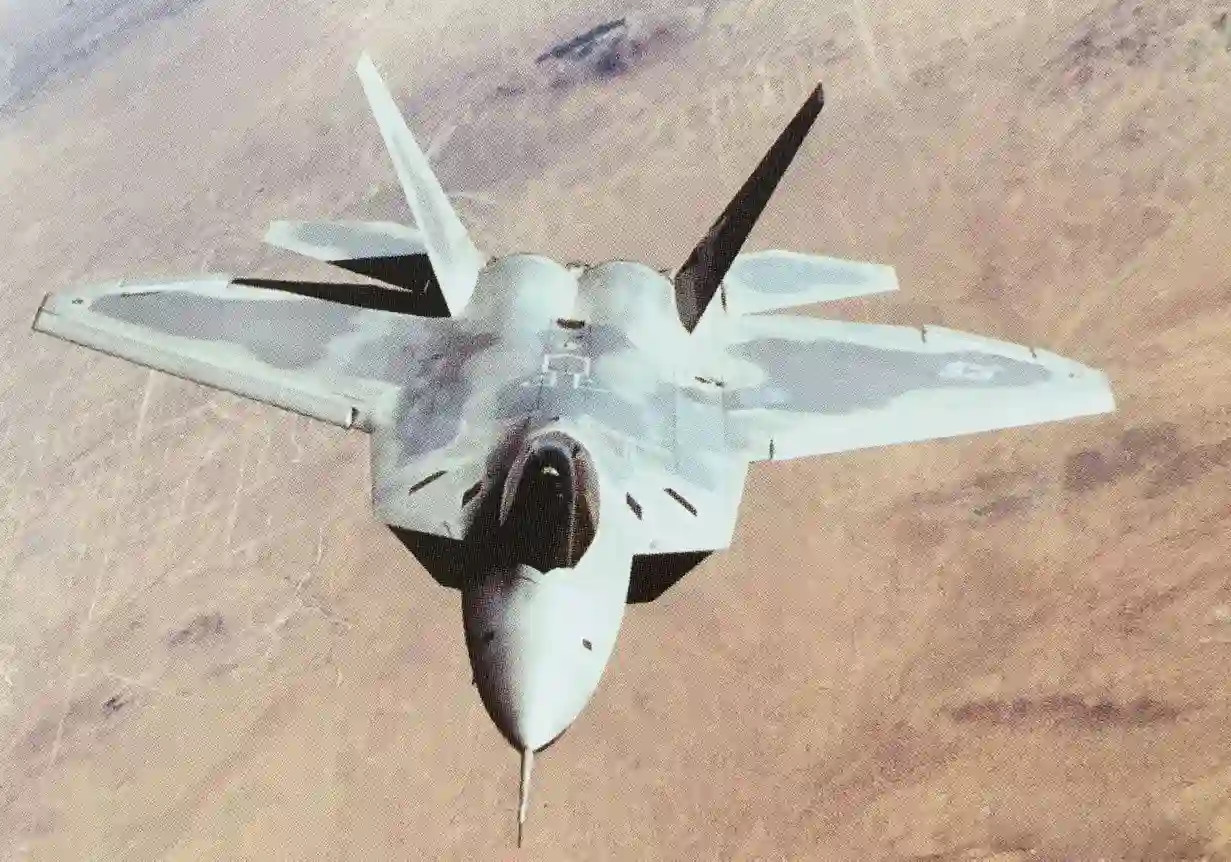
The F-22 Raptor, an advanced fifth-generation stealth fighter, is renowned for its superior maneuverability, stealth capabilities, and unmatched air dominance. Among its impressive flight characteristics, the aircraft’s stall speed is a critical factor that influences its combat effectiveness, agility, and ability to execute high-angle-of-attack maneuvers. This article provides a comprehensive examination of the F-22’s stall speed, the factors that affect it, and how it compares to other fighter aircraft.
Understanding Stall Speed in the F-22 Raptor
The stall speed of an aircraft refers to the minimum speed at which it can maintain controlled flight before losing lift. Unlike conventional fourth-generation fighters, the F-22’s stall behavior is significantly altered by its thrust-vectoring nozzles and advanced aerodynamics, allowing it to operate at remarkably low speeds without entering a full stall.
Estimated Stall Speed Range
The exact stall speed of the F-22 Raptor is not publicly disclosed, as detailed flight data remains classified. However, based on observed performance and known aerodynamic principles, estimates suggest:
- During high-angle-of-attack maneuvers: The F-22 can maintain controlled flight at speeds as low as 100–150 km/h (62–93 mph) using thrust vectoring. This is evident during airshow demonstrations where the jet performs the J-turn and high-alpha flight, maintaining stable flight well below typical stall thresholds.
- In standard combat configuration: Without external stores and under typical operational conditions, the estimated stall speed is 200–240 km/h (124–149 mph). This speed is inferred from its ability to execute tight turns and post-stall maneuvers, such as the Pugachev’s Cobra and Kulbit loops, while maintaining control.
Key Factors Affecting Stall Speed
1. Thrust Vectoring Technology
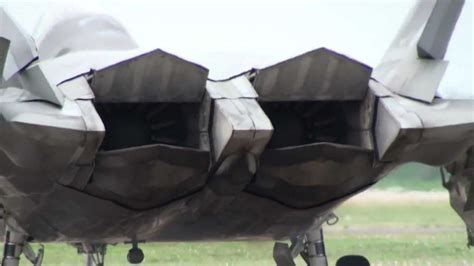
One of the defining features of the F-22 Raptor is its 2D thrust-vectoring nozzles, powered by Pratt & Whitney F119 engines. These nozzles allow the aircraft to direct thrust independently of airflow, counteracting stall conditions and enabling controlled flight at speeds lower than those of conventional fighters.
2. Aerodynamic Design and Wing Loading
- The trapezoidal wing shape of the F-22 prioritizes supersonic efficiency and agility, but also results in higher stall speeds compared to aircraft with larger wing surface areas.
- High-wing loading means the aircraft requires more speed to generate sufficient lift, influencing its stall speed under various flight conditions.
3. Weight and Configuration
- The stall speed of any aircraft is directly impacted by its weight. When carrying internal weapons, additional fuel, or under high-G maneuvers, the F-22’s stall speed increases due to higher aerodynamic loading.
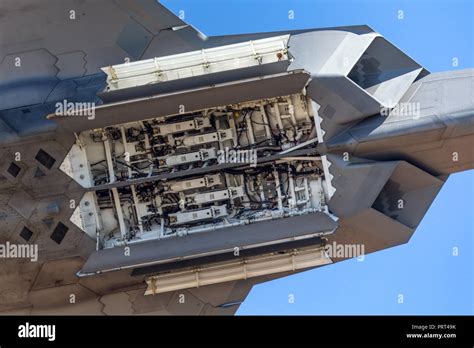
- However, because the F-22 carries weapons internally, its aerodynamic efficiency remains higher than external store configurations found on older fighter models.
Comparison with Other Fighter Aircraft
F-22 vs. Su-27 Flanker
- The Sukhoi Su-27, a fourth-generation Russian fighter, has an estimated stall speed of ~180 km/h (112 mph).
- Unlike the F-22, the Su-27 lacks thrust vectoring in most variants, making it more susceptible to stall-induced loss of control at lower speeds.
- Despite a slightly lower stall speed, the Su-27 cannot match the F-22’s post-stall maneuverability, thanks to the latter’s advanced flight control systems.
F-22 vs. F-35 Lightning II
- The F-35 Lightning II, another fifth-generation stealth fighter, has an estimated stall speed of ~220 km/h (137 mph).
- The F-35 lacks thrust-vectoring nozzles, making it less capable of sustained post-stall flight compared to the F-22.
- The F-35 compensates with advanced fly-by-wire systems, but its overall low-speed handling remains inferior to the Raptor’s superior aerodynamics.
Why the F-22’s Stall Speed Matters in Combat
1. Superior Low-Speed Engagement Capabilities
In dogfighting scenarios, the ability to maintain control at lower speeds grants the F-22 a distinct advantage. Unlike traditional fighters that risk stalling during aggressive turns, the Raptor can sustain controlled flight and even execute post-stall maneuvers to reposition itself against adversaries.
2. Enhanced Survivability and Tactical Flexibility
- The F-22’s ability to operate at low speeds means it can outmaneuver adversaries in close-quarters combat.
- Controlled stalls and post-stall maneuvers allow for unprecedented combat tactics, giving pilots greater control over engagements.
3. Advantage in Beyond-Visual-Range (BVR) and Close Combat
While the F-22 is optimized for BVR engagements, its stall characteristics ensure that even in close combat, it remains a formidable opponent. Its ability to recover from stalls more effectively than legacy fighters adds to its combat survivability.
Conclusion
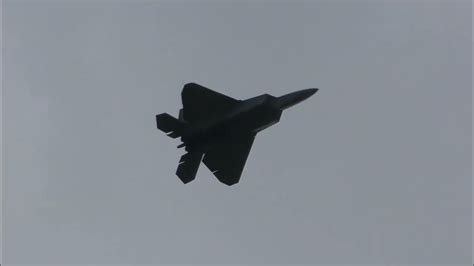
The F-22 Raptor’s stall speed, estimated to be around 200–240 km/h (124–149 mph) in normal configurations, is a testament to its advanced aerodynamic design and thrust-vectoring capabilities. While its stall speed is higher than some fourth-generation fighters, the ability to sustain control at extreme angles of attack makes it one of the most maneuverable aircraft in history. Its ability to execute controlled post-stall maneuvers gives it a distinct advantage in both dogfights and strategic combat scenarios.
FAQ Section
1. What is the lowest speed the F-22 can fly without stalling?
The F-22 Raptor can sustain controlled flight at speeds as low as 100–150 km/h (62–93 mph) using thrust vectoring, but under normal conditions, its stall speed is estimated to be 200–240 km/h (124–149 mph).
2. How does the F-22 prevent stalling at low speeds?
The F-22 prevents stalling through its thrust-vectoring nozzles, which allow it to direct engine thrust independently of its flight path. This compensates for lost lift and maintains controlled flight even at high angles of attack.
3. How does the F-22 compare to other fighters in stall speed?
The F-22 has a higher stall speed than some fourth-generation fighters like the Su-27, but its superior flight control systems and thrust vectoring allow it to recover from stalls more effectively. Compared to the F-35, the Raptor offers better low-speed maneuverability due to its thrust-vectoring capabilities.