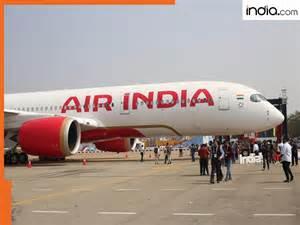
Air India is preparing its largest-ever Delhi–Melbourne schedule, marking a major expansion on one of the most important air links between India and Australia. From October 25, the carrier plans to operate 10 weekly flights between Delhi Indira Gandhi International Airport (DEL) and Melbourne Airport (MEL), representing a 44% increase in frequency compared with the previous peak schedule of seven weekly services.
The expansion comes as Air India gradually restores international capacity following a difficult northern summer. Rising jet fuel prices and disruptions associated with Middle Eastern airspace restrictions forced the airline to reduce several long-haul services between June and August. Melbourne, however, remains a priority market as demand between India and Australia continues to strengthen.
The route is already the busiest city-pair between the two countries, with approximately 281,000 round-trip passengers traveling between Delhi and Melbourne during the 12 months ending April 2026. The growing importance of the market is also reflected in Australia’s changing demographics. In 2025, India-born residents became the country’s largest overseas-born population group for the first time, overtaking England.
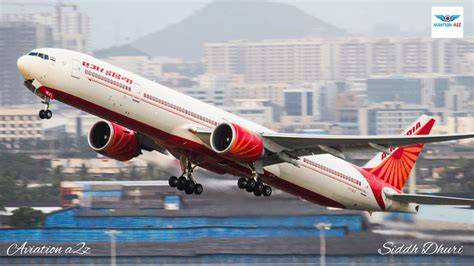
Air India Adds 10 Weekly Delhi–Melbourne Flights
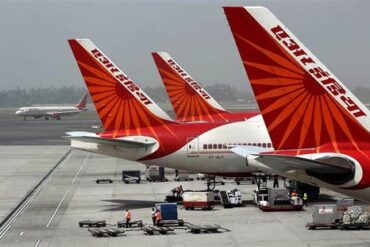
Air India’s new winter schedule combines a daily Boeing 777-300ER service with three additional weekly Boeing 787-8 flights. The result is a 10-flight-per-week operation that gives passengers considerably more flexibility than the airline’s current reduced schedule.
The daily 777-300ER service is scheduled to leave Delhi at 1:15 AM, arriving in Melbourne at 7:00 PM. The aircraft then departs Melbourne at 8:30 PM and reaches Delhi at 3:50 AM the following morning. The additional 787-8 flights follow different timings, departing Delhi at 1:45 PM and arriving in Melbourne at 7:30 AM the next day. The return service leaves Melbourne at 9:15 AM and reaches Delhi at 4:35 PM.
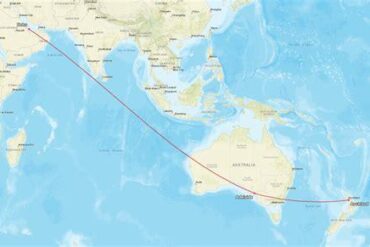
The Delhi–Melbourne sector covers approximately 6,368 miles (10,246 kilometers). Scheduled block time stands at around 12 hours and 15 minutes westbound and 12 hours and 50 minutes in the opposite direction. Such a long stage makes aircraft selection particularly important because even a modest increase in seats per flight can translate into substantial additional capacity over an entire season.
Boeing 777-300ER Brings a Major Capacity Increase
The biggest change on the route is not simply the additional frequency. Air India has also introduced a much larger aircraft. Since July 1, the airline has been deploying its 328-seat Boeing 777-300ER on the route, replacing the smaller Boeing 787-8.
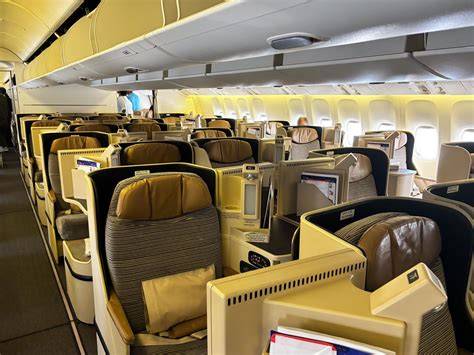
The 777-300ER’s configuration includes eight First Class suites, 40 lie-flat Business Class seats and 280 Economy Class seats. By comparison, the 787-8 used on the route accommodates up to 259 passengers, with 18 Business Class seats and 241 Economy Class seats.
That represents 69 additional seats per departure, or roughly a 27% increase in aircraft capacity. The premium cabin expansion is particularly notable. Air India increases premium seating from 18 positions on the 787-8 to 48 on the 777-300ER, while introducing First Class to the route.
The aircraft themselves have an interesting history. The 777-300ERs were originally operated by Etihad Airways before Air India leased them in 2023 and subsequently purchased them outright in 2025. Their deployment gives Air India a useful way to add capacity without waiting for newly ordered aircraft to arrive.
Melbourne Demand Supports Air India’s Expansion
The decision to increase capacity reflects more than an adjustment to the timetable. India–Australia travel demand has become increasingly important, supported by business connections, tourism, education and a rapidly expanding Indian-origin population in Australia.
Melbourne is particularly significant because it has developed into one of Australia’s largest centers of Indian migration and community activity. Direct connectivity to Delhi allows Air India to serve both point-to-point passengers and travelers connecting onward through its Delhi hub.
For Air India, the 10-weekly schedule also creates a stronger competitive position. A daily widebody service provides a predictable core schedule, while the three additional 787-8 flights increase options on selected days. This combination can help the airline capture both premium travelers who value convenient timings and price-sensitive passengers seeking additional availability.
Air India Restores Its Long-Haul Network
The Delhi–Melbourne expansion forms part of a broader effort to rebuild Air India’s international network after the airline implemented substantial summer reductions. Between June and August, the carrier reduced long-haul flying because of higher fuel costs, operational constraints and Middle Eastern airspace restrictions.
Air India has nevertheless maintained more than 1,200 international flights each month and expects to restore service on several important routes from September. The recovery will not be uniform, however. Some services, including flights to Chicago and Washington Dulles, are expected to remain suspended because the airline does not currently have enough aircraft available.
Fleet Constraints Remain a Challenge
Air India’s ambitious international expansion is being complicated by ongoing fleet work. The carrier began a major Boeing 787-8 cabin retrofit program in 2025, with completion scheduled for mid-2027. At the same time, older Boeing 777-200LR aircraft are being retired, limiting the number of widebodies available for immediate deployment.
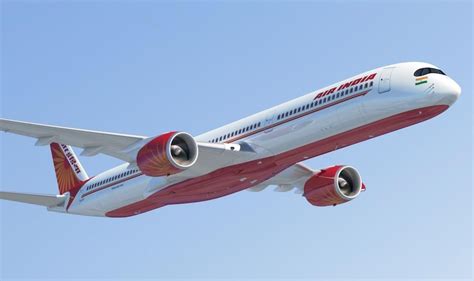
Air India’s current long-haul fleet includes 26 Boeing 787-8s, seven Boeing 787-9s, 19 Boeing 777-300ERs and six Airbus A350-900s. The airline is also expecting its first Airbus A350-1000 aircraft by the end of 2026, potentially providing another important source of long-term growth.
For Melbourne, however, the immediate strategy is clear. Air India is using larger aircraft and more frequencies to capitalize on one of its strongest international markets. If demand continues to support the additional capacity, the record 10-weekly Delhi–Melbourne schedule could become an important foundation of the airline’s wider Australia strategy.