After a prolonged suspension of direct services to India, Delta Air Lines is charting a bold return to the South Asian market. Last operated in 2020, Delta is set to resume long-haul flights to India with a new route between Atlanta and Delhi, marking a significant revival of transpacific travel and a new chapter in U.S.-India aviation. The airline’s renewed interest in India comes amid a multi-faceted partnership with India’s largest carrier, IndiGo, and a growing global appetite for seamless connectivity.
The move is anchored in a newly signed Memorandum of Understanding (MoU) involving Delta, Air France-KLM, Virgin Atlantic, and IndiGo. Announced at the 81st IATA Annual General Meeting (AGM) in Delhi, the agreement outlines a strategic framework for enhanced cooperation across network planning, codesharing, cargo, sales, loyalty programs, and sustainability initiatives. While the launch date is yet to be confirmed and is pending government approval, industry insiders view this development as a critical milestone in Delta’s global expansion.
A Strategic Realignment of Delta’s Global Network
Delta’s re-entry into India’s aviation sector is not simply a return—it’s a calculated reintegration into one of the world’s most promising markets. With over 53,000 roundtrip passengers flying between Atlanta and Delhi in the year ending July 2024, according to OAG Traffic Analyzer, the demand is unmistakable. The route trails closely behind Mumbai, which saw 54,000 travelers in the same period, positioning Delhi as a key strategic target.
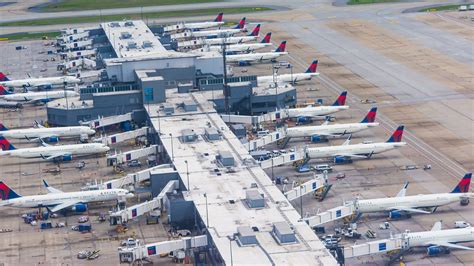
The reestablishment of direct flights from Hartsfield-Jackson Atlanta International Airport, Delta’s primary hub, will allow the carrier to leverage its vast domestic network. Travelers from dozens of U.S. cities will now gain a single-stop option to the Indian capital, slashing travel time and eliminating cumbersome layovers in Europe or the Middle East.
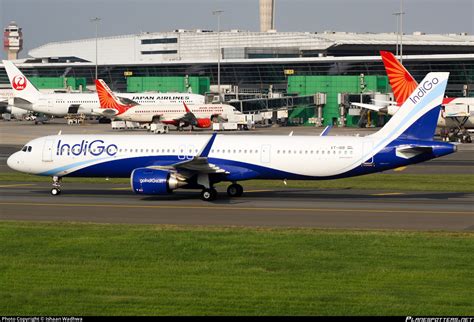
What makes this move even more impactful is the connectivity offered on the Indian side. With IndiGo’s unmatched domestic network, which reaches more than 80 destinations across India, the potential for smooth onward connections from Delhi is massive. Delta customers flying to secondary cities like Jaipur, Ahmedabad, or Kochi could now do so with a single itinerary and baggage transfer, making the experience seamless.
Historical Context: Delta’s Indian Footprint Over the Decades
While Delta has never flown directly to Delhi before, its relationship with India is not new. Through various acquisitions and strategic partnerships, Delta has offered services to the country in several configurations. The story began in October 1990, when Northwest Airlines (later merged with Delta) teamed up with KLM Royal Dutch Airlines to offer Amsterdam-Mumbai and Amsterdam-Delhi services. These routes laid the groundwork for what would later become a complex web of transatlantic flights.
Delta itself has operated multiple one-stop and nonstop services over the years:
- New York-JFK to Mumbai: Operated using Boeing 777-200LR aircraft between 2006–2008 and again briefly from 2019–2020.
- Atlanta to Mumbai: Active from October 2008 to October 2009.
- Paris to Mumbai and Chennai: Operated in the mid-2000s using Boeing 767s.
- Frankfurt to Mumbai: A short-lived route in 2004–2005 as part of Delta’s attempt to establish a European hub.
While these services were curtailed due to rising fuel costs, low yields, and changing strategic priorities, the airline has clearly maintained a long-standing interest in tapping into the Indian market.
The IndiGo Partnership: A High-Stakes Alliance
The linchpin of this new strategy is Delta’s codeshare and interline agreement with IndiGo, India’s largest airline by both passenger volume and fleet size. Although known for its low-cost model, IndiGo has taken aggressive steps to evolve into a global connector, signing similar agreements with KLM, Virgin Atlantic, and Turkish Airlines.
The newly announced MoU enables not just inter-airline ticketing, but also a shared framework for frequent flyer programs, maintenance, sustainability, and sales infrastructure. This deeper collaboration suggests that the relationship is built to endure and expand, possibly setting the stage for joint ventures or equity partnerships in the future.

Rewriting the U.S.-India Long-Haul Travel Equation
Delta’s return to India is taking place in a drastically altered global aviation environment. Competitors such as Emirates, Qatar Airways, and Etihad have long dominated the U.S.-India corridor by offering competitive one-stop options via their Middle Eastern hubs. However, the shift in consumer preference toward nonstop connectivity, accelerated by the pandemic and operational convenience, has opened a fresh window of opportunity.
With Delta’s nonstop Atlanta-Delhi route, passengers will benefit from:
- Shorter overall travel time
- Streamlined customs and baggage handling
- Improved loyalty benefits through SkyTeam integration
- Reliability from two of the world’s top-performing carriers
As geopolitical tensions and slot constraints challenge Middle Eastern carriers, direct U.S.-India flights stand to gain a competitive edge. Moreover, with IndiGo’s expanding European footprint—including new routes to Manchester and Amsterdam via leased Norse Atlantic aircraft—Delta can tap into multiple connection points, further amplifying its reach.
Fleet Strategy and Aircraft Utilization
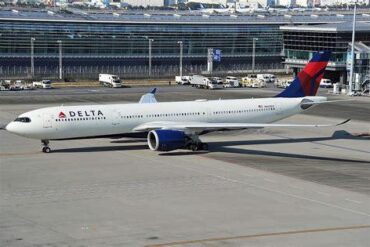
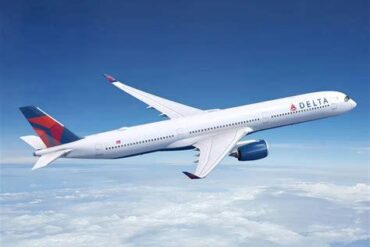
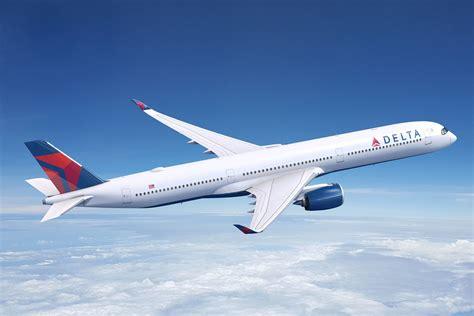
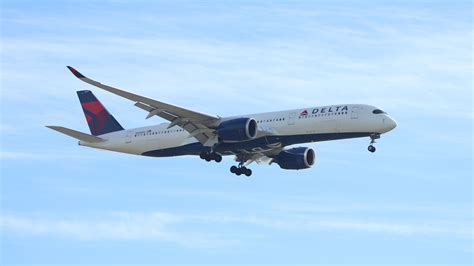
Delta is expected to deploy either its Airbus A350-900 or Airbus A330-900neo on the Atlanta-Delhi route, both optimized for long-haul comfort and fuel efficiency. These aircraft are equipped with Delta’s latest Delta One suites, Premium Select, Comfort+, and Main Cabin classes, offering a wide range of options for different traveler demographics.
Delta has steadily modernized its long-haul fleet, retiring older Boeing 777s in favor of newer models with better operating economics. The carrier’s choice of aircraft will be essential not only for passenger satisfaction but also for route sustainability and profitability, especially as fuel prices remain volatile.
Challenges and Market Risks
While optimism surrounds the route’s launch, several challenges loom. Bureaucratic delays in government approvals, slot coordination at Indira Gandhi International Airport, and potential resistance from entrenched competitors could slow implementation. Additionally, Delta must contend with price-sensitive South Asian travelers, who may prioritize cost over convenience.
Furthermore, the Indian aviation market is notoriously volatile. Regulatory burdens, currency fluctuations, and an unpredictable geopolitical landscape can alter route viability. Yet, Delta’s methodical and partnership-driven reentry positions it better than previous attempts, giving the route a fighting chance.
Future Outlook: A Gateway to South Asia
The Atlanta-Delhi route is more than a new flight—it’s a signal of Delta’s broader South Asian ambitions. With the Indo-Pacific region projected to become one of the world’s fastest-growing aviation markets, Delta’s timely move is both reactive and visionary. If successful, it could pave the way for future direct services to Bengaluru, Hyderabad, or even Colombo, supported by partner networks.
This renewed commitment underlines Delta’s evolving identity as a truly global connector, not just a transatlantic powerhouse. The growing U.S.-India diaspora, increasing bilateral trade, and a spike in student and business travel ensure that the demand is not a short-term anomaly but a long-term trend.
In the words of Delta CEO Ed Bastian, this collaboration aims to make travel “more connected, more inclusive, and more accessible.” If that vision materializes, Delta’s reentry into India will not just be a return—it will be a reinvention.