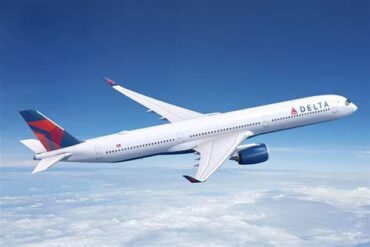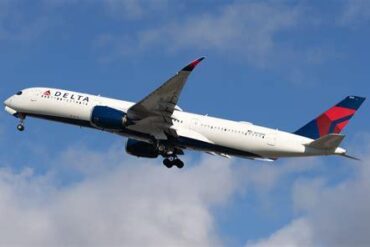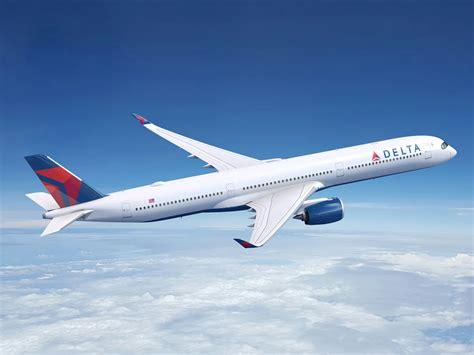
Delta Air Lines is preparing a bold return to the Indian aviation market by resuming nonstop service between Atlanta (ATL) and New Delhi (DEL). The transcontinental route, spanning approximately 7,945 miles (12,785 kilometers), will be one of the airline’s longest nonstop connections and a key component of its strategic international expansion plan. The service is expected to launch in 2026, pending final regulatory approval and the delivery of Delta’s newest long-haul aircraft, the Airbus A350-1000.
Delta’s Return to India: A Strategic Revival
The reintroduction of the Atlanta to New Delhi route is not merely a reinstatement of past operations; it signals Delta’s renewed commitment to the high-growth Indian market. The airline had briefly operated flights from New York (JFK) to Mumbai (BOM) in 2019, but the COVID-19 pandemic and the retirement of Delta’s Boeing 777 fleet led to the suspension of that service.
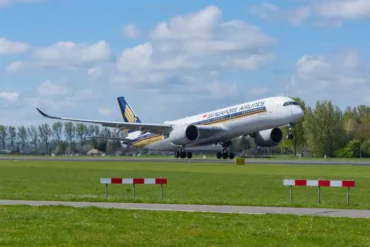
Now, with its upgraded widebody fleet and a focus on sustainable, ultra-long-haul operations, Delta aims to overcome previous barriers. The deployment of the Airbus A350-1000, featuring higher capacity and greater range than its predecessor, the A350-900, marks a technical leap forward that will allow Delta to fly this demanding sector without payload restrictions, ensuring full commercial viability.
Aircraft Evolution: The Role of the Airbus A350-1000
Delta’s confidence in restarting the India service is deeply tied to the performance profile of the Airbus A350-1000. This aircraft, part of Delta’s next-generation fleet strategy, provides an optimal balance of fuel efficiency, passenger comfort, and extended range, making it uniquely suited for ultra-long-haul routes such as ATL–DEL.
Originally scheduled for delivery in 2025, supply chain disruptions and global production slowdowns have pushed the arrival of the A350-1000s into 2026, effectively aligning with Delta’s planned route resumption.
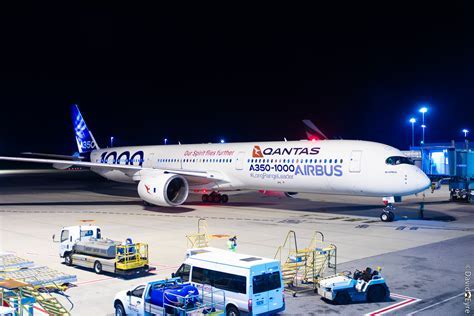
Delta already operates the A350-900, but the larger and more powerful -1000 variant will offer increased seat capacity, ideal for high-demand sectors like India, especially from a major hub such as Atlanta. This will enable the airline to maximize yield per flight, reduce per-seat operating costs, and offer a competitive product against other carriers serving the US–India corridor.
The Power of Strategic Alliances: Delta, IndiGo, and SkyTeam Partners
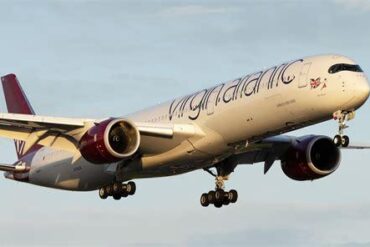
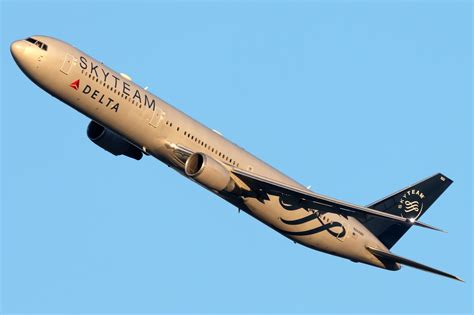
Delta’s planned route is part of a broader multilateral aviation partnership that includes major players such as IndiGo (6E), Air France-KLM (AF/KL), and Virgin Atlantic (VS). This alliance aims to reshape transcontinental connectivity by leveraging combined networks across North America, Europe, and South Asia.
Under the agreement:
- IndiGo customers gain transatlantic access via Delta’s hubs in Amsterdam, Paris, London, and Manchester.
- Delta and its partners can tap into IndiGo’s vast domestic network across 30+ Indian cities.
- The alliance encompasses loyalty program integration, aircraft maintenance collaboration, cargo solutions, and digital innovation initiatives.
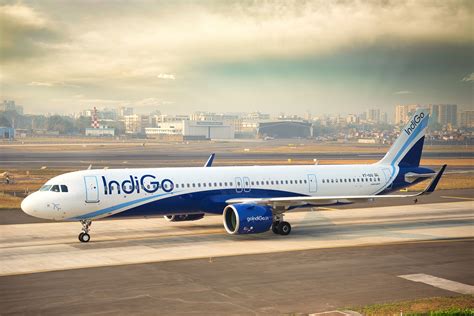
The strategic partnership is a cornerstone of Delta’s return to India, addressing the limitations that previously hindered its competitive presence in the market. The alliance not only ensures last-mile connectivity within India but also gives Delta access to critical European interlining options that enhance passenger convenience and freight logistics.
Market Opportunity: India’s Aviation Growth Trajectory
Delta’s decision to return is grounded in sound market dynamics. India is currently the world’s third-largest domestic aviation market, and international demand is rising at double-digit rates. The robust diaspora traffic, corporate travel segment, and leisure tourism flow between the United States and India offer a compelling case for direct connectivity.
While several carriers operate one-stop or direct services on similar routes—including Emirates, Qatar Airways, Lufthansa, and United Airlines—Delta’s strategy is to create a premium direct service experience backed by integrated global partnerships. The ATL–DEL route also uniquely capitalizes on Atlanta’s position as the world’s busiest airport, allowing passengers from across North America to seamlessly connect eastward via Delta’s network.
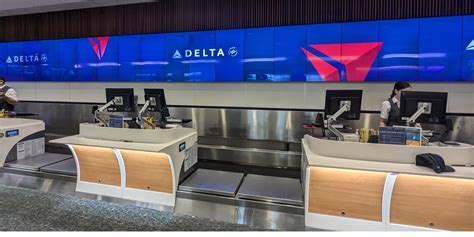
IndiGo’s Role in the Bigger Picture
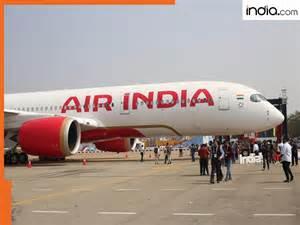
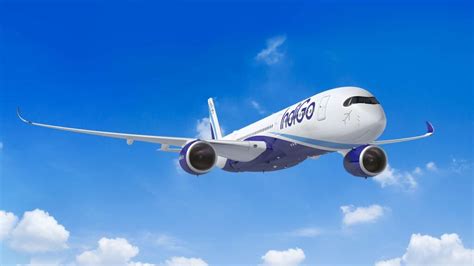
At the center of this strategy lies IndiGo, India’s largest airline by market share. While traditionally a domestic low-cost carrier, IndiGo has been actively pursuing international expansion through:
- Leasing wide-body Boeing 787s for selective long-haul missions.
- Placing a firm order for 30 Airbus A350-900s, with options for 70 more.
These moves support IndiGo’s ambition to become a global airline by 2030. Its domestic dominance and international ambitions make it an ideal regional partner for legacy transatlantic carriers like Delta.
Through this joint effort, travelers can experience a consistent quality of service, shared digital interfaces, and cross-participation in frequent flyer programs. Moreover, cargo operators gain access to streamlined logistics flows between North America, Europe, and over two dozen Indian cities, supporting industries such as pharmaceuticals, textiles, and electronics.
Competitive Implications and the Road Ahead
Delta’s entry into the US–India nonstop market from Atlanta poses competitive pressure on existing carriers, particularly United Airlines, which currently operates from Newark (EWR) and San Francisco (SFO) to India. However, Delta’s ATL base offers a broader domestic feed and the potential for superior network optimization.
This route will likely see strong uptake not only from Indian-American diaspora communities in the Southeastern United States but also from corporate travelers in finance, tech, healthcare, and manufacturing, many of whom rely on direct access to India’s capital.
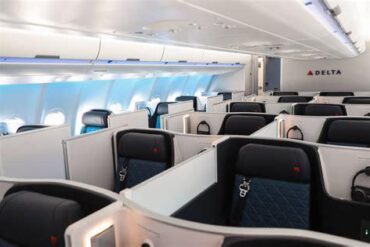
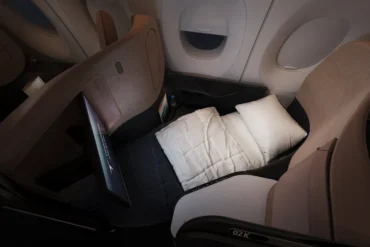
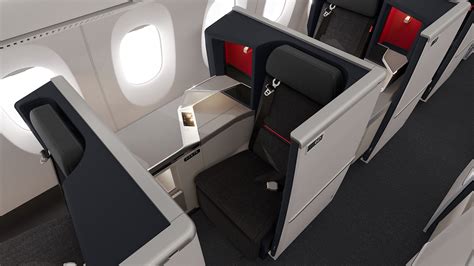
With the Airbus A350-1000 expected to deliver a modern onboard experience—featuring Delta One Suites, premium economy, and enhanced Wi-Fi and IFE systems—Delta’s offering aims to outclass rivals in the premium long-haul segment.
The key challenge now lies in execution:
- Regulatory approval from both U.S. and Indian authorities.
- Ensuring timely A350-1000 deliveries amid global aerospace supply chain disruptions.
- Synchronizing route launch with partner network expansions across Europe and India.
Conclusion: A High-Stakes Comeback
Delta’s return to India is more than a symbolic move—it is a calculated investment in the future of global air travel. With its new long-range fleet, deep partnerships with key global and regional players, and strategic focus on premium direct connectivity, Delta is preparing to compete head-to-head with the world’s most powerful airline networks.
If successful, the Atlanta–New Delhi route will become a flagship service, redefining Delta’s presence in Asia and offering a vital new link for transcontinental travelers. As 2026 approaches, all eyes will be on Delta to see if this high-stakes comeback will transform its fortunes in the Indian market.