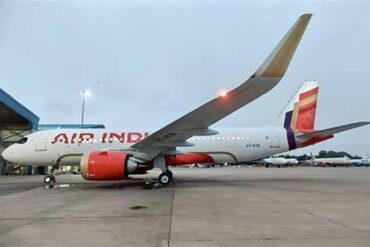
The early morning calm at Delhi Indira Gandhi International Airport was broken by an unusual and costly ground incident that has forced Air India to ground one of its newest and most strategically important widebody aircraft. An Airbus A350-900, operating a long-haul service bound for New York, suffered severe engine damage after ingesting a stray cargo container while taxiing in extremely low visibility conditions, highlighting once again how vulnerable even the most advanced aircraft can be to ground-side lapses.
The aircraft had only recently returned to Delhi after its transcontinental journey was interrupted by a temporary airspace closure over Iran, compelling the flight crew to divert back to its origin shortly after departure. The widebody jet landed safely just after 5:00 AM local time, with passengers and crew unaffected. However, dense fog blanketing the airfield created challenging conditions as the aircraft taxied from the runway toward its assigned parking stand, setting the stage for the incident that followed.
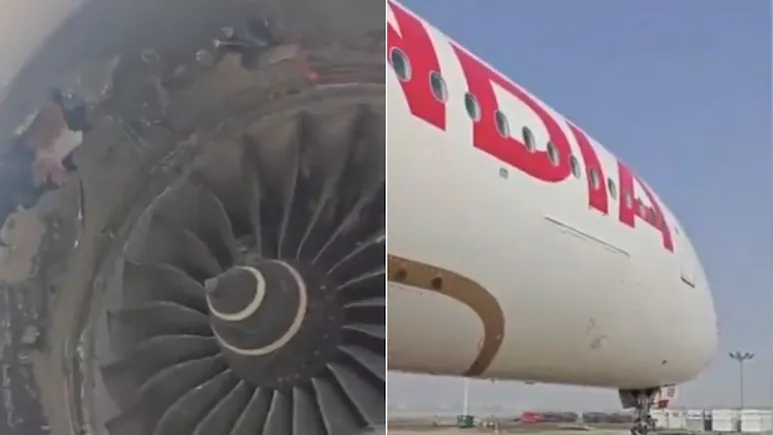
As the A350 moved slowly across a taxiway intersection at approximately 05:25 AM, its number two engine, mounted on the right wing, ingested a large metallic cargo container that had been left on the pavement. The object was immediately drawn into the engine intake, causing extensive internal damage and scattering debris across the taxiway surface. Airport operations were temporarily disrupted as safety teams rushed to secure the area and assess the scale of the damage.
Initial findings released by India’s Directorate General of Civil Aviation (DGCA) point to a breakdown in ground handling procedures. The cargo container is believed to have fallen from a baggage transport tug earlier that morning while en route to the Baggage Makeup Area, unnoticed amid the poor visibility. The DGCA confirmed that the incident resulted in significant engine damage, necessitating a full grounding of the aircraft and a detailed inspection of the surrounding airfield for Foreign Object Debris (FOD).
While aircraft engine ingestion incidents are not unheard of, they are exceptionally rare at taxiing speeds and typically involve smaller debris. The ingestion of an entire cargo container represents a serious anomaly, raising questions about ramp safety protocols, vehicle inspections, and situational awareness during adverse weather operations. Investigators are now examining CCTV footage, vehicle movement logs, and ground staff statements to establish how the container remained on an active taxiway long enough to pose such a risk.
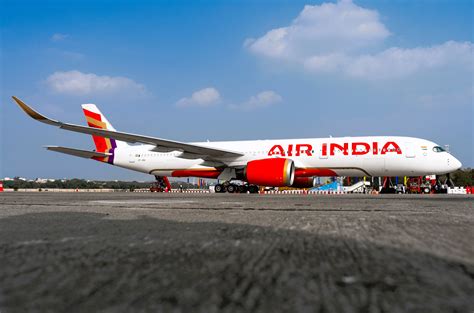
From an operational standpoint, the consequences for Air India are immediate and complex. The airline currently operates a very small A350 subfleet, with only six aircraft delivered so far. The loss of even one unit significantly reduces scheduling flexibility, especially on long-haul routes where aircraft availability, crew pairing, and maintenance windows are tightly synchronized. The grounded aircraft will remain out of service until engine repairs or replacement can be completed, a process that could take weeks depending on parts availability and inspection outcomes.
The Airbus A350 plays a central role in Air India’s international revival strategy, serving premium long-haul destinations with improved fuel efficiency and passenger comfort. The type is consistently assigned to key routes including Delhi–London Heathrow, Delhi–New York JFK, Delhi–Newark, and Delhi–Dubai, with occasional deployments on high-density domestic sectors such as Mumbai and Chennai. With only five operational A350s remaining, the airline may be forced into last-minute aircraft substitutions, potentially involving older widebody jets with different cabin products.

Beyond the immediate disruption, the incident arrives at a pivotal moment for the carrier. Air India is in the midst of one of the most ambitious fleet expansion programs in global aviation history. The airline has 50 Airbus A350s on order, including both the -900 and larger -1000 variants, as part of a broader commitment to modernize its long-haul operations. These aircraft are expected to underpin new intercontinental routes and significantly elevate the airline’s competitive standing against Middle Eastern and Asian rivals.
The damaged A350 itself features a three-class configuration accommodating 316 passengers, blending business, premium economy, and economy cabins. Its temporary removal from service not only affects capacity but also the consistency of Air India’s onboard experience, something the airline has been keen to standardize as part of its brand relaunch. For passengers, this may translate into unexpected aircraft changes, altered seating layouts, or revised service offerings on affected flights.
Regulators, meanwhile, are treating the incident as a serious safety matter rather than a routine operational hiccup. The DGCA’s investigation will likely extend beyond the immediate cause to examine systemic issues in ramp operations, equipment securing standards, and low-visibility procedures at one of India’s busiest airports. Any findings could result in updated guidelines or enforcement actions aimed at preventing similar occurrences across the country’s rapidly expanding aviation sector.
Although no injuries were reported and the aircraft itself remained structurally intact, the episode serves as a stark reminder that aviation safety is as dependent on ground discipline as it is on airborne technology. For Air India, the challenge now lies in managing the operational fallout while cooperating fully with investigators. For the wider industry, the incident underscores the critical importance of FOD prevention, particularly during fog-prone winter operations when margins for error are dramatically reduced.