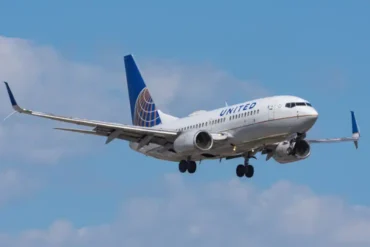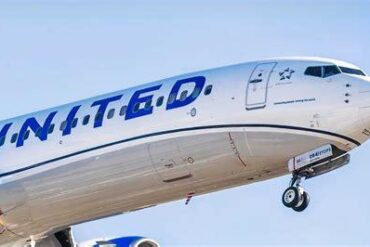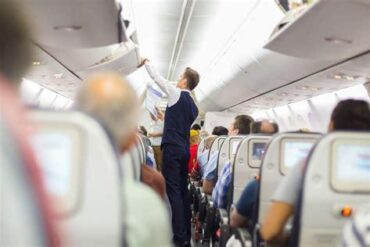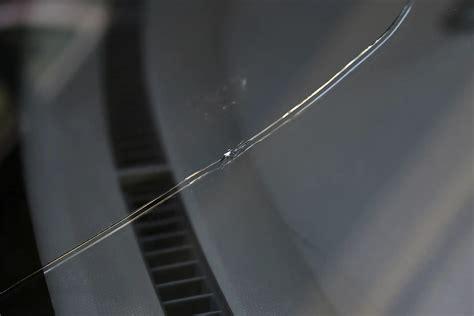
In October 2025, United Airlines Flight 1093 was cruising at 36,000 feet on a routine journey from Denver to Los Angeles when a sudden crack appeared in the cockpit windshield. The aircraft, a Boeing 737 MAX 8, was carrying 134 passengers and six crew members. While no injuries were reported beyond a minor abrasion sustained by one of the pilots, the potential causes of the cracked windshield sparked widespread speculation — and even sensational claims that the aircraft had collided with space debris.
The mid-air emergency prompted the flight crew to immediately divert the aircraft to Salt Lake City International Airport, where it landed safely. The National Transportation Safety Board (NTSB) quickly launched a formal investigation. Initial reports painted an almost apocalyptic picture: was this a freak encounter with a wayward meteorite, or perhaps a shattered relic from a defunct satellite?
Why Space Debris Was the First Suspect
The notion of space debris damaging a commercial airliner sounds like the stuff of science fiction. However, such speculation wasn’t completely unfounded. Space debris, which includes defunct satellites, fragments from disintegrated spacecraft, and other orbiting detritus, poses an increasing risk to both space infrastructure and — as some feared — atmospheric aviation.
Still, from a statistical standpoint, a collision between space debris and a commercial airliner is astronomically improbable. A 2023 report from the Federal Aviation Administration (FAA) quantified this risk as being less than one in a trillion. Commercial jets simply don’t operate high enough to regularly encounter orbital remnants.
Given this context, the growing hypothesis began to lose altitude.
Enter Windborne Systems — A Ballooning Explanation
Just days after the incident, a far more terrestrial explanation emerged. John Dean, CEO and co-founder of Windborne Systems, stepped forward with a striking revelation: the United Airlines jet may have collided with one of his company’s long-duration weather balloons.
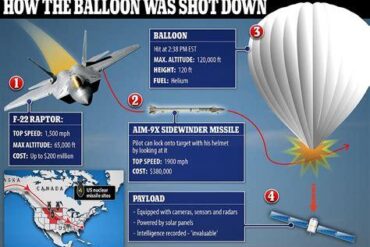
Windborne Systems operates a fleet of AI-enhanced, data-collecting balloons that float in the upper atmosphere to gather meteorological data and support climate change mitigation strategies. These balloons, weighing just 2.4 pounds at launch, are designed with midair safety in mind. According to the company, each flight is meticulously logged with aviation authorities via NOTAMs (Notices to Airmen) to reduce the risk of airspace conflicts.
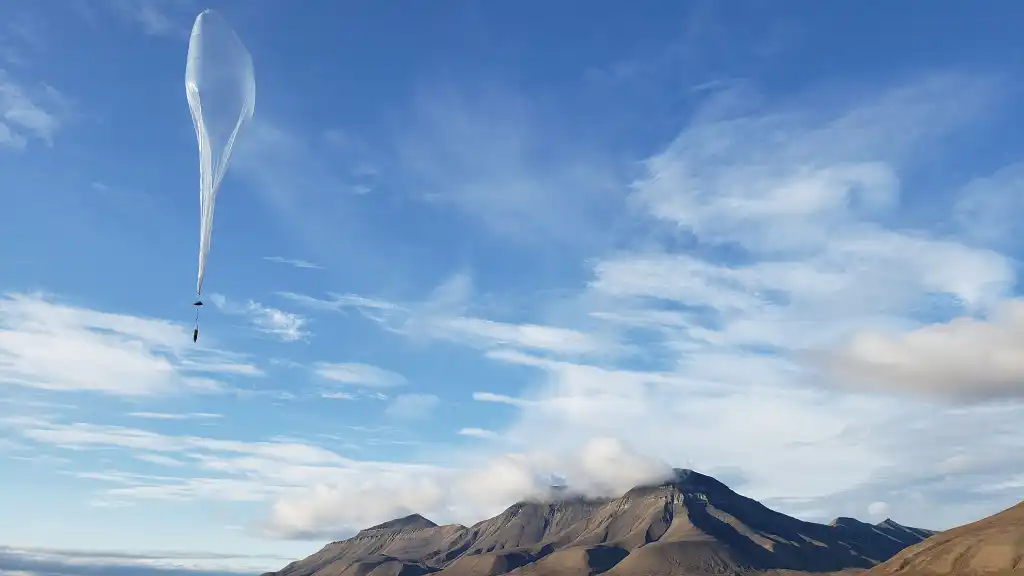
However, Flight 1093’s path intersected with a potentially ill-timed balloon. Windborne issued a statement labeling the level of damage sustained by the aircraft as “unacceptable” and committed to overhauling both its operational procedures and hardware design.
Engineering Meets the Unexpected: How Could a Balloon Crack a Windshield?
One might wonder: how can a seemingly benign balloon inflict enough force to crack a multi-layered cockpit windshield engineered to withstand bird strikes, pressure variations, and extreme temperatures?
The answer lies in a confluence of velocity and vulnerability. At cruising speeds of 500+ mph, even small objects become dangerous projectiles. While Windborne’s balloon wasn’t built to puncture or damage, the speed differential at the moment of impact would exponentially increase the kinetic energy involved.
Reports noted scorch marks and deep fracture lines on the outer layers of the windshield. The material used in commercial jet windows typically involves chemically tempered glass and polycarbonate laminates, built to withstand intense stress. That this particular impact caused a breach, though not a shatter, suggests either:
- A direct strike on a structurally weaker portion of the window.
- A combination of collision and electrical arcing, potentially explaining the scorch marks.
Changes Implemented by Windborne Systems
In response to the event, Windborne Systems swiftly enacted a series of technical and procedural changes:
- Reduced time in high-altitude airspace (30,000 to 40,000 feet), where commercial aircraft operate.
- Integration of real-time aircraft tracking data to dynamically avoid active flight paths.
- Redesigning balloon hardware with materials that would disintegrate more easily upon impact or deflect without transfer of kinetic energy.
These proactive measures are now being reviewed and validated by both the FAA and NTSB.
A Pattern in the Skies: Past Incidents of Cracked Windshields
While this incident captured headlines due to its unique suspected cause, it is not the first time a commercial aircraft has suffered windshield damage midair.
In 2007, Denver International Airport investigated a rash of 13 cracked windshields across multiple flights. The culprit? Foreign object debris (FOD) stirred up by storm activity near the tarmac.
In 2013, a Boeing 757 en route to Boston returned to its origin after sudden cracks appeared on its windshield. Similarly, a 2014 Boeing 767-300 flight to Los Angeles made an emergency landing from 38,000 feet due to windshield fracture.
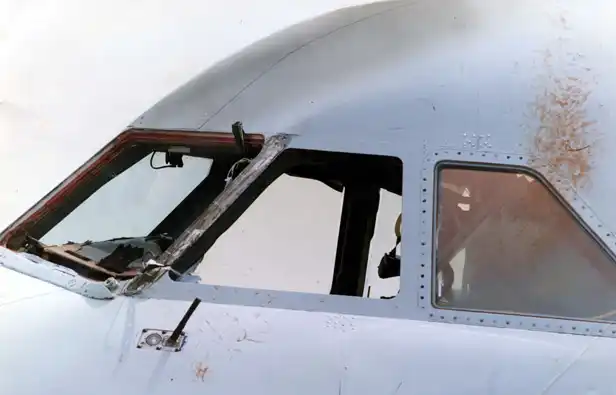
Perhaps the most terrifying incident occurred in 1990 aboard British Airways Flight 5390, when an entire windshield panel detached midair. The captain was sucked halfway out of the aircraft and survived only because his co-pilot and cabin crew held onto his legs until the plane landed.
Why Most Cracked Windshields Don’t End in Tragedy
Despite the drama of these incidents, they remain statistical anomalies within modern aviation. Commercial pilots undergo rigorous training for dealing with cockpit visibility issues, instrument-only flight, and emergency descent procedures.
Modern aircraft are also equipped with redundant systems and reinforced materials, making total windshield failure extraordinarily rare. In the case of Flight 1093, even with visible damage and potential minor pressurization issues, the crew performed a calm, textbook descent to a safe alternate landing site.
Moreover, advancements in meteorological and radar data integration, especially with organizations like Windborne now committing to real-time adjustments, ensure that even novel threats like high-altitude balloons will be accounted for going forward.
The Verdict: Not Space Debris — But Still a Wake-Up Call
In light of the evidence, it appears clear that space debris was not the culprit in the United Airlines Flight 1093 incident. The more plausible — and grounded — explanation lies with a balloon-to-plane collision, courtesy of Windborne Systems.
This event, while rare, highlights critical vulnerabilities in our increasingly crowded skies. Between drones, balloons, and the continuing proliferation of micro-satellites and edge weather tech, the need for coordinated airspace governance has never been greater.
For passengers and pilots, however, this should not serve as a reason to panic. The incident was handled with professionalism and precision, with zero casualties and an aircraft that remained airworthy despite damage.
Looking Forward: Lessons for the Aviation Industry
The collision incident has already set in motion a rethinking of near-space operations. Agencies like the FAA, NASA, and ICAO may begin to reevaluate current buffer zones, tracking requirements, and licensing standards for atmospheric data platforms.
Additionally, we may see:
- Increased use of collision-avoidance AI for weather balloons and autonomous drones.
- Stricter enforcement of NOTAM compliance and updates.
- Broader adoption of transparent flight path databases, allowing public and commercial aircraft to sync more effectively with non-standard aerial vehicles.
Ultimately, Flight 1093 will go down not as a disaster, but as a preventable incident — one that’s already catalyzing changes in how we manage shared airspace. And perhaps, in that sense, it was the best possible outcome from what could have been a tragic turn.
The sky may be vast, but it’s growing busier by the day. Vigilance, innovation, and accountability will keep it safe.