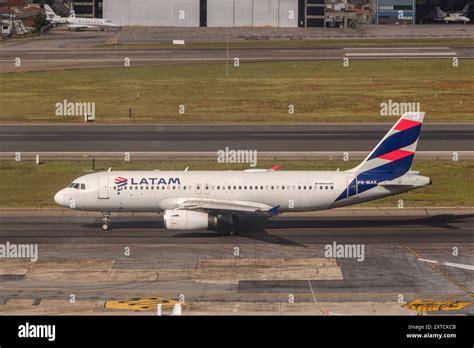
A serious runway incursion scare unfolded at São Paulo/Guarulhos International Airport (GRU) in Brazil on Saturday, August 15, when a LATAM Airlines Airbus A320 began its takeoff roll even after its departure clearance had been canceled. At the same time, an American Airlines Boeing 787-8 and a Delta Air Lines Airbus A330-900 were crossing the same runway after landing. Heavy fog and reduced visibility added another layer of risk to an already complex sequence of movements.
The LATAM aircraft was operating flight LA8019 from São Paulo to Mendoza, Argentina, and had initially been cleared to depart from runway 10L. That clearance was subsequently withdrawn because the two incoming widebody aircraft needed to cross runway 10L after landing on the parallel runway 10R. The LATAM crew acknowledged the cancellation, but the A320 nevertheless began accelerating for takeoff.
The situation became particularly alarming because the aircraft was already moving while the two widebodies were authorized to cross farther along the runway. Air traffic control immediately repeated the instruction to stop the takeoff, reportedly with an urgent tone. The A320 eventually rejected its departure after reaching approximately 129 km/h (70 knots), preventing what could have developed into a much more dangerous runway conflict.
Confusion in São Paulo’s Low Visibility
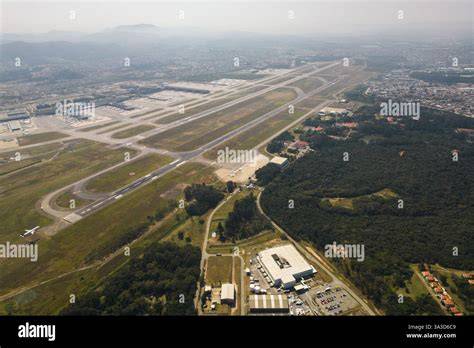
The incident occurred during a foggy morning at Guarulhos, one of Brazil’s busiest aviation hubs. Low visibility can significantly increase the workload for both pilots and controllers because aircraft movements depend more heavily on precise clearances, radio communications, runway awareness, and adherence to established procedures.
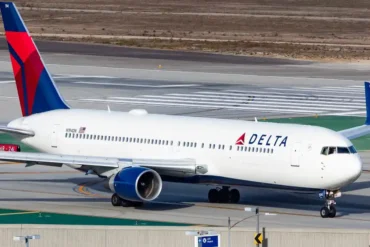
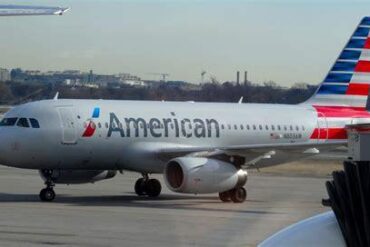
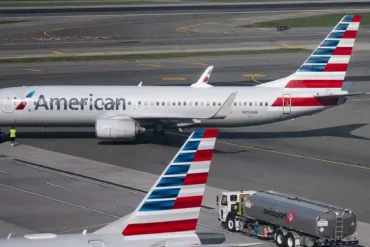
According to flight-tracking information, American Airlines’ Boeing 787-8 had arrived from Miami International Airport (MIA) at approximately 8:18 a.m., while Delta’s Airbus A330-900 had landed from New York John F. Kennedy International Airport (JFK) around 8:22 a.m. Both aircraft then needed to cross runway 10L to reach their assigned gates.
LA8019 was scheduled to depart at approximately 8:00 a.m., but its takeoff attempt occurred at about 8:24 a.m. The timing meant the LATAM A320 began its acceleration just as the American and Delta aircraft were moving across the runway. The exact circumstances surrounding the crew’s decision to begin the takeoff roll remain subject to investigation.
LATAM Crew Stops the A320
The most important development was that the LATAM A320 ultimately stopped on the runway after air traffic control reiterated that its takeoff authorization had been canceled. LATAM subsequently stated that the aircraft interrupted its takeoff following an ATC request and that the procedure was completed safely. The airline also confirmed that it was cooperating with the relevant authorities.
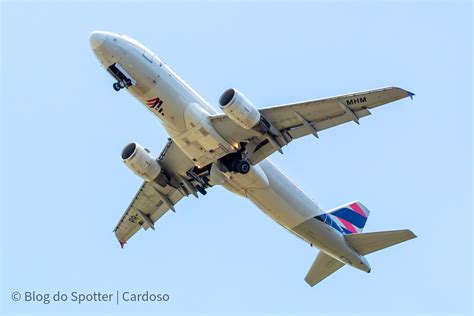
After stopping, the A320 was instructed to hold its position and await further directions. It later vacated the runway, returned to the departure sequence, and prepared for another attempt. The aircraft, registered PR-MHM, eventually departed for Mendoza approximately 46 minutes later than scheduled.
American and Delta Widebodies Were Crossing
The presence of the two US carriers made the incident especially significant. An American Airlines Boeing 787-8 and a Delta Air Lines Airbus A330-900 are substantially larger aircraft than the departing A320, and both had already completed their landings before being cleared to cross runway 10L.
Their movements were part of normal airport operations: both aircraft had landed on runway 10R and required access across 10L to continue toward their gates. The danger emerged because the departure authorization for LATAM’s aircraft had been canceled specifically to accommodate those movements.
This is why runway incursions are treated so seriously. Even when aircraft remain separated by considerable distance, a misunderstanding involving a takeoff clearance can rapidly remove the safety margin built into airport operations. Fog makes that margin even more important because pilots may have limited ability to visually identify traffic on the runway.
CENIPA Investigation Will Examine the Sequence
The incident has prompted an investigation, with relevant information being prepared for processing by Brazil’s Aeronautical Accidents Investigation and Prevention Center (CENIPA). Investigators will likely examine communications between the cockpit and ATC, the timing of each clearance and cancellation, aircraft positions, runway occupancy, and available flight-data records.
The investigation is particularly important because the LATAM crew reportedly acknowledged the canceled clearance before beginning the takeoff roll. Determining how that sequence occurred will be essential to understanding whether the event resulted from communication ambiguity, cockpit workload, human error, environmental conditions, or a combination of factors.
LA8019 Reaches Mendoza After the Aborted Takeoff
Despite the disruption, LA8019 eventually completed its journey safely. The flight’s scheduled block time was around four hours, with arrival in Mendoza planned for noon local time. On August 15, however, the aircraft spent approximately three hours and 46 minutes in the air and landed at about 12:32 p.m.
The A320 subsequently operated its return journey and recovered much of the schedule later in the day. Operationally, the event therefore produced a relatively modest delay. From a runway safety perspective, however, its significance was far greater.
The São Paulo incident illustrates how quickly routine airport movements can become hazardous when clearances change in demanding conditions. A canceled takeoff clearance must be treated as absolute, particularly when other aircraft are occupying or crossing the runway. In this case, the repeated intervention by air traffic control and the eventual rejected takeoff prevented a potentially severe outcome, while the forthcoming investigation should provide a clearer picture of exactly how the breakdown occurred.