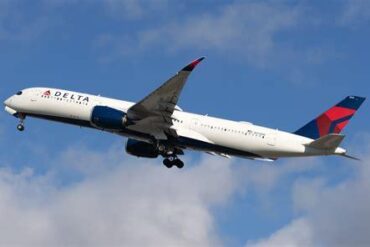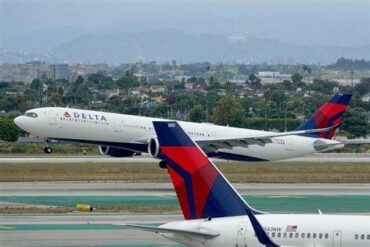
Delta Air Lines flight DL245, scheduled to depart from Catania–Fontanarossa Airport (CTA) to New York-JFK, experienced not one but two aborted takeoff attempts on July 28, 2025, leaving passengers anxious, delayed, and increasingly frustrated. What should have been a routine transatlantic journey aboard a widebody aircraft turned into a lesson in aviation safety and aging fleet realities.
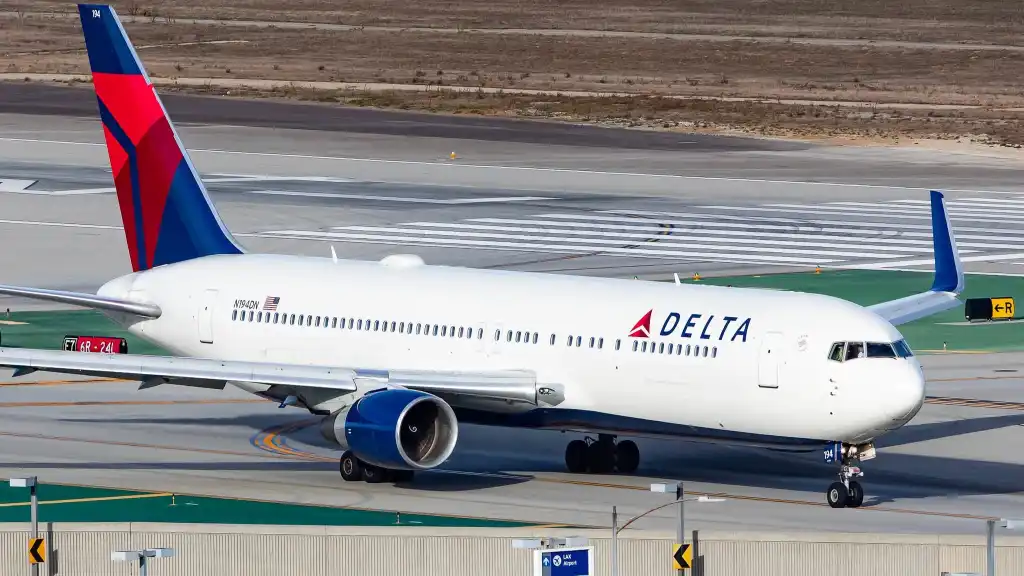
The unfolding drama of Delta flight DL245 began shortly after passengers boarded the Boeing 767-300ER, registered as N180DN, a veteran aircraft with over 33 years of service. Pilots initiated the first takeoff attempt from Runway 26, but as the aircraft gained speed down the runway, technical warnings emerged in the cockpit, prompting the crew to abort the takeoff at low speed. The aircraft taxied back to the gate for a diagnostic check and system reset.
After a period of reassessment and with systems appearing nominal, the flight prepared for a second departure, this time from Runway 08. Again, just as the aircraft began its acceleration, the same warning indicators reappeared on cockpit displays, forcing the pilots to abort for the second time. With no guarantee the issue could be resolved immediately, the decision was made to return the aircraft to the terminal for a deeper inspection, thus indefinitely delaying the flight.
The Aircraft in Question: Aged Yet Trusted
The aircraft at the center of the incident—Boeing 767-300ER, tail number N180DN—is no stranger to long-haul operations. Delivered in 1992, this model is equipped with Pratt & Whitney JT9D engines, a once-reliable workhorse now increasingly rare in frontline service. The aircraft’s age inherently presents certain technical susceptibilities, especially when operating far from home maintenance bases like Delta’s hubs in Atlanta or New York.
While the issues encountered were not related to catastrophic engine failure, they appeared to stem from ambiguous system warnings—likely concerning engine readouts or hydraulic pressure inconsistencies. Such problems can be symptomatic of aging sensors or intermittent faults, which while not immediately life-threatening, must be treated with utmost caution.
A Cautious but Correct Call by Delta’s Crew
To the untrained eye, two aborted takeoffs might appear as an overreaction. However, in the high-stakes world of aviation, especially involving widebody aircraft on international routes, every decision must prioritize safety over schedule. Delta’s pilots, recognizing the potential severity of even minor warning indications, made the responsible choice to abort both takeoff attempts and avoid risking lives based on uncertain diagnostics.
The Federal Aviation Administration (FAA) and European Union Aviation Safety Agency (EASA) both mandate rigorous adherence to Minimum Equipment Lists (MEL) and fault protocols, especially for Extended-range Twin-engine Operational Performance Standards (ETOPS) flights such as DL245. In this context, Delta’s actions were not just prudent—they were procedurally required.
Stranded in Sicily: The Passenger Experience
Despite the commendable professionalism of the cockpit crew, the situation inside the cabin quickly devolved into confusion and fatigue. Passengers, many of whom had already spent hours boarding, taxiing, and waiting, were subjected to ambiguous announcements, air conditioning fluctuations, and a complete lack of clarity about whether the flight would depart at all.
With tempers flaring, several passengers took to social media to voice their frustration, citing everything from missed connections to unfulfilled commitments in New York. As is often the case, communication breakdowns on the ground exacerbated an already tense atmosphere. While Delta staff at Catania attempted to rebook passengers or provide hotel accommodations, language barriers, system delays, and the limited infrastructure of a smaller airport contributed to the chaos.
The Challenge of Aircraft Substitution on International Routes
Unlike domestic flights where aircraft swaps can happen relatively quickly, international departures from secondary cities like Catania present logistical nightmares. Delta’s fleet does not maintain a standby aircraft in Sicily, and flying a replacement widebody from a hub such as Paris-CDG or Amsterdam-Schiphol could take 12–24 hours or longer, depending on crew availability and positioning.
This creates a cascading effect:
- Delayed flights impact connecting schedules in New York.
- Aircraft and crew repositioning affects subsequent departures.
- Maintenance actions must often be coordinated with third-party European contractors.
What might appear to be a simple technical glitch is, in reality, a multi-layered disruption requiring real-time decisions across continents.
Why Older Aircraft Still Fly—and the Risks Involved
Many may question why a 33-year-old aircraft like N180DN is still in service. The reason is a mix of economics, efficiency, and post-COVID fleet reshuffling. The Boeing 767, especially in its ER (Extended Range) form, continues to be a workhorse for cargo and transatlantic operations due to its fuel performance and cargo capacity. However, its age also means that certain onboard systems are less digitally integrated and rely on older analog or hybrid avionics, which are more susceptible to intermittent faults.
Airlines like Delta conduct routine maintenance checks (A-checks, C-checks, D-checks) at scheduled intervals, and no aircraft is permitted to fly unless it clears strict compliance requirements. Still, aging components increase the likelihood of nuisance warnings, which pilots are trained to treat as real until proven otherwise.
Lessons from DL245: The Cost of Safety
While passengers may have faced hours of delays, missed appointments, and added travel expenses, the incident reinforces an unshakable truth in commercial aviation: you only get one chance to get it right. The two aborted takeoff attempts are a clear demonstration of the aviation safety net functioning precisely as intended.
This situation also highlights a deeper trend: airlines are under increasing pressure to replace or retrofit aging long-haul aircraft, especially those operating outside core hubs. Delta, American, and United have all committed to modernizing their fleets with more fuel-efficient widebodies like the Airbus A330neo or Boeing 787 Dreamliner, but these transitions take time.
In the interim, incidents like that of DL245 will continue to surface—reminders that even the most robust systems are vulnerable when mechanical age and operational stress converge.
Looking Ahead: Operational and Strategic Implications
Following the incident, Delta is expected to conduct a full internal review of both the aircraft and the ground handling at Catania. Additionally, the FAA or EASA may review the maintenance logs of the aircraft to ensure no latent issues remain unresolved. The airline may also face calls to reconsider assigning older aircraft to long-haul flights from non-primary hubs, where support infrastructure is less robust.
For passengers, the incident underscores the value of travel insurance, particularly when flying out of secondary cities. It also reflects the need for airline transparency during technical delays—clear, timely updates can often alleviate customer anger even when the situation is far from ideal.
Conclusion: A Cautionary Tale in the Skies
Delta flight DL245 from Catania to New York was more than a delayed departure. It was a live demonstration of decision-making under pressure, the importance of conservative piloting, and the operational strain of managing older aircraft on complex international routes. Though passengers were understandably upset, the actions taken likely prevented a more serious scenario, making safety the ultimate victor.
The event also serves as a wake-up call to global carriers: as aviation returns to pre-pandemic volumes, the margin for error narrows. Every signal, every system, and every decision carries weight. For the 200-plus souls aboard DL245, it was a rough day on the tarmac—but one that ended safely on solid ground, thanks to precautionary measures taken at just the right moment.