Frequent flyers are noticing something unusual inside the Alaska Atmos Rewards program, and the implications could be significant. Over the past day, travelers searching for partner airline redemptions have discovered dramatically higher mileage prices, particularly when itineraries include connections. The sudden change appears inconsistent with the program’s published award charts, raising immediate concerns that a stealth devaluation may be underway.
For years, the loyalty ecosystem surrounding Alaska’s program has earned praise for one rare feature: transparent award charts. In a travel industry increasingly dominated by dynamic pricing, clear redemption tables have been a cornerstone of member trust. These charts display “starting at” prices for award tickets, which generally correspond to saver-level availability on partner airlines. When those seats are available, the expectation is simple—pricing should follow the chart.
That expectation now appears to be breaking down.
Travelers began reporting irregular pricing while booking partner flights between North America and Europe. Instead of following the published redemption bands, itineraries involving connecting flights are suddenly pricing far above what the chart suggests. The discrepancy has been spotted across multiple routes, suggesting a systemic issue rather than an isolated anomaly.
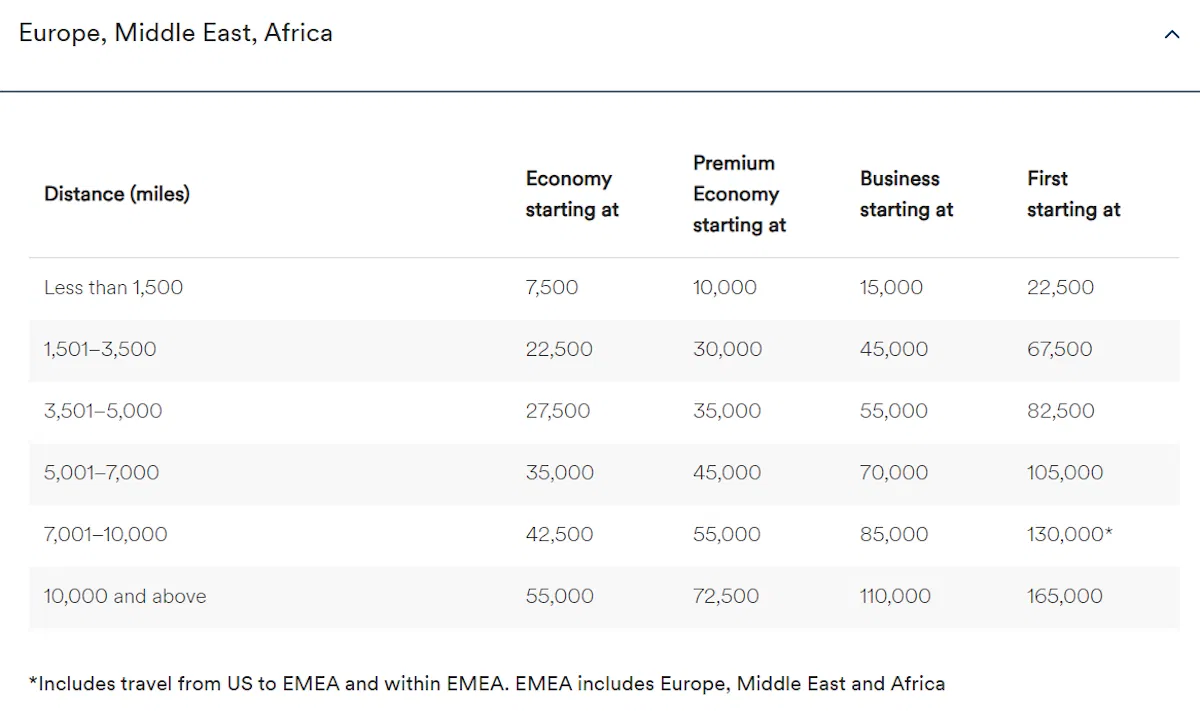
Award Chart Pricing No Longer Matching Search Results
Consider a common transatlantic redemption. A flight from Dallas to Helsinki on Finnair typically falls within the 5,001–7,000 mile distance band of the award chart. Under normal circumstances, this redemption should cost:
- 35,000 points in economy
- 70,000 points in business class
These numbers align perfectly with the published chart and represent the value that has made Alaska’s loyalty program attractive to frequent travelers.
However, something strange happens when a short connection is added. If the itinerary continues onward to Stockholm, the total points required jump dramatically:
- 55,000 points in economy
- 110,000 points in business class
That increase is significant. The connection adds only a short regional leg, yet the pricing behaves as though the itinerary moved into an entirely different redemption tier.

Similar Pricing Anomalies Across Europe Routes
The pattern appears again on routes involving Iberia. A direct flight between Chicago and Madrid falls within the 3,501–5,000 mile distance range of the award chart. As expected, searches currently return prices around:
- 27,500 points in economy
- 55,000 points in business class
These figures match the official chart precisely.
Yet adding a brief connection to Barcelona once again triggers higher redemption rates. The same itinerary suddenly costs:
- 35,000 points in economy
- 70,000 points in business class
In other words, adding a short connecting flight increases the required points by roughly 27 percent to 30 percent, even though the distance band technically remains the same. That behavior contradicts how the program historically priced awards.

Possible Explanations Behind the Pricing Shift
Two plausible explanations are circulating among loyalty analysts and frequent flyers.
The first possibility is an intentional devaluation of partner awards. When Alaska acquired Hawaiian Airlines, part of the regulatory agreement included protections against reducing the value of loyalty points. However, that restriction specifically applies to Alaska-operated flights, not necessarily to partner airline redemptions.
In theory, this loophole could allow the program to quietly increase redemption costs on partner itineraries without violating those commitments.
Yet such a move would represent a sharp departure from Alaska’s reputation. The airline has historically emphasized member transparency and predictable redemption value, two qualities that helped differentiate its loyalty program in a competitive market.
A Technical Glitch May Be the Real Culprit
The alternative explanation is far less dramatic: a software issue.
Airline loyalty systems are notoriously complex, particularly when multiple partner airlines and routing combinations are involved. Pricing engines must calculate distance bands, availability buckets, fare classes, and partner agreements simultaneously. A small update to the booking system can easily produce unexpected pricing behavior.
There is also speculation that Alaska may be preparing to launch expanded multi-partner awards, a feature many loyalty enthusiasts have been requesting for years. If the airline is modifying backend systems to enable those itineraries, it is possible that unfinished pricing logic temporarily slipped into the live environment.
Why This Matters for Frequent Flyers
For travelers who strategically accumulate airline miles, changes like this can have major consequences. A redemption increase of 20–40 percent dramatically alters the economics of a loyalty program, particularly for premium cabin travel.
Programs thrive on trust. Members earn points over months or years with the expectation that award charts will remain relatively stable. When redemption costs suddenly deviate from published pricing, even temporarily, it sends a ripple of uncertainty through the community.
The Situation Remains Unresolved
At the moment, the unusual pricing remains a developing situation. It is still unclear whether the changes represent a permanent adjustment, a temporary glitch, or a preview of future award structures.
What is certain is that frequent flyers are watching closely. If the pricing persists, Alaska Atmos Rewards could be facing one of the most significant loyalty program shifts in recent years. If it disappears just as quickly as it appeared, it will become another curious reminder of how delicate—and mysterious—the machinery behind airline loyalty programs can be.