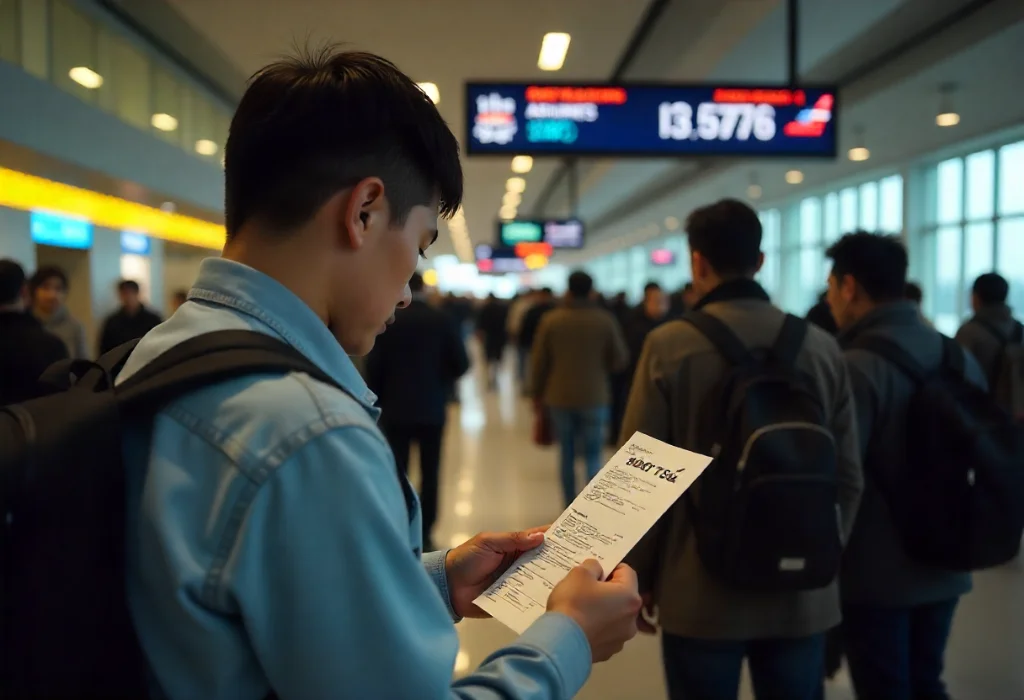
A mishap at a Japanese airport has led to an extraordinary overcharge of $3,674 on an American Airlines award ticket, exposing deep flaws in both ticketing systems and customer service protocols. This troubling case underscores how system errors at airports, combined with delayed refund processes, can inflict serious financial and emotional stress on passengers.
The Costly Error: How a Simple Booking Went Wrong
The ordeal began when a traveler booked a multi-leg journey from Okinawa to Tokyo and onward to Los Angeles using 60,000 airline miles. She planned to travel with her infant as a lap child, a common arrangement under international ticketing rules that usually costs 10% of the adult fare plus taxes. American Airlines initially quoted her $386 for this infant ticket — a reasonable expectation.
However, shock set in when she received a confirmation email reflecting a massive additional charge of $3,674 — an amount equivalent to a full adult fare. Even more alarming, the charge was immediately debited from her account without any prior notice or consent.
Refund Promises That Never Materialized
Upon identifying the error, the traveler immediately contacted American Airlines, where customer service acknowledged the mistake and promised a refund within 5–7 business days. Yet, this assurance quickly fell apart. Weeks passed with no refund and only vague assurances from the airline’s representatives. Repeated follow-ups yielded little more than generic responses such as “Your case is under review” or “Please be patient while we process your request.”
A Check-In Mishap Adds Fuel to the Fire
On the day of departure at Okinawa Airport, she attempted to clarify the situation with staff from a codeshare partner airline. Her intent was simple: ensure she was checked in only under the award ticket. Unfortunately, miscommunication led staff to check her in under the full-fare ticket — the one she had never intended to purchase.
This error gave American Airlines a convenient justification to delay the refund even further. Because the full-fare ticket was technically used, the airline argued that the process now involved coordination with the codeshare partner, further complicating the matter. Instead of a swift correction, the traveler found herself ensnared in bureaucratic red tape.
Silence and Stonewalling from American Airlines
Over the ensuing months, the traveler’s emails, calls, and written complaints were largely ignored. American Airlines eventually ceased responding altogether, leaving her without updates or a timeline for resolution. This radio silence highlighted an alarming breakdown in the airline’s customer service operations, especially in cases involving international award tickets and infant fares.
Public Attention Forces a Resolution
Frustrated and financially burdened, the traveler took her story public, sharing her experience on social media. This strategy proved effective. Once the incident gained traction online, American Airlines finally responded, confirming that the refund process had been initiated and promising the full return of the overcharged amount. Months of stress, unanswered queries, and financial uncertainty came to an end — but only because of public pressure.
Lessons for Passengers: How to Protect Yourself
This incident offers crucial insights for passengers, particularly those booking award travel or flying internationally with infants:
- Check all charges immediately. Always review your email confirmations and bank statements within hours of booking.
- Document everything. Maintain a record of emails, call logs, and payment receipts to support your case.
- Act quickly. Contact the billing department directly at the first sign of an error.
- Understand airline policies. Learn how infant fares are calculated when using points or miles.
- Escalate when necessary. If normal customer service channels fail, take your case public or contact consumer advocacy groups.
Broader Industry Patterns: Why This Isn’t an Isolated Incident
This case is not unique. Similar instances have been reported across the airline industry, where passengers experience unexplained billing errors and unfulfilled compensation promises. One recent case involved a passenger denied reimbursement for hotel expenses despite receiving verbal assurances after an overnight flight delay. Airlines often fall short of their commitments, creating a cycle of mistrust.
Airline Delay Compensation: Promises vs. Reality
Under U.S. Department of Transportation guidelines, airlines are expected to provide accommodations for delays caused by controllable factors like maintenance issues or crew shortages. However, passengers often encounter inconsistent enforcement. Weather-related justifications are frequently used — sometimes dubiously — to avoid compensation, even when the departure and arrival airports were unaffected by adverse conditions.
How Credit Cards Can Offer a Safety Net
For frequent travelers, premium credit cards often provide superior protection compared to airlines’ own policies. Many cards offer trip delay coverage — typically up to $500 per person — which can cover accommodation, meals, and transportation after delays of 6–12 hours. Crucially, these benefits usually come with higher approval rates than airline compensation requests. To use these protections effectively, travelers should retain all receipts and documentation of delays.
Conclusion: A Call for Accountability
This $3,674 overcharge on an award ticket booked through American Airlines reveals how simple errors can escalate into complex financial ordeals when airlines fail to uphold their responsibilities. The incident also demonstrates that public accountability remains one of the most effective tools for resolving such disputes.
For passengers, the key takeaway is clear: stay vigilant, document every interaction, and escalate issues quickly when necessary. Airlines must also confront their systemic failures in handling billing errors and customer complaints. Until then, travelers will continue to rely on social pressure and external advocacy to achieve the justice they deserve.