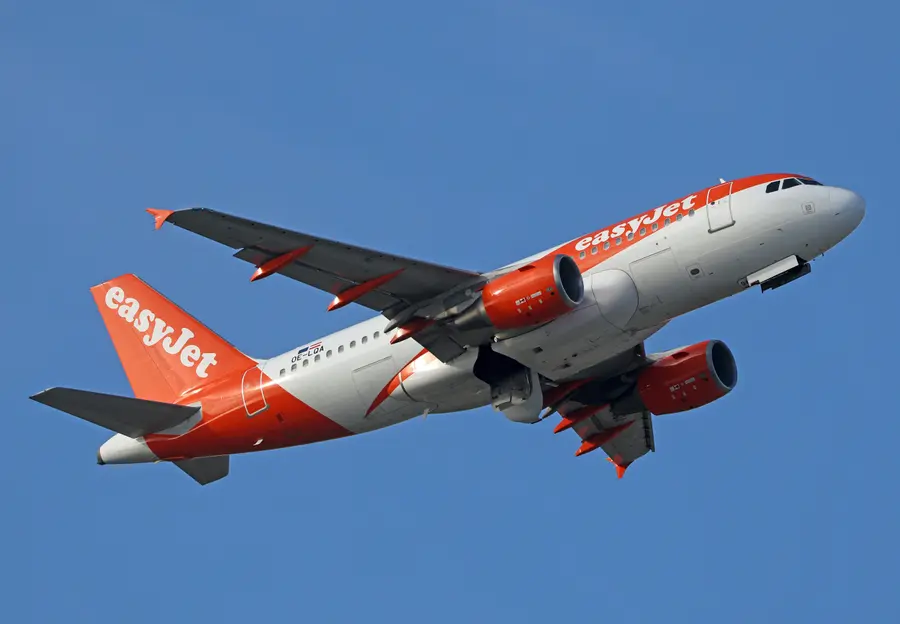
An elderly couple’s planned summer escape to Verona turned into a regulatory flashpoint after easyJet advanced their flight by more than 11 hours, triggering a dispute that ultimately ended with a £900 refund and a public apology. What began as a routine schedule adjustment escalated into a test of European passenger rights—and a reminder that written airline communications carry legal weight.
The couple, both in their 70s and 80s, had booked premium seats with checked luggage for a June departure scheduled around 5:30 PM. That timing mattered. Afternoon departures offer flexibility, manageable airport transfers, and a humane travel rhythm for older passengers. But the airline rescheduled the service to 6:40 AM, effectively requiring a pre-dawn airport arrival and eliminating any practical same-day travel option.
The dispute did not center solely on the time shift. It revolved around what happened next. According to reporting, the airline’s notification email appeared to offer a full refund as one of the options. Yet when the couple contacted customer service, representatives allegedly refused to process the refund. The contradiction between automated communication and frontline response became the core issue.
An 11-Hour Advance That Crossed a Legal Line
Under European Union passenger rights regulations (EU261), a flight that is brought forward by more than one hour can be treated as a cancellation rather than a minor schedule tweak. That distinction is critical. Cancellations activate passenger rights to choose between reimbursement or rerouting. Compensation may also apply depending on timing and circumstances.
An 11-hour advance is not a marginal adjustment. Operationally, it transforms the nature of the journey. Commercially, it disrupts hotel plans, airport transfers, and sleep schedules. Legally, it places the burden on the airline to offer remedies aligned with cancellation rules.
Airlines routinely adjust schedules as they optimize aircraft rotations, respond to airport slot constraints, or refine demand forecasts. Low-cost carriers such as easyJet rely on high aircraft utilization and tight turnaround windows, which often favor early morning departures and late-night arrivals. These adjustments are embedded in the economics of the model. However, when a shift becomes this substantial, the classification changes from inconvenience to cancellation in regulatory terms.
When Automation and Customer Service Diverge
The couple’s experience underscores a structural vulnerability in modern airline operations. Automated systems generate itinerary change emails based on regulatory logic. Call center scripts, meanwhile, may default to fare rules emphasizing “non-refundable” conditions. When those two frameworks clash, confusion follows.
In this case, the written notification reportedly referenced a refund option. That digital record became decisive. Once the matter gained public attention, easyJet reversed its position, processed the refund in full, and issued an apology for the miscommunication.
The reversal did more than resolve a single complaint. It signaled recognition that written offers in schedule-change notifications carry enforceable implications. In regulatory disputes, documentation is leverage.

Why Schedule Changes Demand Immediate Action
Passengers confronted with significant timetable adjustments should treat the notice as a formal legal event, not a casual update. The most effective first step is to respond in writing, explicitly selecting the preferred option—refund or rerouting. Preserving documentation is essential. Screenshots of the original itinerary, the revised schedule, and any stated refund offer create a verifiable record.
If customer service refuses a remedy that appears to be supported by regulation or written communication, escalation to a supervisor or customer relations department becomes the logical progression. In the United Kingdom, airlines are generally expected to resolve complaints within eight weeks before disputes can move to approved alternative dispute resolution bodies.
Credit-card chargebacks can serve as a backstop if services are not delivered as contracted. However, self-rebooking introduces complexity. Passengers who independently purchase replacement flights must retain all receipts and formally request reimbursement, as airlines frequently require documentation before authorizing repayment.
Operational Reality Versus Passenger Rights
Two realities coexist in this episode. Airlines must adapt schedules to maintain network efficiency. Slot allocations change. Aircraft rotations evolve. Market demand fluctuates. A single adjustment can cascade across a day’s operations. From an operational standpoint, moving a departure from late afternoon to early morning may optimize fleet usage.
From a passenger-rights standpoint, however, magnitude matters. An 11-hour shift is not a minor recalibration. It disrupts accommodation bookings, ground transport, and personal logistics. European guidance is explicit: departures advanced by more than one hour should be treated as cancellations. That framing makes refund eligibility difficult to dispute.
By backtracking quickly, easyJet limited reputational damage and reduced the likelihood of an adverse regulatory ruling. It also avoided establishing an unfavorable precedent in which an airline email promising refunds could be publicly contradicted by customer service agents.
A Case Study in Consumer Leverage
Public escalation played a decisive role. Once the dispute attracted media attention, resolution accelerated. Airlines operate in a reputational ecosystem where transparency travels fast. A single unresolved complaint can ripple across consumer trust metrics.
The broader lesson extends beyond one carrier. Non-refundable fares are not absolute shields when regulatory frameworks intervene. Schedule changes of significant magnitude alter contractual expectations. European aviation law recognizes this asymmetry and provides structured remedies.
For travelers, vigilance is practical wisdom. Monitoring inboxes for schedule adjustments, preserving written communication, and responding promptly transforms passive inconvenience into informed action. For airlines, consistency between automated messaging and frontline response is not optional; it is a compliance imperative.
In the end, the Verona trip became a case study rather than a vacation. A refund exceeding £900 closed the dispute, but the episode leaves a sharper insight behind: in modern aviation, the smallest line in an email can outweigh the loudest refusal on a phone call.