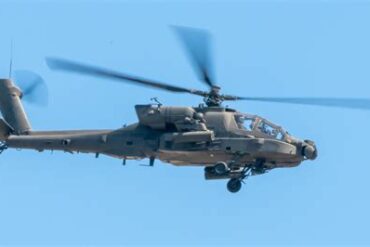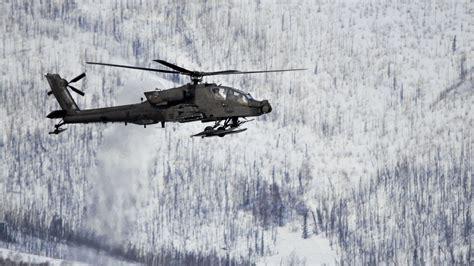
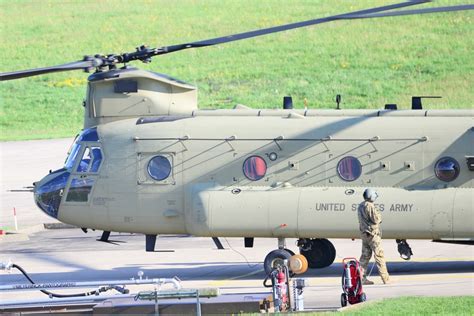
Over recent days, residents of western Alaska have found themselves gazing skyward, watching as military helicopters—most notably the CH-47F Chinook and HH-60 Blackhawk—cut across the sky. While these sightings are not unprecedented during the summer months, their frequency and sudden presence have stirred confusion, speculation, and even alarm across several remote communities.
Heightened Helicopter Activity Spurs Public Concern
In communities like Kotzebue, where urban infrastructure is modest and the skyline largely unbroken, the appearance of military aircraft is a striking visual anomaly. During a recent Kotzebue City Council meeting, Police Chief Christopher Cook shared how unexpected overflights in the past triggered intense concern among locals.
“The citizens were calling us saying, ‘I think the Russians are invading us’ kind of thing,” Cook told council members.
The military presence has prompted widespread questioning: Why now? Why here? Is something being prepared that residents should be concerned about? In reality, the answer is rooted not in crisis, but in strategic preparedness.
Arctic Edge: What It Is and Why It Matters
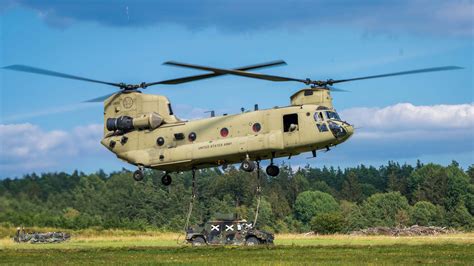
The helicopter sightings are part of advance preparations for Arctic Edge 2025, a recurring U.S. military exercise designed to test and enhance operational readiness in Arctic conditions. While these exercises happen every two years, the scale and regional reach of Arctic Edge has grown, reflecting the evolving strategic importance of Alaska’s northern and western regions.
According to Sergeant Donald Hudson, Public Affairs Officer for Alaskan Command, the current flights are “site surveys”—the military equivalent of vacation pre-planning. These missions aim to evaluate terrain, identify safe landing zones, assess fuel needs, and map out the logistics required to support more substantial deployments during the full-scale exercises.
“You’re doing your research to find out where you’re going to be staying, where you’re going to be eating, how you’re going to get all the people in your group to go there and be there for a chunk of time,” Hudson said.
Such preparation is vital. Arctic Edge involves coordination between multiple branches of the military, including the Army, Air Force, Navy, and Marine Corps, often in partnership with allied forces and regional partners.
Strategic Geography: Western Alaska’s Increasing Significance
The inclusion of Western Alaska in these exercises is no accident. Geopolitically, the region represents a critical frontier in the broader Arctic theater. It lies in close proximity to both Russia and the Bering Strait, making it a strategic location for projecting force, conducting surveillance, and executing logistics-heavy operations in frigid conditions.
The remoteness and austere environment of Alaska’s western coastlines serve as a perfect testbed for simulating real-world scenarios that could emerge in the Arctic—ranging from natural disaster response to contested military engagements. With climate change accelerating Arctic ice melt, new navigable waters and resource routes are opening, which brings both opportunity and tension to the region.
Past Confusion and the Push for Public Transparency
In 2023, an earlier iteration of Arctic Edge caused a flurry of confusion among locals, many of whom were not warned in advance. That experience highlighted a gap in civil-military communication, especially in communities unaccustomed to large-scale maneuvers.
To mitigate this, planners have ramped up public outreach efforts for the 2025 exercise. Police Chief Cook explained that this time, the military made a point of informing local officials and law enforcement early. They emphasized that nothing secretive or operationally imminent is underway—only routine training.
“They’re not hiding anything,” said Cook. “They just want everybody to know… it’s just the annual training they do.”
The exercise will not be limited to western Alaska. It is set to span multiple locations, including Joint Base Elmendorf-Richardson, Eielson Air Force Base, and even parts of the Aleutian Islands, where cold-weather logistics and maritime operations can be tested in parallel.
Equipment Spotlight: CH-47F Chinook and HH-60 Blackhawk
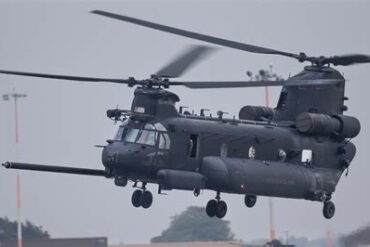
The helicopters seen hovering over Alaskan skies aren’t ordinary transports. The CH-47F Chinook is a twin-engine, tandem rotor heavy-lift aircraft capable of carrying troops, cargo, and even vehicles across long distances and rugged terrain. It’s often the workhorse in Arctic and mountainous regions, where road access is limited or nonexistent.
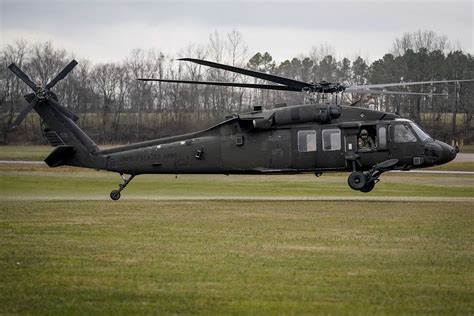
The HH-60 Blackhawk, on the other hand, is typically deployed for tactical transport, medevac, and search-and-rescue missions. Its agility and speed make it ideal for dynamic Arctic environments where unpredictable weather and terrain conditions can threaten ground operations.
Together, these helicopters allow for rapid deployment and flexible mission planning—essential qualities in Arctic warfare and humanitarian response.
Arctic Edge 2025: Scope and Objectives
Arctic Edge 2025, scheduled primarily for August, will be among the most comprehensive Arctic exercises in recent years. Its objectives include:
- Demonstrating cold-weather operational readiness
- Practicing joint logistics and mobility across vast distances
- Enhancing interagency coordination between U.S. forces and local agencies
- Testing communications systems under Arctic signal degradation
- Simulating defense postures against near-peer adversaries
Military planners are also keen to stress that the Arctic is not merely a future conflict zone—it is already a dynamic operational environment. As China and Russia expand their Arctic ambitions, the U.S. is recalibrating its presence, and exercises like Arctic Edge are critical to keeping pace.
Economic and Cultural Sensitivities
Despite its strategic importance, western Alaska remains home to indigenous communities, whose lands and cultural practices are deeply intertwined with the region’s natural rhythms. Military overflights and exercises, while necessary for national defense, must be balanced with respect for these traditions.
This is part of why outreach efforts have expanded. It’s not simply about avoiding panic; it’s about building trust, ensuring residents feel informed, not ignored, and acknowledging that Alaska is not just a frontier—but a home.
Local leaders have voiced cautious support, acknowledging the potential economic benefits of military infrastructure investment but urging continued dialogue to avoid disruption to wildlife, subsistence hunting, and ancestral land use.
Conclusion: No Invasion, Just Preparation
While the sight of low-flying military helicopters over Kotzebue and surrounding areas may seem ominous, the reality is more mundane—though strategically vital. Arctic Edge 2025 is not a signal of impending conflict, but rather a demonstration of the U.S. military’s commitment to Arctic readiness, in an era when the region’s importance is growing exponentially.
What’s happening in the skies over western Alaska is not a warning—it’s a rehearsal.
Military presence in the Arctic is no longer an occasional spectacle but a necessary constant, shaped by climate, geopolitics, and the sheer logistical challenge of operating in one of the world’s harshest frontiers. For residents, awareness and communication remain essential to ensure that future exercises unfold not just effectively, but respectfully.