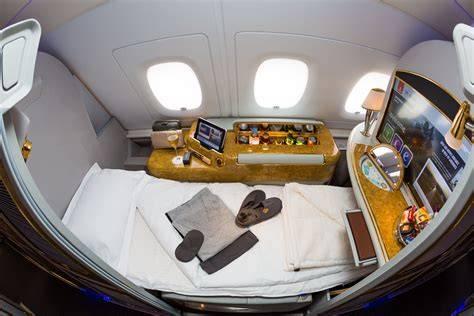
Business class is often described in terms of bigger seats, better food, and more attentive service. Those differences are obvious the moment passengers step aboard a long-haul aircraft, but the real distinction becomes clearer after the cabin doors close. Business class changes not only where passengers sit, but also how they use their time, how they sleep, when they eat, and even how they interact with the aircraft itself.
For many economy passengers, a long-haul flight follows a familiar rhythm. We take our seats, watch the safety demonstration, wait for takeoff, eat when the meal cart arrives, watch entertainment, and eventually try to sleep. The schedule is largely determined by the airline. Business class passengers, however, often have considerably more control over their experience.
A lie-flat seat, greater privacy, upgraded bedding, flexible dining, and personalized service can transform a flight from something passengers simply endure into productive or genuinely restful time. On some airlines, the experience is sophisticated enough that first-time business class passengers may need help understanding everything their seat and service actually offer.
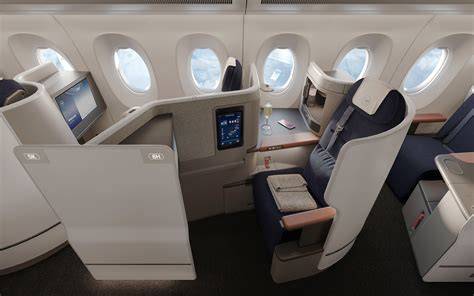
The differences are particularly noticeable on overnight and ultra-long-haul flights. Instead of treating the aircraft as a place where we must remain awake until the next meal service, business class allows us to build a routine around sleep, work, dining, or relaxation. Some passengers barely interact with the entertainment system because they are more interested in maximizing their time in bed.
Here are five things business class passengers do onboard that economy passengers may not even realize are possible.
1. Business Class Passengers Change Into Airline Pajamas
One of the more surprising privileges on selected long-haul flights is the opportunity to change into airline-provided pajamas. This is more strongly associated with international first class, but a number of airlines extend the amenity to business class passengers, particularly on overnight or very long sectors.
Emirates, Etihad Airways, and Qatar Airways are among the airlines known for providing sleepwear on qualifying flights. Other carriers, including Virgin Atlantic, Qantas, American Airlines, United Airlines, Air India, EVA Air, STARLUX Airlines, Oman Air, Air Serbia, and Gulf Air have also offered versions of this amenity on selected services.
The practical advantage is greater than it initially sounds. Remaining in the same clothes for 10, 13, or 16 hours can be uncomfortable, particularly when passengers are trying to sleep. Changing into loose sleepwear creates a psychological separation between the active portion of the journey and the period reserved for rest. We can work, dine, and watch a movie in normal clothes before changing when we are ready for bed.
The procedure also varies. Some airlines proactively place pajamas at the seat, while others require passengers to ask a flight attendant. Sizes and designs can differ, and partnerships with clothing brands have occasionally turned sleepwear into a small piece of the airline’s premium identity.
Not every carrier provides a complete pajama set. Lufthansa, for example, has offered pajama tops on qualifying services, while All Nippon Airways and Japan Airlines have provided cardigan-style garments on some long-distance flights that are intended to be returned.
For economy passengers, this entire routine can seem unusual because the typical long-haul economy experience revolves around staying in the clothes we boarded in. In business class, changing clothes can simply become another part of preparing the seat for sleep.
2. They Skip the Meal to Protect Their Sleep
Perhaps the biggest misconception about business class is that passengers always take advantage of every premium meal. In reality, experienced travelers sometimes do exactly the opposite.
The lie-flat seat is one of the most valuable features of a long-haul business class ticket, particularly when crossing multiple time zones. If a flight departs late in the evening after a full working day, spending another hour or two eating a multi-course dinner may not be the best use of time. Some passengers would rather convert the seat into a bed immediately and sleep.
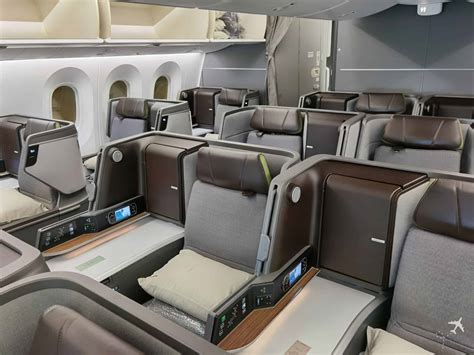
This is where business class fundamentally changes the logic of an overnight flight. In economy, the meal service can be difficult to avoid because passengers have limited opportunities to make the seat comfortable enough for serious sleep. Recline is restricted, legroom is limited, and sleeping upright for several hours is rarely equivalent to proper rest.
Business class passengers can make a different calculation. If we have already eaten before boarding, we may decide that the most valuable “amenity” on the aircraft is another two hours of sleep.
The irony is that the meals themselves are usually significantly better. Business class dining can include multiple courses, upgraded ingredients, premium beverages, tablecloths, proper crockery, and metal cutlery. Some airlines collaborate with recognized chefs or develop menus specifically for long-haul premium cabins.
Yet premium food does not automatically become more important than sleep.
This is particularly relevant for passengers traveling for work. Someone arriving at an international destination at 7 a.m. may have meetings only a few hours after landing. A full night of uninterrupted sleep can be worth considerably more than another elaborate dessert.
The same principle explains why some experienced business class travelers become strategic about meal timing. They may eat lightly, skip the main service, or request food before sleeping if the airline allows it. The goal is not necessarily to experience everything the ticket offers. The goal is to use the cabin in the way that best suits the journey.
3. They Eat When They Want With Dine-on-Demand Service
Some business class passengers discover another feature that can completely change the traditional airline routine: dine-on-demand.
Rather than waiting for the cabin crew to serve everyone at approximately the same time, passengers on selected airlines can request meals according to their own schedules. This system is also known as à la carte dining, and it is particularly valuable when passengers have different sleeping patterns or are traveling across several time zones.
Turkish Airlines, Qatar Airways, and Etihad Airways have been associated with flexible dining concepts in their premium cabins. When the system works well, passengers can sleep through the conventional meal service and eat later, or dine immediately after reaching cruising altitude before settling down for the night.
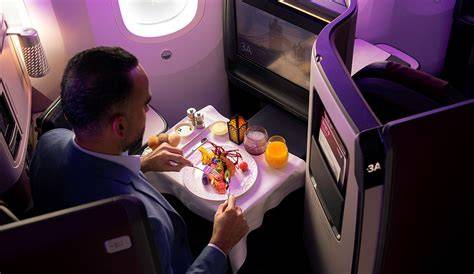
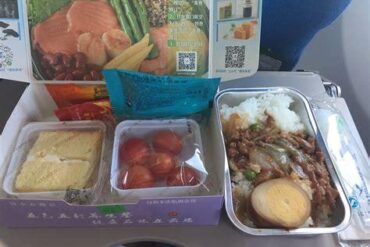
This is a major change from the economy experience, where the meal service is usually built around a coordinated cabin-wide schedule. Economy passengers generally receive meals when the crew begins service, and the entire process moves row by row through the cabin.
Dine-on-demand is more personalized, but it also creates operational challenges. Business class cabins can contain dozens of passengers, and every passenger making different requests places additional demands on the crew. Food availability can also become complicated if popular choices are requested at different times.
There is another less visible issue: food waste. Airlines must load enough meals and ingredients to satisfy unpredictable demand, while some prepared dishes may remain unused.
For passengers, however, the attraction is obvious. We can treat the aircraft more like a private dining space than a conventional scheduled meal service. We decide whether dinner should happen immediately, after a movie, before sleep, or after waking.
That flexibility can make an enormous difference on ultra-long-haul flights, where passengers may spend 14, 16, or even more hours in the air.
4. They Turn Their Seats Into Beds With Turndown Service
The most dramatic transformation in a premium cabin happens when the business class seat stops looking like a seat.
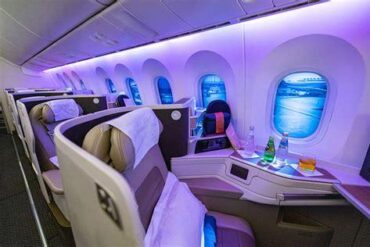
On many long-haul aircraft, the seat can be converted into a fully flat bed, and the crew may provide a mattress pad, duvet, pillows, and blankets. The passenger can then prepare a private sleeping space rather than attempting to rest in a conventional recliner.
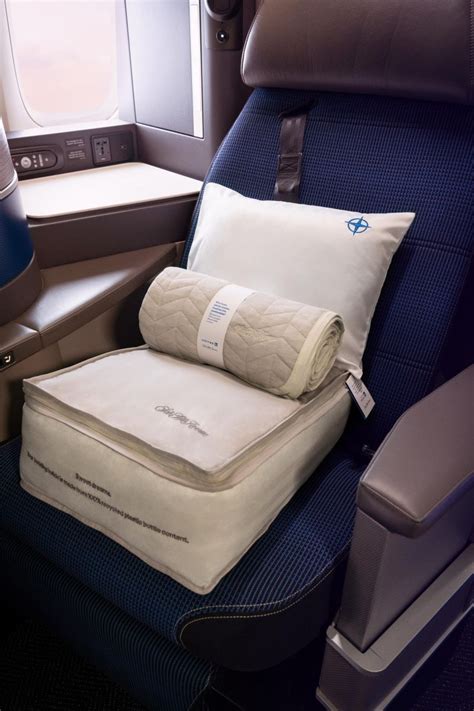
United Airlines’s Polaris product is particularly notable for its bedding, developed in collaboration with Saks Fifth Avenue. Depending on availability and request, passengers can receive multiple pillows, a duvet, blanket, and mattress pad.
Other airlines have also partnered with premium lifestyle and hospitality brands for bedding. Air France has worked with Sofitel, Delta Air Lines has partnered with Missoni, and Etihad has used Armani/Casa products in its premium cabin offerings.
The difference is not merely aesthetic. A mattress pad can soften the seat surface, while a duvet provides more substantial insulation than the thin blankets commonly associated with economy. Pillows can also be arranged to support the head and body more naturally.
When the passenger wakes, the crew may remove the bedding and return the seat to its daytime configuration. That process is often described as turndown service, borrowing language more commonly associated with hotels.
This is one reason business class can feel less like transportation and more like a temporary hotel room. The aircraft remains the same, the flight time remains the same, and the destination remains the same. What changes is how much of that time can be converted into meaningful rest.
For frequent long-haul travelers, that can be the most important difference of all.
5. They Learn the Hidden Functions of Their Business Class Seat
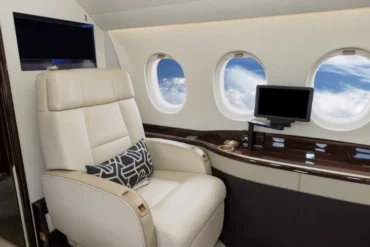
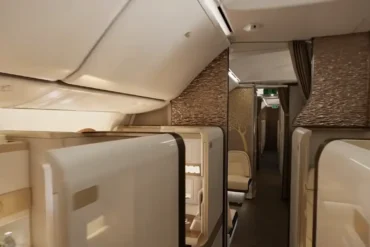
Modern business class seats can be surprisingly complicated. A first-time passenger may initially see a large screen, a table, a footrest, and a collection of buttons. An experienced traveler sees something closer to a personal control center.
Depending on the aircraft and seat design, passengers may have controls for reclining, leg support, lumbar positioning, lighting, privacy screens, massage functions, and preset positions. Some seats include sliding doors, personal lamps, storage compartments, charging ports, and other features designed to make the passenger’s space more self-contained.
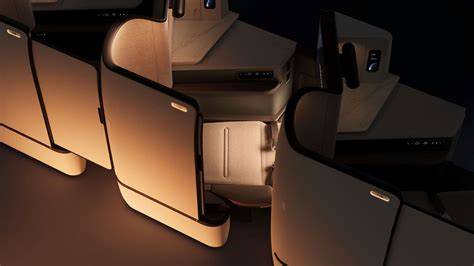
The variety becomes obvious across aircraft types. Business class on an Airbus A350 may look completely different from business class on a Boeing 787, even though both aircraft are designed for long-haul travel. Some cabins use a 1-2-1 configuration, giving every passenger direct aisle access, while older designs may use 2-2-2 or other arrangements.
The controls themselves can also require experimentation. A passenger may discover that one button creates a lounging position, another produces a bed configuration, and another adjusts a specific part of the seat. Some systems use touchscreens, while others rely on physical controls.
Newer products can go further. Lufthansa’s Allegris business class seats, for example, have introduced additional personalization features, including climate-related controls on certain configurations.
This is where the flight attendant can make a meaningful difference. On a first business class journey, crew members may explain how the seat works, where the bedding is stored, how the privacy door operates, and which amenities are available upon request.
Economy passengers generally do not need this level of orientation. Their seat is comparatively simple: recline, tray table, armrest, screen, and perhaps a few additional controls. The learning curve is minimal.
Business class can be different because airlines are effectively giving passengers a much more sophisticated piece of equipment and asking them to operate it comfortably for the duration of a long flight.
Why These Habits Matter More Than the Seat Alone
The five behaviors reveal something important about business class travel. The product is not simply a larger chair. It is a different philosophy for using time in the air.
Economy class is primarily designed to transport large numbers of passengers efficiently and comfortably enough for the duration of the journey. Business class is designed around greater control. Passengers can decide when to sleep, when to eat, how much privacy they want, and how they want to configure their personal space.
That difference becomes especially significant on overnight and ultra-long-haul flights. A passenger who sleeps for seven hours in a lie-flat bed may arrive in substantially better shape than someone who spends the same seven hours repeatedly shifting in a partially reclined economy seat.
The premium cabin therefore rewards passengers who understand how to use it. Some newcomers focus on eating every course and watching every movie because they want to maximize the ticket’s visible benefits. Frequent travelers often take the opposite approach. They use the cabin strategically.
They may change into pajamas, eat quickly, skip another meal, close the privacy door, request bedding, turn off the lights, and sleep for most of the flight. To someone watching from economy, that can look almost bizarre.
But that is precisely the point.
The smartest business class passengers are not necessarily the ones who consume the most amenities. They are the ones who understand that the greatest luxury is control over time. A better meal is enjoyable. A larger screen is convenient. A premium amenity kit is useful. But on a 14-hour overnight flight, the ability to turn an aircraft seat into a comfortable bed, choose when to eat, and wake up genuinely rested may be worth more than all of those extras combined.
That is why the biggest difference between business and economy is often not what passengers receive. It is what business class allows passengers to do with the hours between takeoff and landing.