Air cargo demand has outrun the supply of large freighters, and the industry has responded with the only tool it had left: dismantling passenger cabins and reinforcing floors on aircraft that were never meant to end their lives carrying pallets. The Boeing 777 has become the workhorse of that improvised solution. Three separate passenger-to-freighter conversion programs are now competing to turn used 777-300ERs and 777-200LRs into dedicated cargo aircraft, backed by hundreds of millions of dollars in facility investment and firm orders that run into the dozens. The strategy makes immediate commercial sense. It also rests on an assumption that is quietly falling apart: that enough sound, attractable passenger 777s will continue to exist for conversion lines to consume.
That assumption collides with a hard arithmetic reality. Passenger airlines are holding onto their widebody fleets longer, partly because the 777X program has slipped repeatedly, disrupting the replacement timelines that originally justified retirement. Every airframe a passenger carrier decides to keep is one that a conversion specialist cannot buy. The result is an unusually awkward position for the industry: demand for converted freighters is rising while the feedstock that makes them possible is shrinking, and the aircraft that could resolve the tension — the Airbus A350F and the Boeing 777-8F — will not arrive in meaningful numbers before the end of the decade.
Why Cargo Airlines Are Turning to Used Boeing 777s
The logic behind the conversion rush begins with a gap that new-build production cannot close quickly enough. Cargo operators need capacity now, but the transition from the current generation of freighters to next-generation designs has been stretched by production constraints, certification delays and tightening emissions requirements. Boeing’s 777F line and Airbus’s A350F pipeline cannot deliver at the speed the market wants, and the 777-8F remains in development with a delivery horizon near the end of the decade. In that vacuum, used passenger aircraft became the only source of large-capacity lift that could be obtained on a commercially useful timetable.
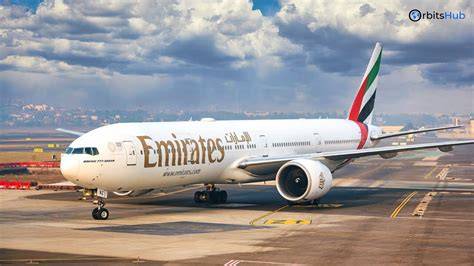
The 777-300ER is the natural candidate. Its fuselage is wide enough to accommodate main-deck pallets without the compromises that plague narrower widebodies, its structure was engineered for heavy long-haul payloads, and its operational history across a decade of airline service gives converters and operators a deep pool of maintenance data. Converting an existing airframe also spares operators the multi-year queue that comes with ordering a factory-built freighter, and it spreads the capital cost across a shorter but still meaningful service window.
The supply side, however, is where the strategy starts to buckle. The 777-300ER was designed as one of the most capable long-haul passenger jets ever built, and it remains exceptionally productive in passenger service. Delays to the 777-9 have pushed carriers to extend leases, refresh cabins and defer retirement plans rather than accept a capacity gap. Conversion specialists must therefore compete for a relatively small pool of aircraft that are simultaneously young enough to justify the modification cost, structurally sound enough to pass inspection, and economically available — a combination that grows rarer every year.
Three Conversion Programs Competing for a Finite Pool
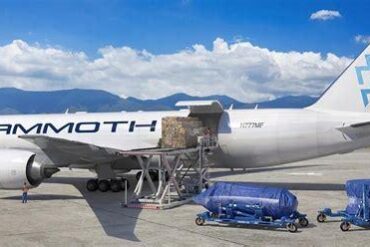
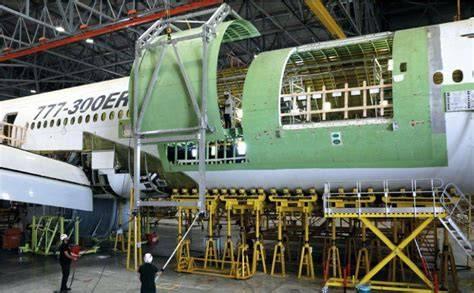
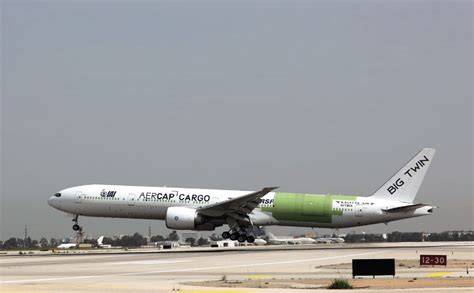
Three companies have emerged as the principal players in the 777 conversion market, and their differing approaches reveal how quickly the industry is trying to scale before suitable airframes disappear. Israel Aerospace Industries was first to establish a commercial operation with its 777-300ERSF, marketed as the Big Twin, which entered revenue service in September 2025 with operators including Kalitta Air, Fly Meta and Challenge Group. Mammoth Freighters followed with Federal Aviation Administration certification for its 777-200LRMF in April, delivering the first converted aircraft to Jetran on August 21 for DHL Air UK operations, and is developing the larger 777-300ERMF. Kansas Modification Center is pursuing a 777-300ERCF built around a distinctive forward cargo-door design intended to reduce structural weight.
The geographic expansion has been equally aggressive. In October, IAI, Ascent Aviation Services and World Star Aviation announced the start of 777-300ERSF conversions in North America, with the first aircraft arriving at Ascent’s Marana facility in Arizona, where two parallel conversion lines are expected to operate. Mammoth extended into China through a partnership with STAECO, where the first 777-200LR entered conversion and a second line is planned for 2027. These investments signal genuine confidence in converted 777 demand, but they also expose the central contradiction: adding conversion lines does not add a single available aircraft. The bottleneck sits upstream, in the hands of passenger airlines that have little incentive to sell.
Conversion Economics and the Fuel Burn Problem
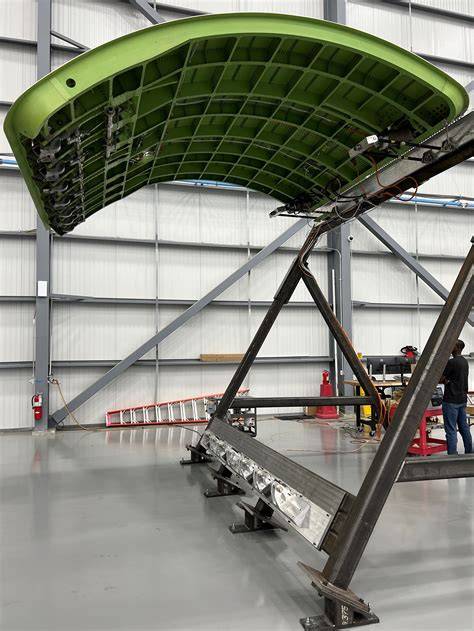
The financial appeal of a passenger-to-freighter conversion is seductive in its simplicity: buy an existing aircraft, modify its interior and structure, and put it into cargo service without paying for a brand-new production freighter. The purchase price, however, is only the entry ticket. The airframe requires extensive structural modification, heavy maintenance inspection and often expensive engine work before it earns a single dollar of revenue. According to consultancy IBA, a half-life 777-300ER converted into a freighter can cost approximately $75 million to $80 million, including the aircraft and conversion work, and the investment can approach $100 million if the GE90-115 engines require shop visits.
Those figures sit uneasily beside the aircraft’s operating characteristics. A converted 777 retains the fuel burn, aerodynamics and engine technology of an older passenger jet rather than incorporating the latest generation of efficiency improvements. At the TIACA Air Cargo Forum, Airbus freighter-marketing executive Bernard De L’Estoile described conversions as only part of the solution, arguing that fuel burn matters most when converted aircraft operate frequently over long distances. His comments carry an obvious commercial interest — Airbus sells a competing new-build freighter — but the underlying economics are manufacturer-neutral. The gap becomes visible when the Mammoth 777-200LRMF is set against next-generation alternatives: 104.8 tonnes of maximum payload and 4,800 nautical miles of range, against 111 tonnes and 4,700 nautical miles for the A350F and 118.2 tonnes and 5,000 nautical miles for the 777-8F.
A converted 777 remains attractive where operators need substantial capacity but cannot justify new-build capital expenditure. Its case weakens when it flies long-haul sectors almost continuously, because small efficiency deficits compound across hundreds of operating hours. The commercial sweet spot is therefore likely to be moderate-utilization routes rather than the most demanding intercontinental cargo networks — which raises an uncomfortable question about what will serve those networks once the conversion window closes.
The A350F and 777-8F Are Racing Against the Clock
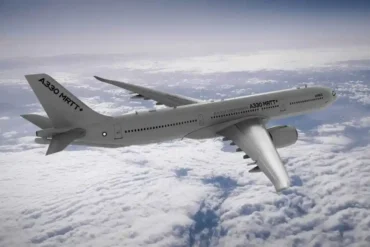
The long-term answer lies in purpose-built freighters designed around modern engines, improved aerodynamics and dedicated cargo handling. Airbus achieved a significant milestone on September 29 when the A350F completed its maiden flight, a four-hour and ten-minute sortie that opened a flight-test campaign expected to last more than nine months. The manufacturer is targeting initial deliveries in the second half of 2027, though some observers expect slippage into 2028, and had secured 115 firm orders from 14 disclosed customers by the end of August. The aircraft offers a maximum structural payload of 111 tonnes, a range of 4,700 nautical miles and Rolls-Royce Trent XWB-97 engines.
Boeing’s competing 777-8F is designed to carry still more, with a maximum structural payload of approximately 118.2 tonnes, a range of 5,000 nautical miles, a composite wing, GE9X engines and 17% more cargo volume than the existing 777F. The program, however, has been dragged down by 777X delays, and Boeing is targeting deliveries around 2029 — roughly two years after the expected first delivery of the 777-9 — with 81 firm orders reported in the October industry comparison.
The transition will not happen overnight even once those aircraft enter service. Production must ramp up, operators must integrate new types into their networks, and training and maintenance infrastructure must follow. That lag is precisely why converted 777s have a real revenue window. The length of that window depends on whether the new-build programs meet their commitments, and it has been complicated further by the decision to extend 777F production, which may soften conversion demand among operators who would otherwise have committed to a converted airframe.
Why the Used 777 Supply Could Become the Biggest Bottleneck
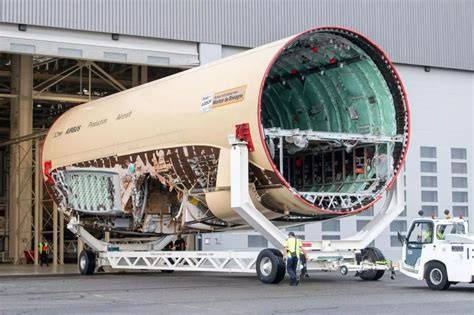
Passenger-aircraft availability is emerging as the binding constraint on the entire conversion market. Strong demand for the 777-300ER has kept residual values relatively high, while 777X delays have encouraged carriers to retain existing widebody fleets and in some cases invest in cabin refurbishments rather than retire aircraft they had planned to replace. This creates direct competition between passenger airlines and conversion companies. A 777-300ER that remains commercially useful in passenger service may generate more value for its current operator than it would in a sale to a lessor or conversion specialist, and age alone is not a reason for retirement when replacement capacity is unavailable.
Conversion companies therefore cannot simply buy as many aircraft as their facilities can accommodate. They must wait for suitable jets to enter the market and outbid other buyers when they do. Boeing’s own production strategy adds another variable: the FAA granted an exemption allowing up to 35 additional 777Fs to receive first airworthiness certificates between January 1, 2028 and January 1, 2031, providing a temporary extension to the existing program while operators await the 777-8F. According to Cirium’s October 2026 analysis, that extension could influence conversion demand because some customers were waiting for clarity on continued factory-built 777F availability before committing.
The waiver, however, does nothing to solve the feedstock problem. Cirium reported 86 firm orders across the IAI, Mammoth and KMC conversion programs, while noting that securing individual aircraft for all of those commitments remains challenging. The additional 777F production is a limited extension of a finite program, not an unlimited source of new capacity. If used 777 prices keep climbing, conversion costs could exceed what customers are willing to pay, particularly once engine maintenance is included — and the A350F and 777-8F will eventually offer better operating economics on exactly the routes where conversions are most exposed.
The Converted 777’s Future Depends on More Than Cargo Demand
The 777 conversion market is entering a phase in which demand alone will not determine success. Cargo operators still need large widebody aircraft, and converting passenger jets can remain economically attractive in specific markets. But airframe availability, engine maintenance cost and the operating efficiency of older aircraft will increasingly decide which conversion programs stay competitive. The industry faces a genuinely unusual situation: it needs more converted 777s, yet the aircraft required to build them are becoming more valuable to the airlines that already own them.
The milestones that matter are now firmly dated. The A350F’s anticipated first deliveries in the second half of 2027 and the 777-8F’s expected arrival around 2029 will define how long the conversion window stays open. In the interim, IAI, Mammoth Freighters and Kansas Modification Center will need to secure additional passenger aircraft while managing conversion costs and production schedules, and the FAA’s allowance for 35 additional 777Fs gives cargo operators another option that may moderate demand for converted airframes.
Converted 777s will remain an important part of the global freighter market, but they are unlikely to become the industry’s permanent answer to the shortage of large cargo aircraft. Their greatest value may lie in connecting two generations of freighters, supplying capacity while manufacturers work through development and production challenges. Whether that bridge can be extended will depend less on how many conversion facilities open and far more on how many suitable passenger 777s are left to convert.