The Airbus A350 is widely recognized as one of the most technologically advanced commercial airliners ever built. Featuring extensive composite construction, outstanding fuel efficiency, and impressive long-haul performance, it has become a flagship aircraft for airlines around the world. Considering the long history of successful passenger-to-freighter (P2F) conversions, it is natural to wonder whether the A350 will eventually receive the same treatment as aircraft like the Boeing 767, Boeing 777, Airbus A330, or Airbus A321.
The answer is more complicated than a simple yes or no. From a purely engineering perspective, converting an A350 into a dedicated cargo aircraft is certainly possible. Modern aerospace engineering has repeatedly demonstrated that almost any aircraft can be modified if enough time, money, and technical expertise are invested.
Commercial aviation, however, is driven by economics rather than engineering curiosity. Every successful conversion program exists because it provides operators with a profitable balance between acquisition costs, modification expenses, operating efficiency, and long-term revenue generation. Unfortunately for the A350, virtually every one of those factors works against a conversion program.
By the time an aging A350 reaches retirement from passenger service decades from now, a conversion would require such extensive structural reconstruction that purchasing a purpose-built freighter would almost certainly remain the smarter investment.
The Airbus A350 Was Never Designed With Future Passenger-to-Freighter Conversion in Mind
Aircraft that become successful conversion candidates usually possess one important characteristic—they are relatively easy to modify.
Classic aircraft including the Boeing 767, Boeing 737, McDonnell Douglas MD-11, and Airbus A330 were primarily constructed using aluminum alloys. Engineers have spent decades refining methods to reinforce metallic fuselages, install oversized cargo doors, strengthen floor structures, and certify converted aircraft for cargo operations.
The A350 represents an entirely different generation of aircraft design.
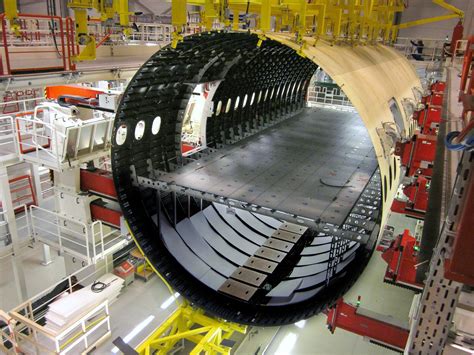
Instead of relying primarily on aluminum, Airbus developed the aircraft around an advanced composite structure. Approximately 53 percent of the aircraft consists of carbon fiber reinforced polymer (CFRP) alongside titanium and other lightweight materials.
This construction delivers enormous operational benefits.
Airlines enjoy:
- Lower fuel consumption
- Reduced corrosion
- Longer structural life
- Lower maintenance costs
- Better fatigue resistance
- Reduced operating weight
Ironically, these same advantages become disadvantages when extensive structural modifications are required.
Composite materials behave fundamentally differently from aluminum. Engineers cannot simply cut large openings into composite fuselages and reinforce them using conventional techniques. Every modification changes the way structural loads travel throughout the aircraft, requiring detailed stress analysis, specialized manufacturing processes, and extensive certification testing.
The very feature that makes the A350 one of the world’s most efficient passenger aircraft also makes it one of the least attractive candidates for large-scale structural conversion.
Installing a Main Deck Cargo Door Would Become a Massive Engineering Project
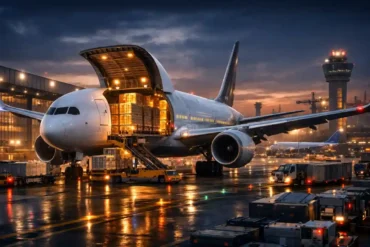
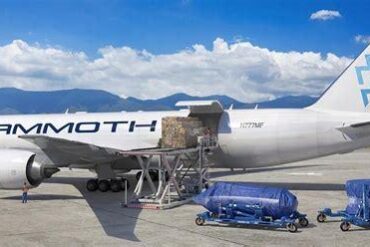
Every modern freighter requires a large cargo door positioned on the main deck.
This opening allows standardized freight pallets and containers to be loaded quickly while maximizing cargo volume.
Creating that opening is relatively straightforward—although still expensive—on metallic aircraft.
On the A350, the challenge becomes exponentially more difficult.
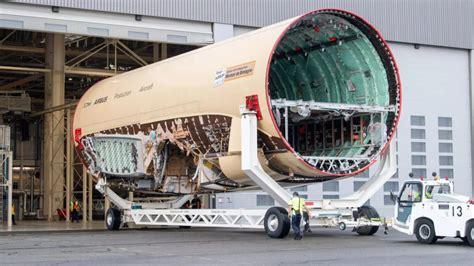
Removing a large section of composite fuselage means engineers must completely redesign how structural forces bypass the opening. New reinforcement frames, composite layups, metallic fittings, and load transfer structures would all need to be developed specifically for the modified aircraft.
Unlike aluminum repairs, composite modifications often require entirely different manufacturing environments, specialized curing procedures, and sophisticated quality inspections.
Every reinforcement adds weight.
Every additional pound reduces payload.
Every structural change increases certification complexity.
The cumulative effect rapidly erodes the financial advantages that traditionally make P2F programs attractive.
The A350F Demonstrates Why Designing a Freighter From the Beginning Matters
Perhaps the strongest evidence against a future conversion program already exists.
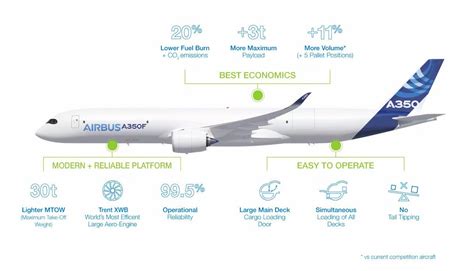
Rather than converting the passenger A350 into a freighter, Airbus developed the A350F as a purpose-built cargo aircraft.
This decision alone speaks volumes.
Instead of modifying an existing passenger airframe, Airbus redesigned multiple structural sections specifically for cargo operations.
The dedicated freighter incorporates:
- A factory-designed oversized cargo door
- Reinforced floor structures
- Modified fuselage geometry
- Strengthened center wing box
- Optimized cargo loading systems
- Revised landing gear configuration
- Structural reinforcements throughout the airframe
Each component was engineered before production began.
Attempting to duplicate these modifications after an aircraft has already entered airline service would involve extensive disassembly of major structural sections.
At that stage, the project ceases to resemble a traditional conversion and instead becomes a partial reconstruction of the aircraft itself.
Passenger Cabin Floors Cannot Support Heavy Freight Loads
One of the least visible—but most significant—differences between passenger aircraft and cargo aircraft lies beneath the cabin floor.
Passengers distribute their weight relatively evenly across hundreds of seats.
Cargo does not.
Freight operations concentrate enormous loads onto standardized pallets weighing several tons each.
Those loads create stress levels far beyond what passenger floor beams were originally designed to withstand.
Consequently, virtually every successful P2F conversion requires extensive floor reinforcement.
On traditional aluminum aircraft, this process is already expensive.
On the A350, the task becomes substantially more complicated.
Industry studies have discussed replacing certain composite floor beams with stronger metallic alternatives capable of carrying concentrated cargo loads.
Although technically achievable, such work would require removing much of the aircraft’s interior, exposing primary structural members, replacing major components, and integrating them into surrounding structures.
The labor alone could consume thousands of engineering hours.
Floor modifications would likely represent only the beginning.
Structural Reinforcement Would Extend Across the Entire Airframe
Strengthening one component of an aircraft rarely affects only that single component.
Aircraft structures function as integrated systems.
If heavier cargo loads are introduced into the cabin floor, those forces must eventually travel into the fuselage, wing box, landing gear, and surrounding support structures.
That creates a domino effect.
Strengthening the floor often requires strengthening adjacent frames.
Those reinforcements may require modifications to fuselage skins.
Additional reinforcements can increase aircraft weight.
The higher weight alters landing gear loads.
Those changes influence structural fatigue calculations.
Certification authorities then require additional testing to validate the modified aircraft.
Instead of isolated engineering changes, the conversion gradually expands into a complete structural redesign.
Composite Certification Would Add Significant Cost and Time
Modern aircraft certification is already among the most demanding engineering processes in the transportation industry.
Composite structures introduce another level of complexity.
Every structural modification must demonstrate:
- Fatigue resistance
- Damage tolerance
- Impact survivability
- Long-term durability
- Structural redundancy
- Safe load distribution
Unlike metallic structures, composites may develop barely visible internal damage after impacts.
Detecting, analyzing, and certifying repaired or modified composite sections requires advanced inspection techniques including ultrasonic testing and other non-destructive evaluation methods.
Certification costs alone could reach hundreds of millions of dollars before the first converted aircraft even enters commercial service.
The Passenger A350 Has the Wrong Fuselage Geometry for Cargo Operations
Perhaps the most surprising obstacle involves the aircraft’s overall proportions.
Many people assume a freighter is simply a passenger aircraft with its seats removed.
Reality is far more complicated.
Cargo aircraft have entirely different center-of-gravity requirements.
Weight distribution changes dramatically depending on pallet placement.
After extensive engineering analysis, Airbus concluded that the most efficient cargo version should not retain the passenger aircraft’s original length.
The A350F therefore uses a shortened fuselage, removing several structural frames ahead of the wing.
That modification improves payload capability while optimizing balance during freight operations.
A conversion program cannot realistically reproduce such a change.
Removing fuselage sections from an already completed aircraft would require separating the fuselage into multiple major assemblies before rebuilding and recertifying the entire airframe.
Such an undertaking would be extraordinarily expensive and technically complex.
A Converted Aircraft Would Still Be Less Efficient Than the Factory-Built A350F
Even if engineers successfully solved every structural problem, one unavoidable issue would remain.
Performance.
According to Airbus officials responsible for the A350F program, a converted passenger A350 would likely remain approximately 15–20 percent less efficient than the dedicated freighter.
That difference matters enormously.
Cargo airlines calculate profitability over decades of operation.
Even small efficiency losses accumulate into millions of dollars through higher fuel consumption, reduced payload, increased maintenance costs, and lower operational flexibility.
A disadvantage approaching twenty percent becomes difficult to justify when a purpose-built alternative already exists.
The Business Case Simply Does Not Exist
Historically, successful P2F programs succeed because older passenger aircraft become inexpensive to acquire.
Conversion costs remain manageable.
Operators gain useful cargo aircraft for significantly less than purchasing new freighters.
The A350 changes that equation.
Future operators would likely face:
- Extremely expensive structural modifications
- Lengthy certification programs
- Significant aircraft downtime
- Higher engineering risk
- Reduced operational efficiency
- Competition from the factory-built A350F
Investors considering such a program would quickly discover that development expenses could consume much of the financial advantage normally associated with conversions.
Without compelling economics, private companies have little incentive to launch a program.
Could Future Technology Change the Equation?
Technological progress should never be underestimated.
Future composite manufacturing techniques, automated repair methods, digital structural analysis, and advanced certification processes may eventually reduce conversion costs.
However, technological improvements would also benefit newly manufactured freighters.
Unless those future innovations disproportionately reduce A350 conversion expenses—which appears unlikely—the economic balance would remain largely unchanged.
Furthermore, by the time significant numbers of passenger A350s retire from airline fleets, entirely new freighter designs may dominate global cargo operations.
Hydrogen propulsion, sustainable aviation fuels, advanced composite manufacturing, and next-generation aerodynamic concepts could reshape the cargo industry before the first retired A350 even becomes available in meaningful numbers.
The Airbus A350 Will Likely Enjoy a Long Passenger Career Instead
Another factor working against conversion is longevity.
The A350 is still relatively young compared with aircraft that traditionally become P2F candidates.
Many current operators expect their aircraft to remain in passenger service for thirty years or more.
Its excellent fuel efficiency, lower emissions, and modern cabin design mean airlines have little incentive to retire large fleets prematurely.
By the time substantial numbers become available for secondary markets, the cargo industry’s requirements may have evolved considerably.
Instead of becoming freighters, many retired A350s may continue operating with secondary passenger airlines, charter operators, or government fleets before eventual retirement.
Final Thoughts
The concept of an Airbus A350 passenger-to-freighter conversion is fascinating because, from a purely engineering standpoint, it remains possible. Modern aerospace engineering can solve remarkably difficult structural challenges when sufficient resources are available.
Commercial aviation, however, rewards practical solutions rather than theoretical possibilities.
The A350’s composite fuselage complicates major structural modifications, while cargo door installation, floor reinforcement, center wing box strengthening, landing gear revisions, and cargo system integration collectively transform a straightforward conversion into an extensive reconstruction project. Airbus itself demonstrated this reality by designing the A350F as a dedicated freighter rather than adapting the passenger aircraft.
Even after overcoming these engineering obstacles, operators would still face an aircraft expected to deliver roughly 15–20% lower efficiency than the factory-built alternative. Combined with enormous certification costs and limited financial upside, the commercial case effectively disappears.
For that reason, the absence of an A350 P2F program is not evidence of an engineering limitation. Instead, it reflects the realities of aircraft economics, structural optimization, and long-term operational performance. Unless those fundamentals change dramatically in the future, the Airbus A350 is poised to remain one of the rare modern widebody aircraft whose second life is unlikely to be spent carrying freight.