The question seems almost paradoxical at first glance. The Airbus A350 is widely regarded as one of the most advanced, efficient, and passenger-friendly widebody aircraft ever built. Yet American Airlines, one of the world’s largest long-haul carriers, deliberately walked away from it. Instead, the airline doubled down on the Boeing 787 Dreamliner, committing billions to expand that fleet while canceling its A350 order entirely.
This was not a casual decision. It was a calculated, multi-layered strategic move shaped by economics, operational philosophy, and long-term fleet discipline. Understanding why American Airlines made this choice requires digging deep into how modern airlines think—not just about aircraft performance, but about cost structures, scalability, and risk management.
The Airbus A350: A Benchmark in Modern Widebody Aviation
The Airbus A350 represents the pinnacle of long-haul aircraft engineering. Built primarily from carbon-fiber-reinforced polymers, it delivers exceptional fuel efficiency, reduced maintenance requirements, and impressive range capabilities. Powered by the Rolls-Royce Trent XWB engines, the aircraft offers airlines a powerful combination of lower operating costs and extended reach.
Airlines across the globe have embraced the A350 as a long-haul backbone, particularly for routes that demand both range and capacity. The aircraft comes in two primary variants: the A350-900 and the larger A350-1000, allowing airlines to scale capacity while maintaining fleet commonality.
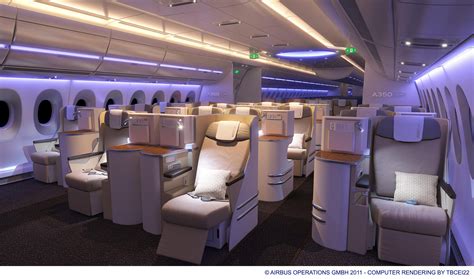
Its cabin environment is equally compelling. Improved pressurization, humidity levels, and wider cabins contribute to a noticeably better passenger experience—something increasingly critical in the premium travel segment.
Despite these advantages, the A350 occupies a specific niche. It sits strategically between the smaller Boeing 787 and the larger Boeing 777 family, making it ideal for airlines that need a mid-to-large capacity, ultra-long-haul aircraft. But that positioning, while advantageous for many carriers, did not align perfectly with American Airlines’ evolving needs.
The Inherited Order: A350’s Unexpected Entry into American’s Plans
American Airlines did not initially choose the A350—it inherited the program through its 2013 merger with US Airways. The original order, dating back to 2005 and later expanded, was part of US Airways’ ambition to rebuild and expand its international network.
At the time, the A350 was seen as a future-proof investment. However, by the time the merged airline began reassessing its fleet strategy, the aviation landscape had shifted. Demand patterns were changing, fuel economics were evolving, and new-generation aircraft like the Boeing 787 Dreamliner were already proving their value in real-world operations.
American Airlines repeatedly deferred its A350 deliveries. These delays were not random—they reflected growing hesitation. Each deferral signaled a deeper realization: the aircraft, while impressive, was becoming less central to the airline’s actual operational needs.
2018: The Strategic Pivot That Changed Everything
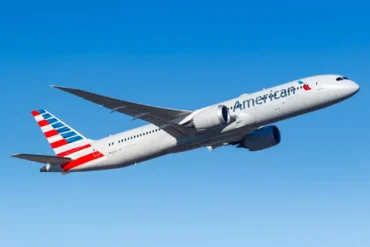
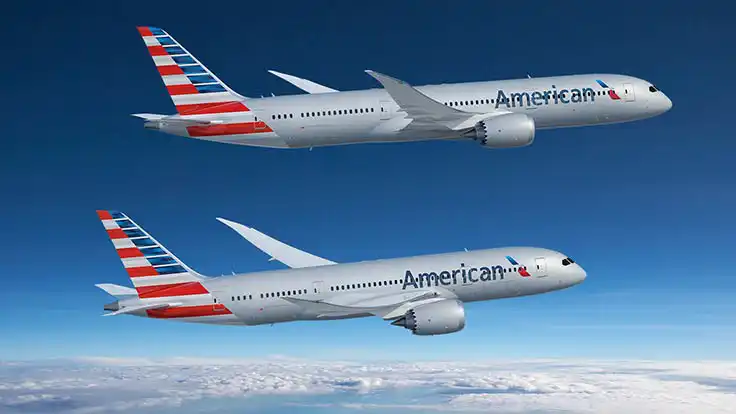
In April 2018, American Airlines made a decisive move. It canceled its order for 22 Airbus A350-900 aircraft and replaced it with a massive order for 47 Boeing 787 Dreamliners, including both the 787-8 and 787-9 variants.
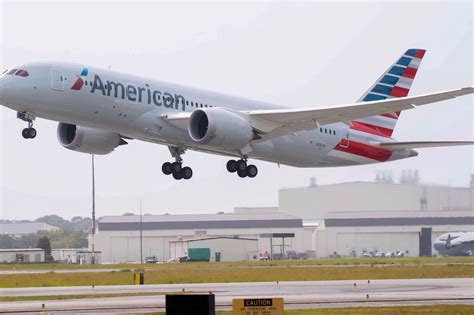
This was more than a fleet adjustment—it was a philosophical shift.
The airline chose to simplify its widebody operations dramatically. At the same time, it accelerated the retirement of older aircraft such as the Boeing 767-300, Airbus A330-300, and parts of its Boeing 777-200ER fleet. The goal was clear: fewer aircraft types, lower costs, and greater operational flexibility.
The Boeing 787 emerged as the perfect candidate to anchor this transformation.
Why the Boeing 787 Was the Better Fit
The Boeing 787 Dreamliner offers a unique balance of range, capacity, and efficiency that aligns closely with American Airlines’ network structure. Unlike the A350, which leans toward larger capacity missions, the 787 is optimized for “long and thin” routes—routes that are long in distance but do not require massive passenger volumes.
This distinction is critical. American Airlines operates an extensive network across the Atlantic and Pacific, where frequency and flexibility often matter more than sheer capacity.
The 787 allows the airline to:
- Open new long-haul routes with lower financial risk
- Maintain high load factors without overcapacity
- Adjust capacity dynamically across markets
From an economic standpoint, the Dreamliner also delivers excellent fuel efficiency per trip, even if the A350 may outperform it on a per-seat basis in certain configurations. For American, the priority was not maximizing seats—it was maximizing profitability per route.
Fleet Simplification: The Hidden Power Move
One of the most underrated aspects of this decision is fleet simplification. Operating multiple aircraft types introduces complexity at every level—pilot training, maintenance, spare parts inventory, scheduling, and operational logistics.
By focusing on the Boeing 787 alongside its existing Boeing 777 fleet, American Airlines achieved significant efficiencies:
- Reduced training costs for pilots and crew
- Streamlined maintenance operations
- Lower inventory requirements for spare parts
- Improved aircraft utilization across the network
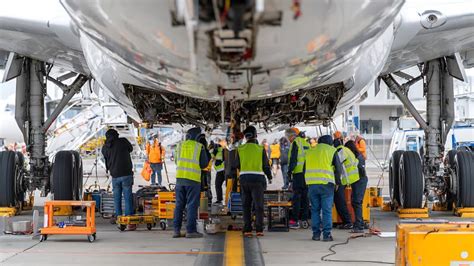
Introducing a small subfleet of A350s would have created disproportionate costs. Even though the aircraft itself is efficient, the lack of scale would have turned it into a financial burden rather than an asset.
This is where many casual observers get it wrong. Aircraft decisions are not just about performance—they are about ecosystem efficiency.
Financial Discipline and Capital Allocation
Timing played a crucial role. Between 2016 and 2018, American Airlines was under pressure to control capital expenditures and maintain financial flexibility. The repeated deferrals of the A350 order were a clear signal that the airline was prioritizing cash flow management.
Canceling the A350 order allowed American to:
- Avoid large upfront capital commitments
- Reallocate resources to more immediate needs
- Invest in a unified fleet strategy
The Boeing 787 order was not just a replacement—it was a financially optimized alternative that aligned with the airline’s broader restructuring efforts.
In simple terms, the A350 may have been technologically superior in certain areas, but the 787 was financially and operationally superior for American Airlines’ reality.
Network Strategy: Matching Aircraft to Market Demand
American Airlines’ long-haul network is heavily concentrated on transatlantic and transpacific routes, where demand can fluctuate significantly. In these markets, deploying a slightly smaller aircraft more frequently often generates better results than flying fewer high-capacity jets.
The Boeing 787 excels in this environment. Its range enables it to connect distant city pairs, while its capacity ensures strong load factors without overexposure to demand volatility.
The A350, particularly the larger variants, is better suited for high-density trunk routes—markets where demand is consistently strong and predictable. That is not the core of American Airlines’ strategy.
This mismatch explains why the A350, despite its strengths, was never truly the ideal fit.
What American Airlines Gave Up by Skipping the A350
No decision comes without trade-offs. By choosing the Boeing 787 over the Airbus A350, American Airlines gave up several advantages.
The A350 offers:
- Superior passenger comfort, including quieter cabins and better air quality
- Higher capacity options, especially with the A350-1000
- Exceptional efficiency on ultra-long-haul routes
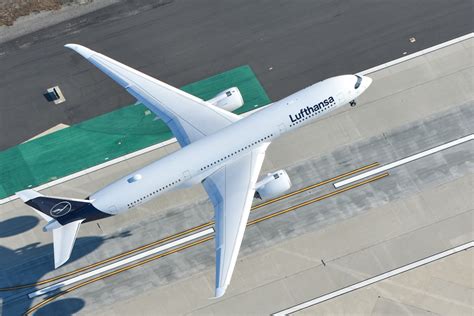
These features could have helped American compete more aggressively in the premium segment, where rivals like Delta and United have made significant strides.
There is also the question of ultra-long-haul capability. The A350 is particularly well-suited for routes exceeding 15 hours, where its efficiency and comfort truly shine. American Airlines, by relying on the 787, may be slightly constrained in this niche.
The Boeing Relationship and Future Fleet Direction
Another factor that cannot be ignored is American Airlines’ longstanding relationship with Boeing. While airlines do not make decisions based purely on manufacturer loyalty, existing partnerships often influence pricing, support, and long-term planning.
Looking ahead, the Boeing 777X is expected to play a key role in replacing older 777 aircraft within American’s fleet. This further reinforces the airline’s Boeing-centric strategy.
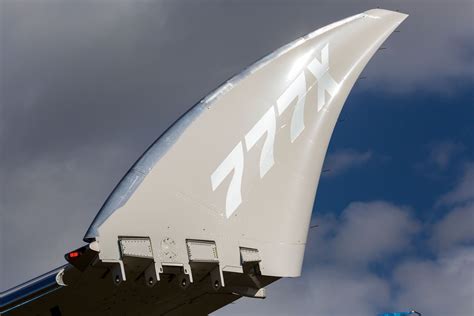
However, delays in the 777X program introduce an element of uncertainty. If these delays persist, the Airbus A350 could theoretically re-enter the conversation as a high-capacity, long-haul alternative.
Still, such a shift would require a major strategic reversal—something that appears unlikely in the near term.
Could American Airlines Ever Order the Airbus A350?
While the door is not completely closed, it is barely ajar. For American Airlines to reconsider the A350, several conditions would need to align:
- Significant delays or performance gaps in the 777X program
- A major shift in network strategy toward higher-capacity routes
- Competitive pressure forcing a rethink of passenger experience standards
Even then, the airline would have to weigh the cost of introducing a new aircraft type against the benefits it might deliver.
At present, the Boeing 787 continues to meet the airline’s needs effectively, reinforcing the logic behind the original decision.
Conclusion: Strategy Over Spec Sheets
The decision by American Airlines to favor the Boeing 787 Dreamliner over the Airbus A350 was not about choosing the “better” aircraft in absolute terms. It was about selecting the aircraft that best fit a specific operational model, financial framework, and network strategy.
The A350 remains one of the most capable widebody jets in the world. But capability alone does not dictate airline decisions. What matters is alignment—alignment with routes, costs, scalability, and long-term goals.
American Airlines chose alignment. And in doing so, it built a fleet strategy that prioritizes efficiency, flexibility, and financial discipline over raw performance metrics.
That is why, in a world where the Airbus A350 dominates headlines, American Airlines continues to fly confidently with the Boeing 787.