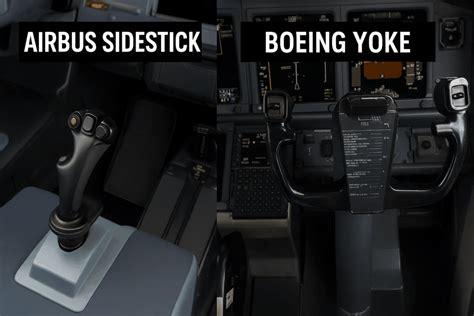
Commercial aviation hides its most fascinating engineering debates inside the cockpit. Passengers may notice seat layouts or engine sounds, but pilots immediately recognize a much deeper design divide. The two dominant aircraft manufacturers—Airbus and Boeing—built radically different philosophies into the core of their flight decks.
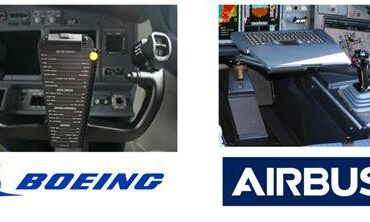
One prefers a compact sidestick mounted beside the pilot, while the other continues to rely on a traditional control yoke positioned in the center of the cockpit. Both systems guide some of the most sophisticated flying machines ever built, yet they represent fundamentally different ways of thinking about how humans and computers should share control of an aircraft.
Understanding why this difference exists requires stepping back into aviation history, examining technological breakthroughs like fly-by-wire, and exploring the cultural engineering philosophies that shaped the aircraft families we see flying today.
By the end, the sidestick-versus-yoke debate begins to resemble something deeper than hardware. It becomes a story about human authority, computer assistance, and the evolution of modern aviation design.
The Origins of the Traditional Aircraft Control Yoke
The control yoke has roots stretching back to the earliest decades of powered flight. Early aircraft used mechanical linkages—cables, pulleys, and rods—to physically move the control surfaces on wings and tails. The pilot needed a control system capable of transmitting force through these mechanisms, and the yoke became the natural solution.
When a pilot pulls the yoke backward, the aircraft’s nose rises. Push it forward, and the nose drops. Turn it left or right, and the aircraft banks in that direction. The design is intuitive because the motion resembles steering a vehicle, giving pilots a physical and tactile connection to the aircraft.
During the mid-20th century, Boeing cemented the yoke as a defining cockpit element. Legendary aircraft such as the B-17 Flying Fortress, the Boeing 707, and later the 747 jumbo jet all used the center-mounted control column. The arrangement became deeply embedded in pilot training worldwide.
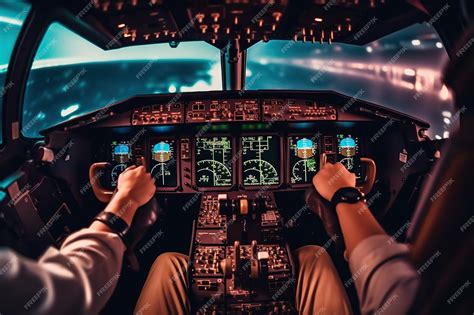
This design also evolved alongside hydraulic systems that reduced the enormous forces required to move large control surfaces. As aircraft grew larger and faster, mechanical feedback became artificial, but Boeing engineers preserved the feeling by carefully tuning control forces.
The result was a cockpit environment where the pilot physically felt the aircraft through the controls, even though modern systems relied on hydraulic and electronic assistance.
Airbus and the Rise of the Sidestick Revolution
Airbus disrupted this tradition in the 1980s with the introduction of the Airbus A320, the first mass-produced commercial airliner to fully embrace digital fly-by-wire technology.
Fly-by-wire means the pilot’s inputs are converted into electronic signals rather than transmitted through mechanical linkages. Computers interpret those signals and command the aircraft’s control surfaces accordingly. This innovation allowed engineers to rethink the entire cockpit interface.
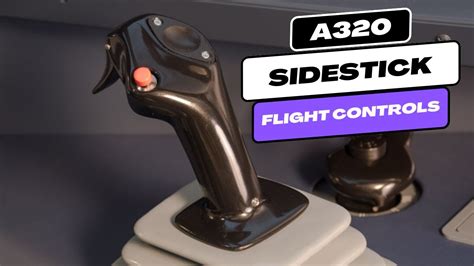
Instead of a large central yoke, Airbus introduced a compact sidestick controller mounted beside each pilot’s seat.
This design choice was more than aesthetic. It embodied Airbus’s belief that aircraft computers should actively assist the pilot, ensuring the aircraft always remains within safe flight limits. In this philosophy, the pilot issues commands, but the computer determines the safest way to execute them.
For example, if a pilot attempts to pitch the aircraft upward beyond the point where a stall might occur, the flight control computer simply refuses the request. The aircraft stays within a safe flight envelope, regardless of how aggressively the sidestick is moved.
This concept fundamentally redefined the relationship between human and machine inside the cockpit.
The Boeing Philosophy: Pilots Always Have the Final Say
Boeing approached automation with a different mindset. Its engineers traditionally believed that pilots must always retain ultimate authority over the aircraft, even when computers are heavily involved.
Modern Boeing aircraft such as the 777 and 787 Dreamliner also use fly-by-wire technology. Yet the company deliberately retained the familiar control yoke, preserving decades of pilot experience and muscle memory.
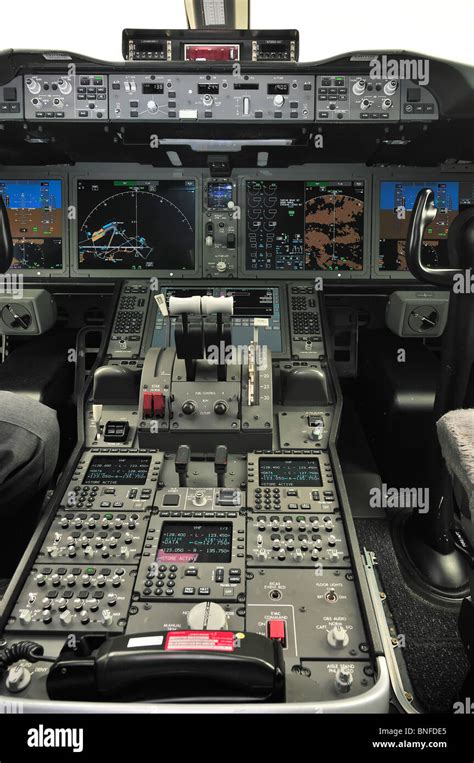
One of the defining features of Boeing’s design is that the two control yokes are mechanically linked and back-driven. If one pilot moves their yoke, the other pilot’s yoke moves in exactly the same way. The same occurs when the autopilot controls the aircraft.
This provides immediate situational awareness. Both pilots can see and feel every input affecting the aircraft.
Another key detail is that Boeing uses “soft limits” rather than absolute restrictions. The flight control computers warn the pilot and resist unsafe inputs, but if the pilot applies enough force, those protections can be overridden. In extreme circumstances, the human operator still has the final word.
The result is a cockpit that prioritizes pilot authority and tactile feedback over strict automation boundaries.
How Airbus Flight Computers Interpret Pilot Inputs
The Airbus sidestick behaves less like a steering wheel and more like a command device.
When a pilot moves the sidestick, the system interprets that movement as a request for a certain flight attitude or maneuver, rather than a direct command to move control surfaces. The flight control computers then determine how to achieve that outcome safely.
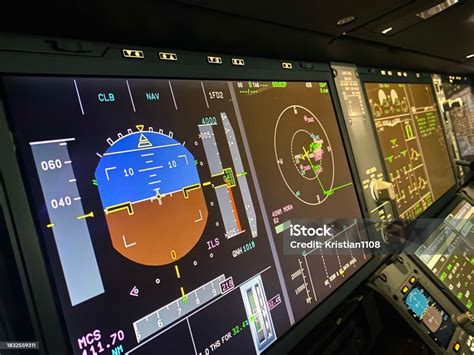
This design introduces a unique behavior: Airbus sidesticks are not mechanically connected to each other. Each pilot’s controller operates independently.
If both pilots move their sidesticks simultaneously, the flight control computer combines the inputs. To avoid confusion during emergencies, Airbus installed a priority button on the sidestick. Pressing it temporarily disables the other pilot’s control input.
While this system initially felt unusual to pilots trained on traditional aircraft, it quickly proved highly effective. The aircraft’s software prevents many categories of human error, reducing the risk of stalls, overspeed conditions, or structural overload.
Ergonomics and Cockpit Space: A Hidden Advantage
Removing the large center yoke dramatically changes the cockpit environment.
Airbus designers realized that a sidestick frees up valuable space in front of the pilot. Instead of maneuvering around a bulky control column, pilots gain a clear workspace and unobstructed view of the instrument panels.
This allowed Airbus to introduce features rarely associated with aircraft cockpits:
- Fold-out tray tables for paperwork or meals
- Easier access to electronic flight bags such as iPads
- Larger and more flexible digital display layouts
- Improved legroom and seating posture
Long-haul pilots sometimes spend 10 to 15 hours in the cockpit, and small ergonomic improvements can significantly reduce fatigue.
The sidestick also requires relatively little physical effort to operate. Because computers manage aerodynamic forces, the pilot’s hand movements remain light and precise even during extended flights.
Boeing’s Commitment to Cockpit Commonality
Despite the ergonomic benefits of sidesticks, Boeing had another powerful incentive to keep the traditional design: cockpit commonality.
During the development of the Boeing 757 and 767, engineers pioneered the idea that two different aircraft could share nearly identical cockpit layouts. A pilot trained on one model could transition to the other with minimal additional training.
Airlines loved this concept because it reduced training costs and simplified crew scheduling. Pilots could operate multiple aircraft types without lengthy retraining programs.
However, this advantage created a constraint. Switching from a center yoke to a sidestick would fundamentally change the cockpit layout and invalidate decades of commonality across Boeing’s fleet.
For airlines operating thousands of Boeing aircraft, preserving that familiar cockpit environment remained extremely valuable.
Simulating the “Feel” of Flight in Modern Jets
One fascinating challenge of modern aviation is that real aerodynamic forces no longer reach the pilot’s hands.
In early aircraft, the control column physically resisted movement because it was directly connected to the wings and tail. Modern jets use hydraulic actuators and computers, meaning the pilot could theoretically move the controls with almost no resistance.
Engineers solved this by creating artificial feedback systems.
Boeing’s yokes simulate the sensation of aerodynamic pressure. As the aircraft accelerates, the yoke becomes harder to move, mimicking the increased forces acting on control surfaces at high speed. This preserves a sense of realism that many pilots appreciate.
Airbus sidesticks behave differently. They do not replicate aerodynamic forces in the same way because the flight control computers automatically manage those dynamics. Instead, the sidestick focuses on precision commands, leaving the physics calculations to the aircraft’s software.
The contrast highlights two distinct philosophies: one preserves the illusion of direct control, while the other emphasizes computer-managed flight stability.
The Influence of Military Aviation
Interestingly, the sidestick concept did not originate in commercial aviation. It first gained prominence in high-performance fighter aircraft, where cockpit space and pilot workload are critical factors.
Modern fighter jets frequently use sidesticks because they allow pilots to control the aircraft while operating weapons systems, radar displays, and navigation computers.
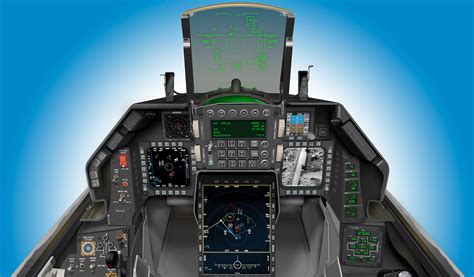
Aircraft such as the F-16 Fighting Falcon, F-22 Raptor, F-35 Lightning II, Dassault Rafale, and Chengdu J-20 all rely on sidestick controllers. These jets integrate advanced fly-by-wire systems that maintain stability even during extreme maneuvers.
Military aviation often pushes technological boundaries first. Once proven reliable in combat aircraft, these innovations gradually migrate into civilian airliners.
This technological cross-pollination helped normalize sidestick controls in the aerospace industry.
Pilot Preferences: Tradition vs Innovation
Despite decades of debate, neither system has achieved universal dominance.
Many pilots trained on Boeing aircraft appreciate the physical feedback and visual cues provided by the traditional yoke. Seeing both yokes move together helps crews maintain shared awareness during complex situations.
Others strongly prefer the Airbus sidestick, praising its clean cockpit layout and precise handling. The absence of a central control column creates a modern workspace more reminiscent of advanced computer systems than mechanical flight decks.
Interestingly, pilots who transition between the two often adapt quickly. Once the underlying flight control logic becomes familiar, both systems prove remarkably intuitive.
What began as a rivalry between manufacturers has evolved into a friendly cultural divide within the aviation community.
Why Both Designs Continue to Coexist
The persistence of these two control philosophies reveals an important truth about engineering: multiple solutions can succeed simultaneously.
Airbus sidesticks highlight the power of automation, ergonomic design, and digital flight management. Boeing’s yokes preserve tactile feedback, pilot authority, and long-standing cockpit continuity.
Both approaches ultimately achieve the same goal—allowing highly trained pilots to guide aircraft weighing hundreds of tons safely across oceans and continents.
And here lies the delightful paradox of aviation engineering. Two radically different cockpit interfaces, born from competing philosophies decades ago, now guide thousands of flights every day with extraordinary safety.
The aircraft may look different inside the cockpit, but the sky seems perfectly happy accommodating both ideas at once.