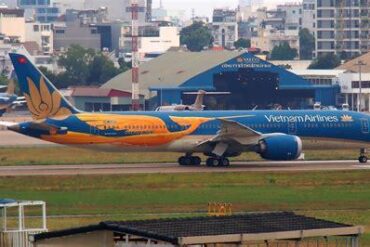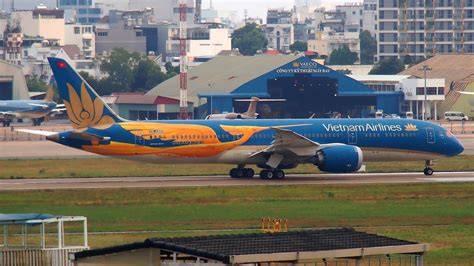
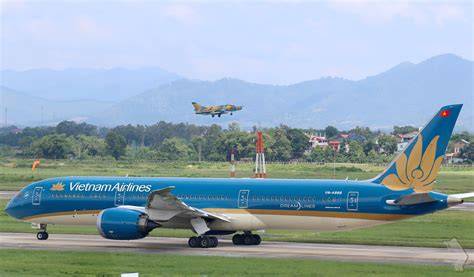
A Vietnam Airlines Boeing 787-9 came dangerously close to disaster during takeoff from Munich Airport after its acceleration unexpectedly changed during the critical final stages of the runway roll. The preliminary investigation has now provided important details about what the crew experienced aboard Flight VN34, offering a clearer picture of an incident that initially appeared to be a straightforward late-rotation event.
The aircraft, registered VN-A867, was operating from Munich to Hanoi on August 15 when its takeoff sequence deviated from expectations. According to preliminary findings from Vietnam’s aviation authority, the crew reported that the aircraft’s acceleration briefly stopped when it was approximately halfway down Runway 26L. The aircraft subsequently accelerated again, but its speed decreased after passing V1, leaving the pilots with very little runway in which to respond.
The Boeing 787-9 ultimately became airborne with only about 300 feet (91 meters) of runway remaining. During the late rotation, the rear fuselage struck the runway, producing indications consistent with a tail strike. Additional warnings involving abnormal tire pressure appeared after takeoff. Despite the severity of the situation, all 271 passengers and 16 crew members survived without injury, turning what could have been a catastrophic accident into a remarkable escape.
Acceleration Loss Becomes Central Investigation Question
The preliminary report is significant because it identifies an unexpected change in aircraft performance before the aircraft reached the most critical point of the takeoff. The crew reportedly observed the 787’s acceleration stop for approximately two seconds when the aircraft was around halfway along Munich’s 13,123-foot (4,000-meter) Runway 26L.
That pause was followed by renewed acceleration, allowing the aircraft to reach V1. However, the situation then deteriorated again when the crew observed another reduction in speed. This sequence is particularly important because it indicates that the pilots were responding to an abnormal development during the takeoff roll rather than simply rotating the aircraft too late from the beginning.
The aircraft’s takeoff weight was reportedly below the 787-9’s maximum takeoff weight of 571,500 pounds (259,200 kilograms). Weather conditions were also described as good. Those factors make the unexplained acceleration change an especially important area for investigators. The available information does not establish whether the problem involved propulsion, aircraft systems, configuration, performance calculations, runway conditions, or another factor.
Why The Crew Continued After V1
Understanding V1 is essential to understanding the crew’s decision. V1 is the calculated takeoff decision speed and represents a critical point in the departure sequence. Before V1, there is generally more runway available to reject a takeoff following a serious problem. After V1, the aircraft is normally committed to continuing the takeoff unless an exceptionally severe circumstance makes continuation impossible.
In the VN34 incident, the aircraft had already passed V1 when its speed began decreasing. The crew determined that there was insufficient runway remaining to safely reject the takeoff. They therefore selected maximum thrust and continued accelerating toward the end of Runway 26L.
The decision placed enormous importance on the final seconds of the takeoff. With approximately 300 feet of pavement remaining, the pilot flying raised the nose, allowing the 787-9 to leave the ground. The maneuver prevented the aircraft from overrunning the runway, but the late rotation caused the aircraft’s rear fuselage to contact the runway surface.
This distinction matters. The preliminary report does not identify the late rotation as the original cause of the event. Instead, the late rotation appears to have been a consequence of the aircraft’s unexpected acceleration behavior and the rapidly shrinking amount of runway available.
Tail Strike And Four Burst Tires
Once airborne, VN34 presented another set of concerns. The aircraft generated warnings consistent with a tail strike as well as indications of abnormal tire pressure. The crew notified air traffic control and elected to return to Munich rather than attempt the approximately long-haul flight to Hanoi.
Because the Boeing 787 was still carrying a substantial quantity of fuel, the crew needed to reduce the aircraft’s weight before landing. The aircraft also conducted low approaches that allowed controllers and personnel on the ground to visually examine the landing gear before the crew committed to the landing.
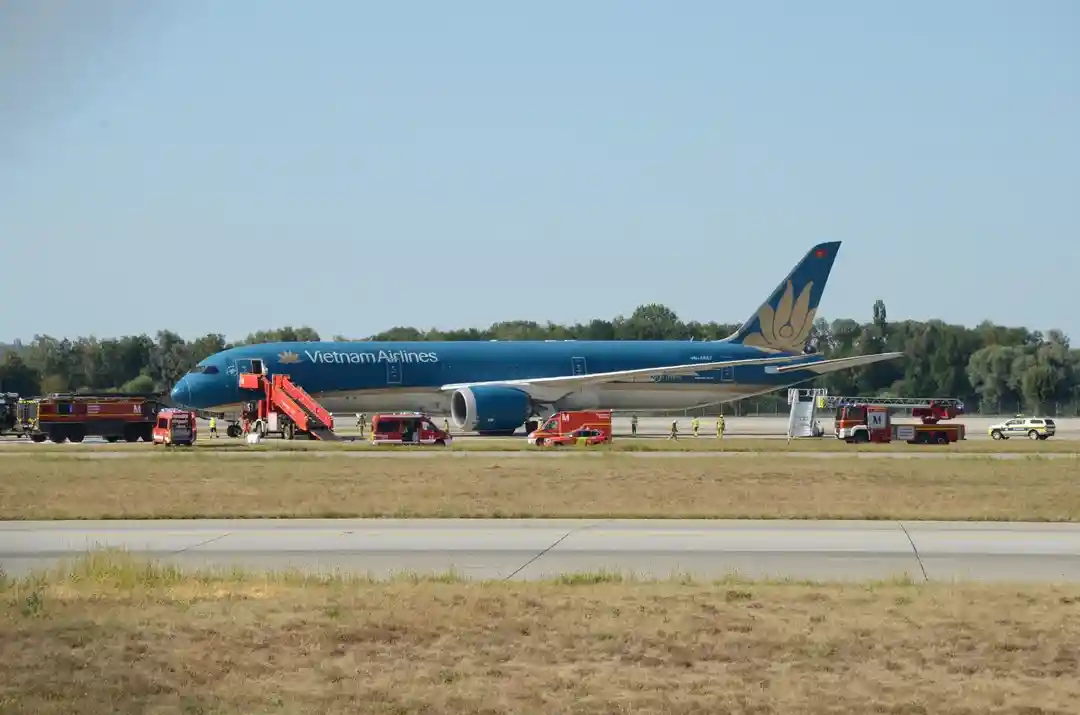
The aircraft eventually landed on Runway 26R at approximately 3:57 p.m. local time, around two hours after its departure. Post-landing inspections revealed four burst main landing-gear tires, scrape marks beneath the rear fuselage, and damage to sections of the aircraft’s skin.
The aircraft remains grounded in Munich while investigators conduct further technical examinations. The physical evidence will be particularly valuable because investigators can compare the tire damage and fuselage scrape marks with recorded aircraft parameters to reconstruct exactly what occurred during the takeoff.
Flight Data Could Explain The VN34 Overrun
The next stage of the investigation will likely focus heavily on the aircraft’s flight-data recordings and cockpit information. Investigators must establish the precise relationship between engine thrust, acceleration, airspeed, aircraft configuration, runway position and pilot control inputs.
The central question is straightforward but technically complex: what caused the Boeing 787-9’s acceleration to change unexpectedly during the takeoff roll? Determining that answer will be more important than simply identifying the late rotation or subsequent tail strike.
Vietnamese and German authorities are cooperating on the investigation, with Vietnam Airlines instructed to work alongside Boeing and other relevant parties. Their analysis should help determine whether the event resulted from a technical malfunction, an unexpected aircraft-performance issue, an incorrect configuration, an environmental factor, or a combination of circumstances.
Preliminary Findings Are Not A Final Cause
The report should therefore be viewed as an important investigative milestone rather than a final explanation. It establishes a clearer sequence of events, but it does not yet determine the cause.
What makes the VN34 incident particularly significant is the narrow window between the first unexplained acceleration change and the eventual liftoff. The crew encountered an abnormal situation, passed V1, saw speed decrease, determined that rejecting the takeoff was no longer viable, applied maximum thrust and rotated with almost no runway remaining.
The Boeing 787-9 survived the event, and everyone aboard was safe. The remaining challenge is to understand why the aircraft’s performance changed in the first place. As investigators examine the aircraft, flight data and operational records, the preliminary report has already transformed the Munich incident from a mysterious runway overrun scare into a much more precisely defined takeoff-performance investigation.