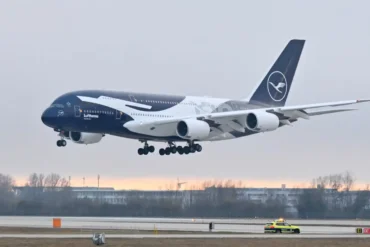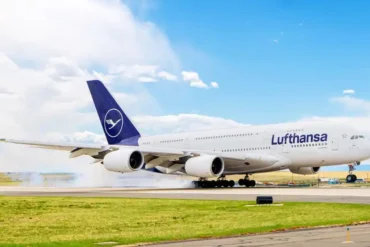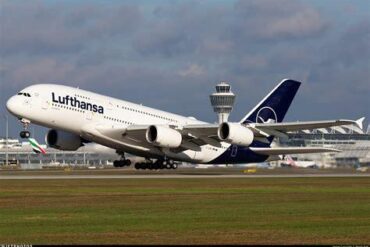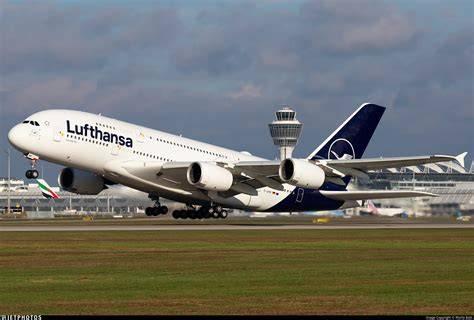
A Lufthansa Airbus A380 touched down short of the runway threshold at Munich Airport on August 17, damaging runway lighting infrastructure in an incident that occurred only two days after a Vietnam Airlines Boeing 787-9 experienced a serious takeoff problem at the same German airport. The Lufthansa aircraft, registered D-AIML, was operating Flight LH459 from San Francisco to Munich with 351 passengers aboard.
Despite the unusual touchdown, the aircraft completed its landing and taxied to its assigned position. All passengers were able to leave the aircraft safely, and there were no reported injuries. Lufthansa confirmed that runway lighting was damaged during the landing, while Germany’s Federal Bureau of Aircraft Accident Investigation, known as the BFU, has begun examining the circumstances surrounding the event.
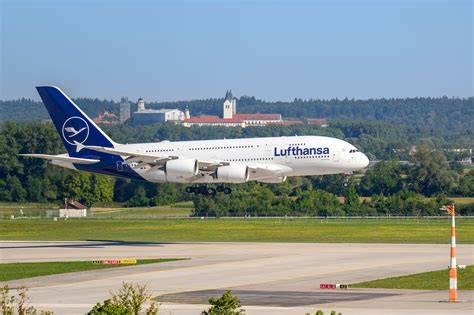
Lufthansa A380 Touches Down Before Munich Runway Threshold
The Lufthansa A380 arrived in Munich following an approximately 11-hour transatlantic flight from San Francisco. During its approach to Runway 26L, the aircraft touched down before reaching the designated runway threshold. Its landing gear subsequently came into contact with runway lighting positioned in the threshold area.
The event is significant because the threshold provides the intended starting point for the runway’s landing surface, and aircraft are expected to cross it at a prescribed height during a stabilized approach. Touching down before that point can expose an aircraft to airport infrastructure that would normally remain clear of its landing gear and wheels.
There is no indication from the available information that D-AIML departed the paved area or suffered major structural damage. The A380 continued its landing normally enough to taxi away from the runway, allowing passengers to disembark without an emergency evacuation. Nevertheless, the damage to runway equipment gives investigators an important physical indication of where the aircraft contacted the ground and airport infrastructure.
The A380’s enormous dimensions make the incident particularly noteworthy. The aircraft measures approximately 238 feet 7 inches (72.7 meters) long, has a maximum takeoff weight of around 1.268 million pounds (575 tonnes), and can accommodate hundreds of passengers depending on its cabin configuration. An aircraft of this size touching down short of a runway threshold creates obvious operational and safety concerns, even when the immediate outcome is relatively benign.
BFU Investigates Why the A380 Landed Short
The BFU has opened an investigation and secured the aircraft’s flight recorder, which could provide crucial information about the final stages of the approach. Recorded flight data may help investigators determine the aircraft’s altitude, speed, vertical profile and position in relation to the runway during the moments immediately before touchdown.
At this stage, there is no confirmed explanation for why the A380 landed short. Investigators will need to establish whether the approach developed below the intended glide path, whether visual conditions affected the crew’s perception of the runway threshold, or whether another operational, environmental or technical factor played a role.
The runway-lighting damage could also prove valuable. Investigators can examine the exact location and pattern of damaged equipment and compare those findings with the aircraft’s recorded flight path. That evidence may help reconstruct the final seconds of the approach with considerably greater precision.
For that reason, describing the event prematurely as an aircraft failure or a conventional runway excursion would be inappropriate. The confirmed facts are narrower: the A380 touched down short of the designated runway threshold and damaged runway lighting, after which it completed the landing and passengers safely exited the aircraft.
Munich Faces Second Runway Incident in Just Two Days
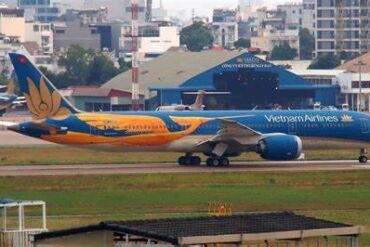
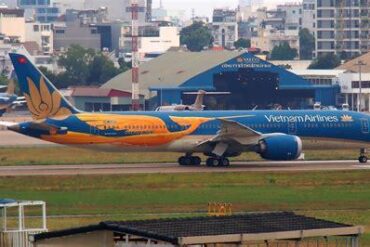
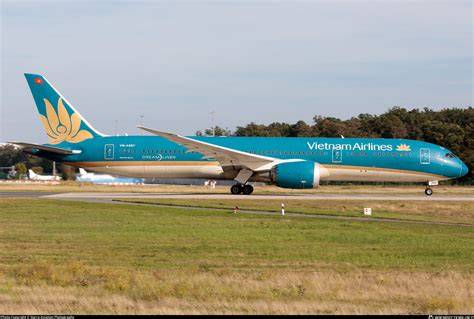
The Lufthansa incident has attracted additional attention because it occurred only days after another serious event at Munich Airport. On August 15, a Vietnam Airlines Boeing 787-9 encountered an acceleration problem while departing from the same Runway 26L for Hanoi.
The 787 reportedly struggled to accelerate during its takeoff roll before eventually becoming airborne with only about 300 feet (91 meters) of runway remaining. After departure, the aircraft returned to Munich following warnings associated with a possible tail strike and abnormal tire-pressure indications. The aircraft also damaged runway lighting during the incident and remained in Munich for further examination.
The close timing of the two events naturally raises questions about whether Munich’s runway environment could have contributed to both incidents. However, there is currently no evidence connecting the two events or indicating a common cause. The A380’s short landing occurred during an approach, while the 787 incident involved acceleration during takeoff, making the operational circumstances fundamentally different.
Runway 26L is one of Munich Airport’s two approximately 4,000-meter runways, providing substantial length for long-haul aircraft such as the A380 and 787. The repeated damage to runway lighting nevertheless means airport operators and investigators will have a clear reason to examine the condition and operation of the affected infrastructure.
What Happens Next for Lufthansa and Munich Airport?
The immediate question for Lufthansa is whether D-AIML sustained any damage that requires inspection or maintenance before returning to normal service. Even when passengers can safely disembark and an aircraft appears operational, contact with runway infrastructure warrants careful technical examination.
For the BFU, the central issue will be reconstructing the A380’s approach and determining why the aircraft crossed the runway threshold at an unusually low altitude. Investigators are expected to consider flight-recording data alongside crew procedures, weather and visibility conditions, aircraft systems and the physical evidence found around the runway.
The fact that nobody was injured is the most important outcome. However, the incident demonstrates why runway thresholds, approach profiles and airport lighting systems are critical components of aviation safety. The two Munich events occurring within days of each other make the situation unusual, but proximity alone does not establish a connection.
Until investigators release additional findings, the Lufthansa A380 incident should therefore be viewed as a serious but contained runway event. The flight recorder, aircraft inspection and damaged lighting infrastructure could eventually reveal exactly what happened during the final moments of LH459’s approach—and whether any lessons need to be applied to future A380 operations at Munich.