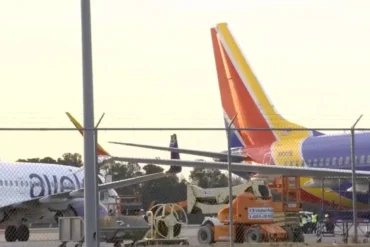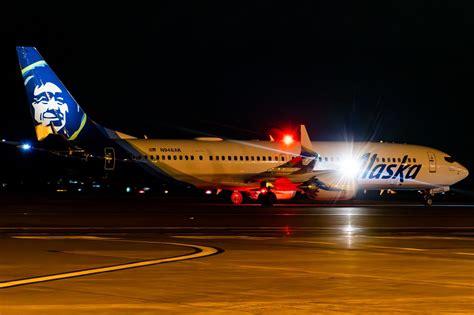
On Monday, December 15, Alaska Airlines Flight 62, operated by a Boeing 737-700, experienced a lightning strike during its final approach to Sitka Rocky Gutierrez Airport (SIT) in Alaska. The incident occurred under atmospheric conditions ripe for electrical activity, and while visually dramatic, it concluded with a routine and safe landing. No injuries were reported among passengers or crew.
Alaska Airlines Flight 62: A Routine Turned Extraordinary
Flight 62 had a delayed departure from Juneau International Airport (JNU), taking off at 10:49 a.m. local time, one hour past schedule. The total gate-to-gate flight time was recorded at 79 minutes, with the aircraft touching down in Sitka at 12:08 p.m. However, local sources suggest that the aircraft may have spent only 27 minutes in the air, possibly due to extended delays on the ground.
This aircraft, registered N644AS, is nearly 23 years old, according to Planespotters.net. It is part of a fleet that frequently traverses the challenging and often unpredictable weather patterns of the Alaskan skies. Its route map includes destinations as far north as the Bering Strait and infrequently south to Seattle, which is its southernmost routine stop.
The Moment of the Strike: Passengers Recall a Bright Flash
One of the passengers, Kathy Fitzgerald, shared her firsthand experience of the lightning strike with Juneau-based station KTOO:
“It was like a giant flashbulb going off throughout the whole plane, coming from outside. There was this huge, bright light — there was no loud sound, there was no shimmying or shuddering of the plane.”
This description paints a surreal image — a silent explosion of light engulfing the fuselage, yet with none of the typical sonic or tactile signs that often accompany such phenomena. Unlike other lightning events that may produce a sudden jolt or cabin vibration, Flight 62’s strike lacked any such symptoms.
What Happens When a Plane is Hit by Lightning?
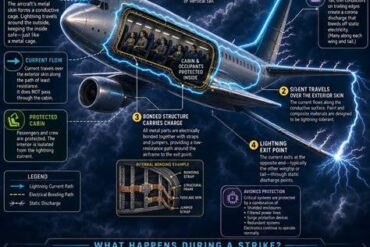
While alarming, lightning strikes on commercial aircraft are not rare. On average, each aircraft is struck once or twice a year. These aircraft are designed with safeguards that make such encounters relatively harmless. Central to that safety is the Faraday Cage principle—a design feature that allows lightning to travel along the aircraft’s conductive exterior and exit without penetrating the cabin or damaging critical systems.
Additional protection systems include:
- Static discharge wicks on wingtips and tails to dissipate electricity.
- Shielded wiring and avionics bays to protect electronic systems.
- Conductive fuselage materials that redirect electric current along the aircraft’s frame.
The Alaska Airlines spokesperson confirmed that the aircraft’s systems responded as expected, and no damage affecting flight safety was reported at the time of landing.
Curious Absences: No Typical Lightning Precursors Observed
In other lightning incidents, passengers and crew often witness precursor phenomena such as:
- The smell of ozone, a distinct sharp scent produced by ionized air.
- Precipitation static causing interference in radio systems.
- Saint Elmo’s Fire, a bluish glow visible on windshields or wing edges.
- Hair standing on end due to electrostatic buildup.
Interestingly, none of these were observed during this flight. Fitzgerald did not recall any static build-up, visual anomalies, or even the smell of ozone. This may suggest the lightning bolt struck suddenly and cleanly, with minimal interaction with the surrounding atmosphere inside the plane.
A Near Miss with Timing: Could Delay Have Prevented the Strike?
Flight 62’s departure was delayed by an hour — and ironically, had it departed on time, it may have completely missed the storm cell that unleashed the lightning bolt. Such is the unpredictable nature of flying in the Alaskan frontier, where meteorological shifts occur with little notice and weather data is often sparse or delayed due to remote geography.
Had the jet taken off as scheduled, it’s likely the atmospheric conditions would have been different upon approach, and the encounter with lightning might never have occurred. This detail adds a dramatic twist to the narrative, highlighting how even minor scheduling changes can place aircraft into the path of rare events.
The Aftermath: Assessment and Return to Service
Post-landing, the aircraft was subjected to routine inspection to assess any structural or electrical impacts. Alaska Airlines stated that the aircraft is scheduled to return to service by Thursday, indicating no major damage was sustained. It’s common protocol to perform thorough checks even in cases where the strike appears superficial.
Inspections focus on:
- Entry and exit points for the lightning bolt.
- Avionics and navigation systems for transient voltage damage.
- Flight control surfaces for scorching or minor punctures.
Engineering Marvels: Why Planes Withstand Lightning
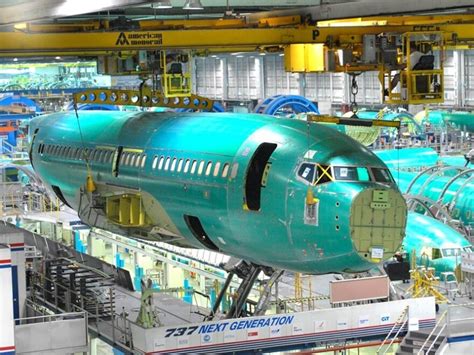
The resilience of the Boeing 737-700 and its contemporaries lies in their meticulous engineering. The Faraday Cage is not a passive structure; it is designed with electrical redundancy, shielding, and smart routing to absorb and expel high-voltage energy without compromising the aircraft’s systems.
Over decades of evolution, aircraft manufacturers have tested their designs in labs with artificial lightning generators and high-voltage discharges to simulate worst-case scenarios. From composite nose cones to lightning arrestors, each structural component has a role in channeling or resisting electrical energy.
These features not only prevent mechanical damage but also protect passengers from experiencing electric arcs, burns, or any harmful effects inside the cabin. The strike is often only visible from the outside, manifesting as a bolt-to-metal flash that exits quickly, usually near the tail.
Passenger Experience: Calm Amid the Storm
That there was no panic aboard Flight 62 is a testament to both aircrew professionalism and public awareness. Today’s passengers, while still wary of turbulence and storms, are more informed about aviation technology than ever before. Fitzgerald’s calm recounting of the event reflects a trust in Alaska Airlines and their aircraft.
Her account:
“There was no loud sound, no shuddering of the plane.”
speaks volumes about the smooth operation of the jet’s systems in an otherwise shocking situation.
Flying in Alaska: Risks and Realities
Alaska’s terrain and climate pose unique challenges for commercial aviation. Narrow flight corridors between mountainous terrain, unpredictable icing, rapidly forming storm systems, and low visibility are part of daily operations for regional pilots.
Alaska Airlines is a veteran in this environment. Their operations are tailored to meet these challenges, with:
- Specialized pilot training for adverse weather.
- Reinforced flight schedules to accommodate variable conditions.
- Robust communication systems for remote coordination.

In this context, lightning strikes—while rare—are considered part of the operational envelope. Aircraft that operate frequently in such regions are more likely to experience them due to increased exposure.
Conclusion: A Bolt of Reality in the Skies
The lightning strike on Alaska Airlines Flight 62 is a vivid reminder of the raw power of nature and the impressive capability of modern engineering. While visually dramatic, this incident was managed with precision, professionalism, and calm—from both the crew and passengers.
In the end, what could have been a harrowing experience became a footnote in the aircraft’s logbook. It landed safely, was inspected thoroughly, and is set to return to the skies. For the 737-700 jet N644AS, and those who flew aboard it, it was simply another day navigating the beautiful yet unpredictable Alaskan skies.