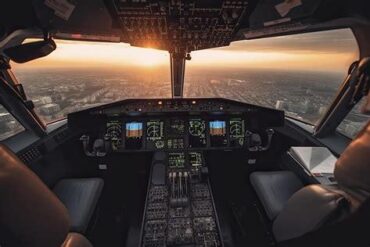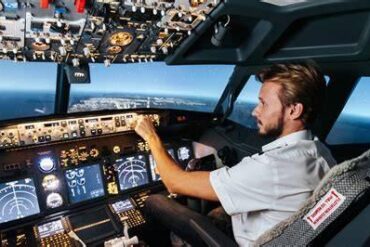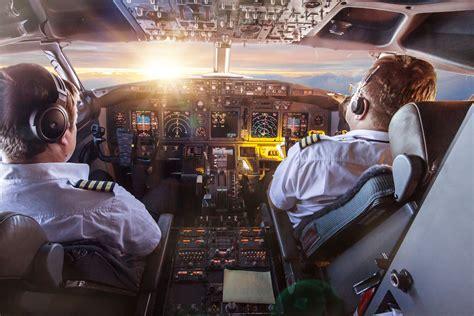
The modern airline cockpit is designed around a remarkable paradox: the more capable the automation becomes, the more important it is for pilots to remain mentally engaged. An autopilot can maintain altitude, follow a programmed route, manage climbs and descents, capture an instrument approach, and, on suitably equipped aircraft and under approved conditions, even conduct an automatic landing. From the passenger cabin, it can therefore seem as though the pilots have little left to do once the automation takes over.
That impression is misleading. Airline pilots are not expected to sit back and simply watch the aircraft follow a computer-generated flight path. The Federal Aviation Administration (FAA) specifically encourages crews to “stay in the loop by mentally flying the aircraft” even when the autopilot is engaged. This principle reflects decades of aviation human-factors research showing that automation can reduce physical workload while creating a different danger: pilots may gradually become passive monitors who are less prepared to recognize an unexpected change.
The idea of mentally flying the aircraft does not mean pretending to move the control column or physically performing every maneuver in one’s imagination. Instead, it means continuously maintaining a clear mental picture of what the aircraft is doing, why it is doing it, and what it should do next. A pilot should be able to anticipate the next turn, altitude change, speed adjustment, or configuration change before it occurs. When reality differs from that expectation, the discrepancy becomes an immediate warning.
What “Mentally Flying the Aircraft” Really Means
The FAA’s guidance in Advisory Circular 120-71B reflects a fundamental principle of automated flight: engaging the autopilot does not transfer responsibility for the aircraft to the computer. The pilots remain responsible for managing the flight, monitoring the aircraft’s performance, and deciding whether the automation is doing what it is supposed to do.
A pilot who is mentally flying the aircraft might look at the current altitude and already know that the airplane is approaching an assigned level-off. The pilot understands the selected vertical mode, anticipates the aircraft’s response, and watches the instruments to confirm that the expected sequence actually occurs. If the airplane begins behaving differently, the pilot has an expectation against which the real-world behavior can immediately be measured.
This is particularly important because modern aircraft automation does not simply respond to one isolated command. Flight management systems combine navigation data, programmed restrictions, aircraft performance information, selected targets, and multiple operating modes. A seemingly simple instruction can therefore produce a complicated sequence of automated actions.
The essential question for the crew is not merely “What is the airplane doing?” It is also “Is the airplane doing what we expect it to do?” That distinction is at the center of effective automation management.
Why Pilots Check the Flight Mode Annunciator
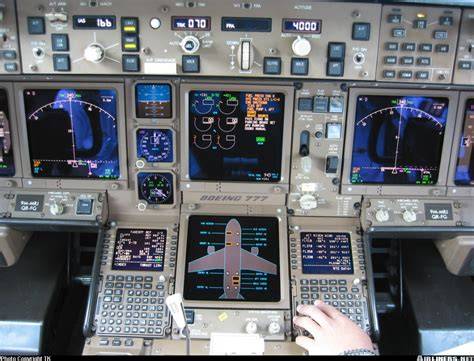
One of the most important tools for maintaining this mental connection is the Flight Mode Annunciator, commonly known as the FMA. Located prominently on the primary flight display, the FMA tells pilots which lateral and vertical automation modes are actually active.
That information matters because selecting a mode and successfully engaging a mode are not necessarily the same thing. A pilot may press a button expecting one behavior while the aircraft remains in another mode. If the crew does not immediately verify the FMA, the airplane can begin following a flight path that differs from what the pilots believe they commanded.
For this reason, pilots routinely verify the FMA after making changes to the autopilot or flight director system. The procedure is essentially a closed-loop process: command, verify, monitor. The pilot makes a selection, confirms that the aircraft accepted the intended mode, and then watches the resulting flight path.
This discipline becomes especially valuable during climbs, descents, arrivals, and approaches. These phases can involve multiple altitude restrictions, speed targets, navigation changes, and transitions between automation modes. A small misunderstanding can develop quickly when the aircraft is descending toward an airport and the crew has limited time to diagnose an unexpected response.
Automation Surprise Can Leave Pilots Behind the Aircraft
A major concern in highly automated cockpits is known as automation surprise. The term describes situations in which an automated system behaves in a way that is technically logical but unexpected to the human operators.
This does not necessarily mean that the computer has malfunctioned. In many cases, the system is doing exactly what its programming, selected modes, and available data tell it to do. The problem is that the pilots may no longer understand why the aircraft is behaving that way.
Human-factors researchers Nadine Sarter and David Woods have examined this problem extensively. Their work helped demonstrate that sophisticated automation can function almost like an independent agent within the cockpit. It responds according to its internal logic, while the pilots must continuously maintain an accurate understanding of that logic.
That creates an unusual challenge. A pilot can become less physically busy while simultaneously becoming more vulnerable to losing situational awareness. During a long period of stable cruise flight, the aircraft may require very little manual intervention. If the pilot’s attention gradually shifts from actively managing the flight to simply observing the automation, however, recognizing an unexpected change can become more difficult.
The danger is therefore not simply automation failure. It is the gap between what the pilots believe the system will do and what the system is actually doing.
Why VNAV and Automated Descents Require Special Attention
Vertical Navigation, or VNAV, illustrates why mentally flying the aircraft remains so important. VNAV can manage complex vertical profiles involving altitude restrictions, descent paths, and speed targets. It can dramatically reduce workload, but it also requires the crew to understand how the system is constructing and executing the planned profile.
During an arrival, several things can change in a short period. Air traffic control may issue a new altitude, the aircraft may receive a revised clearance, the crew may modify the flight-management-system programming, or the aircraft may encounter a restriction that changes how the descent should proceed. The pilots must understand how each change affects the automation.
Research involving airline pilots has found that mode confusion remains a recurring human-factors issue, with VNAV among the areas that can generate particular difficulties. The reason is understandable: vertical automation often involves several interacting targets and constraints rather than one simple command.
Mentally flying the aircraft provides a defense against this complexity. The pilot continuously predicts the aircraft’s vertical path and checks whether the actual trajectory matches that prediction. If the airplane levels unexpectedly, accelerates, descends differently, or fails to capture an expected altitude, the discrepancy immediately becomes something to investigate.
The Asiana 214 Accident Shows Why Monitoring Matters
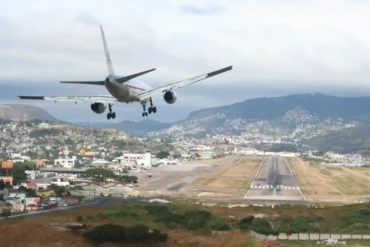
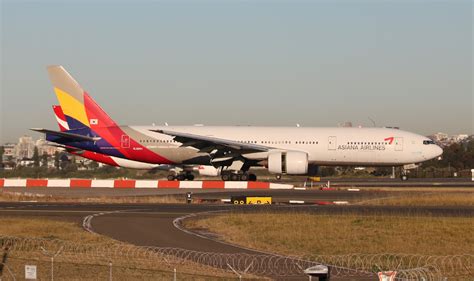
The consequences of losing this mental connection were tragically demonstrated by Asiana Airlines Flight 214, which crashed while approaching San Francisco International Airport on July 6, 2013. The Boeing 777 struck the seawall short of the runway during an approach that had become dangerously slow and low.
The accident was not caused by a simple mechanical failure of the aircraft. Instead, the investigation revealed a complicated interaction involving automation modes, pilot expectations, airspeed management, and monitoring. The crew expected the aircraft’s automated systems to provide certain behavior, but the automation was not operating in the way the pilots believed.
As the approach continued, the aircraft’s airspeed deteriorated. The crew did not recognize the developing energy-state problem early enough, and the airplane descended below the appropriate flight path. By the time the seriousness of the situation became unmistakable, there was insufficient altitude to recover safely.
The accident demonstrated why monitoring is not a secondary cockpit task. A pilot cannot safely supervise automation merely by confirming that lights and displays appear normal. The crew must understand the aircraft’s energy state, flight path, configuration, speed, altitude, and active automation modes simultaneously.
The lesson is particularly powerful because the aircraft itself was capable of performing the approach. Advanced technology did not eliminate the need for pilot judgment. Instead, it created a situation in which misunderstanding the technology became part of the risk.
Automation Does Not Replace Pilot Judgment
Modern airliners are built with layers of automation, redundancy, warnings, protections, and monitoring systems. These technologies have transformed commercial aviation and allow aircraft to perform extremely precise operations across enormous distances. Yet none of that changes the fundamental responsibility of the flight crew.
The autopilot is a tool, not an independent pilot. It can execute commands with extraordinary consistency, but it does not possess the crew’s overall operational context. Pilots understand the clearance received from air traffic control, the weather, runway conditions, aircraft limitations, traffic situation, operational priorities, and changing circumstances around the flight.
That is why good automation management involves active questioning. If the aircraft does something unexpected, the correct response is not to assume that the computer must be right. The crew should determine why the aircraft behaved differently and whether the current automation configuration remains appropriate.
This philosophy also explains why airline training increasingly emphasizes monitoring skills alongside manual-flying proficiency. Manual control remains important, but modern airline operations demand another type of expertise: understanding sophisticated systems well enough to supervise them effectively.
The Pilot Monitoring Provides Another Safety Barrier
Airline cockpit procedures add another important layer through the division between the pilot flying and pilot monitoring. The pilot flying is primarily responsible for controlling and managing the aircraft’s trajectory, whether that control is manual or automated. The pilot monitoring independently cross-checks critical information and watches for deviations.
This arrangement is more than a division of labor. It creates redundancy in human decision-making. One pilot may have selected a mode or entered a change into the flight management system, while the other verifies that the resulting aircraft behavior matches the clearance and the intended flight path.
The monitoring pilot can therefore catch problems before they become emergencies. A wrong altitude, unexpected mode, incorrect navigation selection, excessive speed, or developing energy-state problem can be identified through independent cross-checking.
That principle mirrors a broader lesson from aviation safety: systems are safest when they do not depend on one person or one technology being perfect.
Why Mental Flying Is Especially Important in Emergencies
The value of staying mentally ahead of the aircraft becomes even clearer when something unexpected happens. Automation can reduce workload during normal operations, but an abnormal situation can suddenly require rapid decision-making.
A pilot who has been actively monitoring the aircraft already knows its altitude, speed, configuration, trajectory, and automation state. If the autopilot disconnects, an instrument behaves unexpectedly, weather changes, or a system alert appears, that pilot is not starting from zero. The mental model is already established.
A pilot who has become a passive observer may face a much harder transition. Suddenly taking manual control requires rebuilding an understanding of the aircraft while also responding to the problem that caused the automation to become inappropriate or unavailable.
This is why mental engagement is a form of preparation. It keeps the pilot’s understanding synchronized with the aircraft so that intervention can happen quickly when necessary.
The Future of Automated Flight Still Needs Human Oversight
As aviation technology advances, the question is unlikely to be whether aircraft will become more automated. They almost certainly will. The more important question is how pilots will interact with that automation without losing situational awareness or manual proficiency.
Future flight decks may provide better interfaces, clearer mode information, improved alerts, and automation designed around human cognitive limitations. These developments could reduce some of the confusion associated with today’s systems. But the underlying principle will remain relevant: someone must understand what the aircraft is doing and why.
The FAA’s instruction to mentally fly the aircraft is therefore not an argument against automation. It is an argument for using automation intelligently. The safest pilot is not necessarily the one who touches the controls most often, nor the one who trusts the computer most completely. It is the pilot who understands the aircraft well enough to know what should happen next and notices immediately when reality begins to diverge from expectation.
That is the real meaning behind “mentally flying” with the autopilot engaged. The hands may be off the controls, but the pilot’s attention should never leave the flight. Automation can fly the programmed path with remarkable precision. The human crew must still make sure it is the right path, the right mode, and the right moment to continue—or to take over.