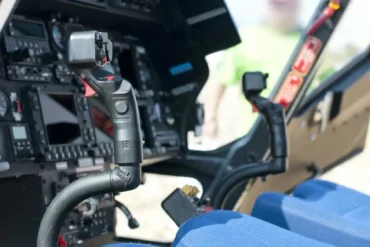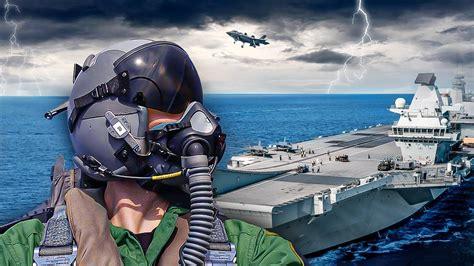
Autopilot technology has transformed aviation, but its role in U.S. Navy carrier landings remains a nuanced subject. Despite the rapid advancements in automation, U.S. Navy pilots do not rely solely on autopilot to land jets on aircraft carriers. Instead, a hybrid approach is employed, where software support systems like Precision Landing Mode (PLM) significantly reduce pilot workload, while human control remains paramount.
The Critical Role of Human Oversight in Carrier Landings
Unlike commercial airliners that follow relatively predictable flight patterns, Navy jets operate in highly dynamic and dangerous environments. Landing on an aircraft carrier is one of the most perilous tasks in aviation. The flight deck is not only narrow and constantly in motion, but the wind, sea conditions, and other operational aircraft make the process incredibly complex.
These conditions necessitate active pilot engagement, not full automation. Despite software support, every carrier landing is ultimately a manual feat of precision and control, requiring a pilot’s keen judgment and reflexes.
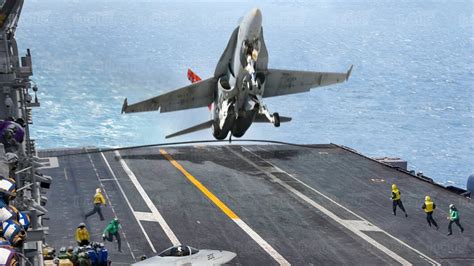
Understanding Precision Landing Mode: A Technological Evolution
The U.S. Navy’s Precision Landing Mode (PLM) is a technological innovation designed to support — not replace — pilot input during carrier landings. Introduced as “Magic Carpet” (Maritime Augmented Guidance with Integrated Controls for Carrier Approach and Recovery Precision Enabling Technologies) in 2015, PLM was envisioned to reduce the burden on pilots during approach and recovery.
In its earliest form, PLM faced operational challenges. Initial deployments revealed scenarios where the system failed to maintain functionality, particularly under extreme conditions. After critical updates, the refined system became operational by 2021 and is now integrated into aircraft such as the F/A-18E-F Super Hornet and EA-18G Growler.
PLM works by simplifying how pilots manage glide paths and pitch during landings. Instead of wrestling with dozens of micro-adjustments, pilots use PLM to stabilize the aircraft’s nose and maintain an optimal angle of attack. This assists the tailhook in successfully catching one of the arresting wires on the carrier deck — a maneuver that is both high-stakes and surgically precise.
Precision Without Sacrificing Skill
When a Navy jet prepares to land, the margin for error is virtually zero. An improper approach means the jet must immediately execute a go-around or risk catastrophic failure. Before PLM, pilots would make up to 300 small control inputs in the seconds leading up to touchdown. With PLM engaged, this number is drastically reduced — often to fewer than 10.
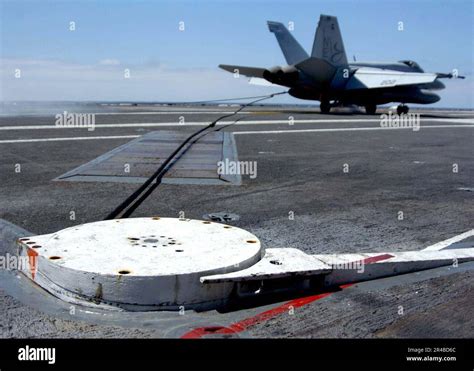
This reduction is not just a matter of convenience. It enhances safety, consistency, and pilot endurance, especially during intense training cycles or operational deployments. In fact, Capt. Dan Catlin, a commanding officer in 2021, noted that newly qualified pilots using PLM delivered “by far the smoothest evolution, best performance we’ve seen from our students ever — and that’s by an awful lot.”
Such remarks underscore PLM’s importance as a force multiplier, not a replacement for skill. The system does not make decisions; it facilitates them. It offers a more stable platform from which pilots can execute the landing, but if the system fails or is unavailable, manual proficiency remains essential.
Maintaining Manual Proficiency: A Vital Training Standard
Despite its advantages, PLM is not a panacea. Pilots are still required to perform manual landings regularly to maintain proficiency in non-automated recovery scenarios. As Catlin emphasized, even experienced aviators must execute what’s called a “manual pass” to ensure they retain the skills necessary for situations where PLM may be unavailable due to malfunction or mission parameters.
This dual-track training ensures that all naval aviators are technologically adept yet fundamentally skilled, ready to respond to emergencies or rapidly changing conditions with or without automation.
Extending PLM to the F-35 Lightning II and Beyond
The utility of PLM has not gone unnoticed. Its integration into the F-35 Lightning II — one of the most advanced stealth multirole fighters in the U.S. arsenal — marks a significant step in standardizing software-assisted carrier landings across future fleets. The F-35, with its sophisticated sensor fusion and networked warfare capabilities, is ideally positioned to benefit from the streamlined control interface that PLM provides.
As these systems become further refined, we may see PLM evolve into a more adaptive and intelligent assistant, capable of responding to real-time inputs and offering even greater support under high-stress conditions. Still, the doctrine remains clear: the pilot is in command.
Conclusion: Autopilot Assists, But It Doesn’t Land the Jet
In summary, U.S. Navy pilots do not use full autopilot to land on aircraft carriers. Instead, they leverage systems like Precision Landing Mode that act as augmentation tools, reducing the cognitive and physical load during one of the most dangerous phases of flight. PLM is a support system, not an autopilot, and its effectiveness lies in its ability to empower — not supplant — the skills of a trained naval aviator.
While automation will continue to reshape aviation, the U.S. Navy’s approach underscores a deeper truth: technology should enhance human performance, not replace it. Carrier landings will always demand judgment, adaptability, and courage — traits no machine can replicate.