Understanding Autopilot Systems: From Gyroscopes to Digital Intelligence
Autopilot systems are among the most transformative innovations in aerospace engineering, revolutionizing the way aircraft are navigated across the skies. These systems control a vehicle’s trajectory with minimal human intervention, allowing operators to delegate routine control tasks while maintaining strategic oversight of flight operations. In aviation, the automation of flight paths has redefined both safety and efficiency, and continues to evolve with the integration of artificial intelligence and redundant fail-safe architectures.
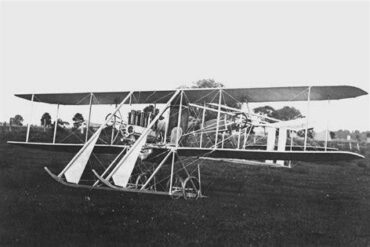
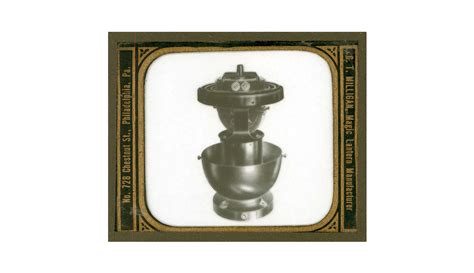
Historically, autopilot technology was born in the early 20th century, with the Sperry Corporation’s 1912 gyroscopic stabilizer marking the first successful attempt at self-steering mechanisms in aviation. This innovation allowed an aircraft to maintain straight and level flight, an extraordinary leap in a time when human pilots were solely responsible for every manual adjustment. As military needs grew during World War II, autopilot systems matured rapidly, aided by advances in gyroscopic instruments, hydraulic actuators, and servo-controlled flight surfaces.
By the post-war period, autopilot had transcended aviation. Maritime vessels, including large tankers, began integrating similar systems to maintain heading and stability. The technology’s adaptation into helicopters, particularly production models during the 1950s and 60s, illustrated its versatility and growing importance in vertical flight domains.
The Functional Anatomy of an Autopilot System
At its core, an autopilot system is a highly coordinated network of sensors, actuators, processors, and control logic. It operates by interpreting real-time data from the aircraft’s navigation suite, responding with calculated movements of flight control surfaces to maintain a desired trajectory.
Modern systems categorize control authority across three primary axes:
-
Single-axis systems manage roll.
-
Two-axis systems handle roll and pitch.
-
Three-axis systems add yaw control.
These classifications dictate how comprehensively the system can control the aircraft’s movement. A three-axis autopilot, typical in commercial airliners and advanced private aircraft, can assume full control across all rotational dimensions, contributing to ultra-stable flight characteristics.
Autopilot Integration Across Flight Phases
One of the defining achievements of autopilot evolution is its capability to manage the entire flight envelope, including:
-
Taxi
-
Takeoff
-
Climb
-
Cruise
-
Descent
-
Approach
-
Landing
Each phase demands a distinct set of control priorities. For instance, during takeoff, the autopilot coordinates with the autothrottle system to manage thrust-to-weight ratios, while during approach, it integrates with Instrument Landing Systems (ILS) to execute Autoland in conditions of reduced visibility.
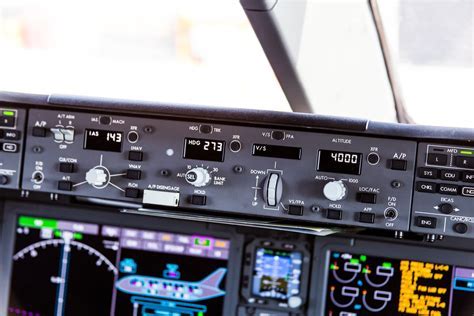
Advanced commercial jets feature autopilots that can perform Category III Autoland, allowing landings with near-zero visibility—an achievement only made possible by millimeter-level precision and reliable redundancy protocols.
Key Components and Safety Features
To maintain integrity and safeguard against failure, autopilot systems incorporate several mission-critical technologies:
-
Inertial Navigation Systems (INS): These detect motion and orientation based on accelerometer and gyroscope data, forming the system’s core reference.
-
Kalman Filters: Applied to correct for drift in INS, enhancing positional accuracy by fusing data from GPS and other sensors.
-
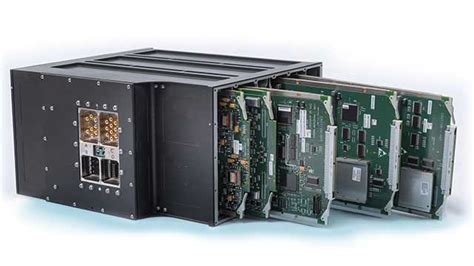
Redundant Microprocessors: Most systems feature triplicated processing units running independently, ensuring one can take over if others fail.
-
Software Design Diversity: Variants of autopilot code are written differently but serve the same purpose, offering additional safety in case of coding errors.
Moreover, Control Wheel Steering (CWS) allows pilots to temporarily override the autopilot using traditional yoke or sidestick inputs. This hybrid model preserves human intuition while benefiting from the automation’s consistency.
Stability Augmentation and Flight Path Correction
Many aircraft—especially those with high-speed or swept-wing designs—exhibit inherent aerodynamic instabilities. To counteract these effects, Stability Augmentation Systems (SAS) are employed. A notable feature is the yaw damper, which mitigates Dutch roll, a lateral oscillation that can lead to discomfort or loss of control.
These systems work seamlessly with autopilot functions, subtly adjusting rudder input at high frequency. Without such augmentation, aircraft like the McDonnell Douglas DC-8 or Boeing 707 would be challenging to fly safely at cruising speeds.
The Role of the Flight Director System
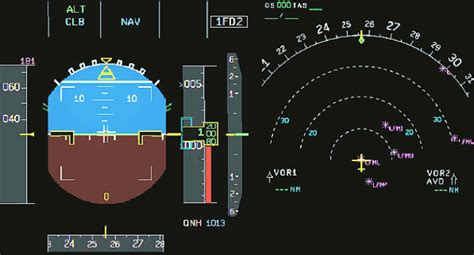
Closely related but distinct from autopilot is the Flight Director System (FDS). While autopilot executes the commands, the flight director provides visual cues to human pilots about the optimal flight path. Pilots can follow these cues manually or allow the autopilot to do so autonomously.
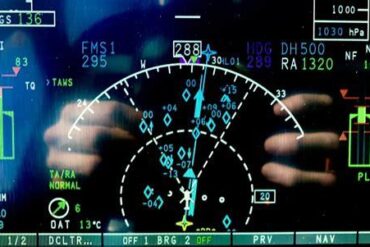
In modern glass cockpit designs, flight directors are represented through crosshair indicators on the Primary Flight Display (PFD). They function as an essential human-machine interface, enhancing situational awareness and decision-making efficiency.
Autopilot Systems in UAVs and Model Aviation
The democratization of autopilot technology has extended its reach into the realm of Unmanned Aerial Vehicles (UAVs) and radio-controlled aircraft. Here, miniature systems replicate the behavior of full-scale avionics. These systems use compact IMUs (Inertial Measurement Units), barometers, magnetometers, and GPS modules to stabilize and navigate flight paths with minimal human input.
Examples include open-source platforms like ArduPilot and PX4, which allow customization and experimentation in both hobbyist and professional aerospace research settings. Their modularity and low cost have accelerated autonomous applications across surveying, agriculture, and environmental monitoring.
The Digital Future of Autopilot Systems
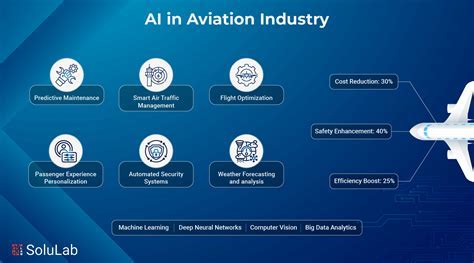
Today, the rise of Artificial Intelligence (AI) and Machine Learning (ML) is ushering in a new era of adaptive autopilot. These systems can learn from data collected across thousands of flights, continuously refining algorithms for turbulence response, energy optimization, and failure recovery.
Key innovations on the horizon include:
-
Predictive failure detection through real-time data analysis
-
Cloud-synchronized navigation databases
-
AI-driven energy efficiency optimizers
-
Autonomous Air Traffic Control (ATC) integration for self-sequencing arrivals
These advancements are not just theoretical. Several operators, including Airbus with its ATTOL (Autonomous Taxi, Take-Off & Landing) project, are already field-testing aircraft that can operate with little to no pilot intervention under controlled conditions.
Conclusion
The story of autopilot systems is one of relentless technological refinement. From rudimentary gyroscopes steering biplanes to AI-enhanced algorithms managing transcontinental jetliners, the systems have matured into indispensable components of modern aviation. Their influence is also evident in maritime navigation, drone operation, and spacecraft trajectory design.
As aviation continues to embrace automation, the balance between human oversight and machine control remains critical. However, the trajectory is clear—autopilot systems will continue to redefine flight safety, efficiency, and capability well into the future.
Frequently Asked Questions
What is the main difference between a flight director and an autopilot?
A flight director provides visual guidance cues for the pilot, showing the ideal attitude and flight path to follow, whereas an autopilot physically manipulates the flight controls to maintain or achieve that path. The flight director assists the pilot; the autopilot acts on its behalf.
Can autopilot systems handle emergency situations?
Most autopilot systems are not designed to independently resolve emergencies like engine failure or structural issues. However, modern systems incorporate fail-safes, redundancy, and even emergency descent modes to assist pilots during critical scenarios.
Are pilots still necessary if autopilots can land planes?
Yes. Human pilots remain essential for decision-making, system oversight, and manual control in complex or unexpected situations. Autopilots are tools—not replacements—designed to enhance safety and reduce workload, not eliminate human judgment.