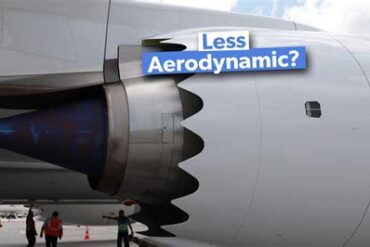
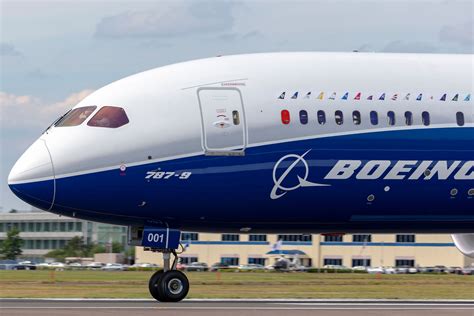
Boeing’s innovative use of engine chevrons stands as a testament to how engineering advancements can dramatically alter the performance and efficiency of commercial aviation. Engine chevrons, the distinctive sawtooth patterns found on the engine nacelles of certain Boeing models, represent a crucial development in addressing noise pollution, fuel efficiency, and aerodynamic challenges.
The Evolution of Boeing Engine Chevrons
The story of Boeing engine chevrons begins with a focused collaboration between Boeing, General Electric, and NASA. Aimed at reducing aircraft noise, this initiative birthed the chevron technology seen today. NASA’s detailed research into airflow and turbulence revealed that serrated engine nacelles could significantly diminish the noise created during air mixing at the engine’s exhaust.
James Bridges, a principal figure at NASA, emphasized that the creation of chevrons was not straightforward. Early attempts often worsened noise levels, highlighting the complexity of controlling turbulent airflow. Only through incremental advances, aided by better diagnostics and instrumentation, was the optimal chevron shape eventually realized.
Technical Functionality of Engine Chevrons
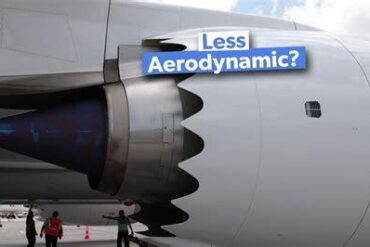
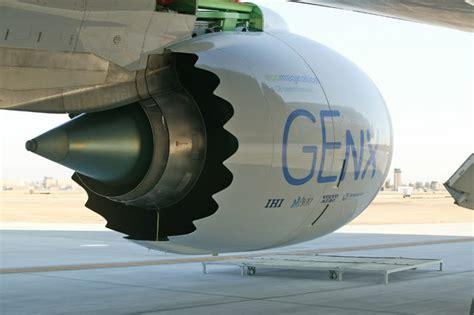
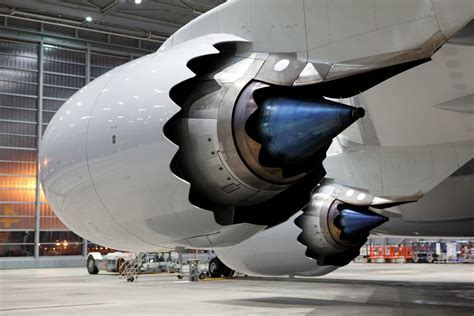
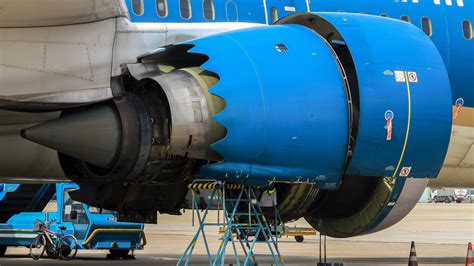
The primary purpose of chevrons is to reduce jet noise by smoothing the mixing of the hot exhaust with the cooler surrounding air. This effect minimizes turbulence, which is the primary generator of noise during jet engine operation. Specifically, the notches at the nacelle’s trailing edge disrupt shock waves in the exhaust plume, resulting in less pronounced noise signatures during takeoff and landing phases.
Andrew Naidu, a licensed aircraft engineer, detailed that chevrons contribute to more than just noise reduction. The improved exhaust flow dynamics also slightly enhance fuel efficiency, thanks to the reduced turbulence and improved laminar airflow around the engine. This nuanced balance between aerodynamic design and functional improvement typifies Boeing’s approach to modern aircraft engineering.
Implementation Across Boeing Aircraft
Boeing strategically incorporated chevrons into several of its flagship models, including:
- All Boeing 787 Dreamliner variants
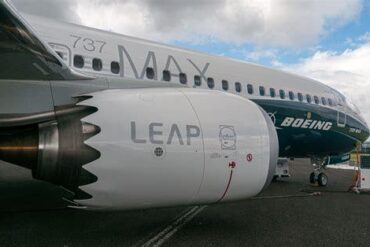
- The Boeing 737 MAX series
- The Boeing 747-8
On the 747-8, chevrons are uniquely present not only on the engine nacelles but also on the inner core nozzles, maximizing the noise-dampening effect. It’s important to recognize that the nacelle, being part of the airframe, falls under Boeing’s design purview rather than the engine manufacturers like General Electric or Rolls-Royce.
Impact on Thrust and Aircraft Performance
While the advantages of quieter operation are evident, the introduction of chevrons was not without trade-offs. As pilot and aviation analyst Petter Hörnfeldt (Mentour Pilot) explains, the chevron design induces minor vortex creation at the engine exit, which slightly diminishes engine thrust.
Quantitatively, this reduction accounts for around 0.5% of total thrust—an acceptable compromise considering the broader benefits. However, this minor loss was ingeniously countered by Boeing. The quieter engines allowed for the removal of substantial quantities of heavy sound insulation material from the fuselage—up to 600 lbs (272 kg) on the 787 Dreamliner. This weight reduction led to improved fuel efficiency, offsetting the minor loss in thrust and further enhancing the economic viability of Boeing’s next-generation aircraft.
Regulatory Motivations Behind Chevron Adoption
The early 21st century saw a tightening of international aviation noise regulations. Boeing anticipated these developments and proactively incorporated chevrons to ensure compliance with future standards, avoiding the need for costly retrofits or operational restrictions. As a result, Boeing’s chevron-equipped models have been better positioned for international operation, particularly in noise-sensitive airports where curfews and restrictions are strictly enforced.
This foresight in design not only offered environmental benefits but also substantial commercial advantages by broadening market access for Boeing’s customers.
Comparative Insights: Airbus and the 777X’s Departure from Chevrons
Interestingly, despite the evident benefits, Airbus chose not to adopt serrated nacelle technology for its aircraft. Executives such as Dougie Hunter, A350 chief engineer, publicly stated that chevrons offered no noise advantage to Airbus designs and came with a slight fuel consumption penalty. Consequently, Airbus stuck to other noise reduction strategies without resorting to serrated designs.
Even within Boeing, the newest generation of aircraft, particularly the 777X, has moved away from chevrons. The 777X utilizes a different nozzle technology that achieves similar or better noise reduction without the associated drag penalty or additional weight.
Terry Beezhold, the 777X program chief, indicated that the replacement nozzle design is lighter, produces lower drag, and maintains cabin and community noise standards. This marks a natural evolution in aircraft engine integration, demonstrating that while chevrons were a significant step forward, they are not the final word in noise reduction technology.
Technological Legacy and Future Trends
The legacy of Boeing’s engine chevrons is profound. They represent a critical pivot point in how manufacturers address environmental impacts without severely compromising performance. They also exemplify how collaborations across corporations and research institutions like NASA can produce groundbreaking innovations.
Today, as aviation continues to evolve toward quieter, more efficient, and environmentally conscious operations, chevrons serve as a benchmark for what is possible when multiple goals—performance, regulatory compliance, and environmental stewardship—are pursued simultaneously.
The future of aircraft noise reduction is likely to rely more heavily on integrated designs that enhance both aerodynamic efficiency and acoustic performance without the need for visibly distinct features like chevrons. With advanced materials, novel exhaust nozzle geometries, and revolutionary propulsion systems such as open-rotor and hybrid-electric engines on the horizon, the next steps in noise abatement are already in motion.
Conclusion: Chevron Technology’s Lasting Impact on Aviation
Boeing’s implementation of engine chevrons provided a powerful solution at a time when noise regulations were becoming a formidable hurdle for manufacturers. Despite their slight drag and thrust penalties, the gains in reduced noise pollution and improved fuel efficiency demonstrated a net positive outcome, enhancing Boeing’s reputation for innovation.
As aerospace engineering continues to advance, chevrons remain a critical milestone in the industry’s ongoing effort to build quieter, greener, and more economically viable aircraft. Although newer technologies may replace them, their contribution to reshaping modern aviation is undeniable, and their legacy will endure well into the next era of flight.