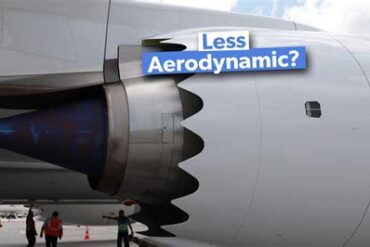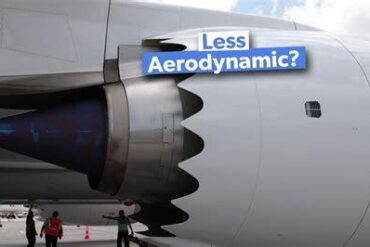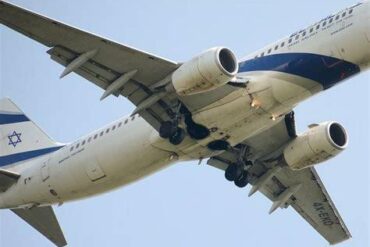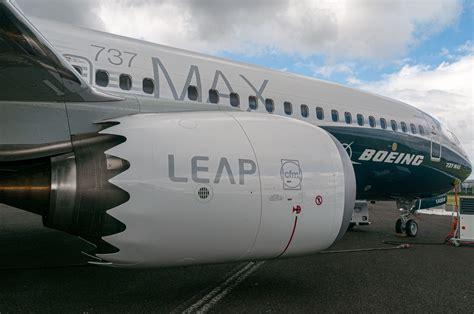
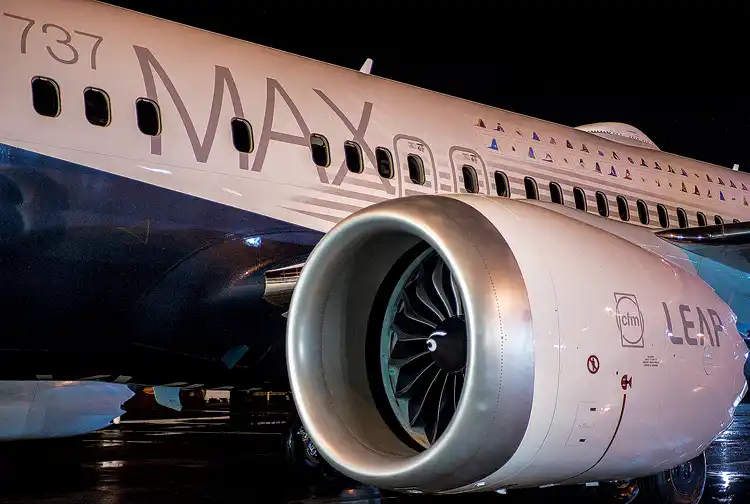
The Boeing 737 MAX introduced a number of visible changes compared to previous generations of the world’s best-selling airliner, but one of the most distinctive is often overlooked by casual travelers. Standing near a gate, passengers may notice that the rear edges of the aircraft’s engine nacelles feature jagged, tooth-like shapes resembling shark teeth. These serrated edges, known as chevrons, were not added for aesthetics. They were designed to solve one of aviation’s most persistent challenges: reducing aircraft noise.
While the technology successfully made the 737 MAX quieter, it also created an unexpected engineering dilemma. In an industry where even fractions of a percentage point can determine the success or failure of a design decision, Boeing discovered that quieter engines came with a measurable performance penalty. The result was a classic aviation compromise—one that highlights how modern aircraft development is often a balancing act between environmental goals, operational efficiency, and economic realities.
Why Boeing Added Chevrons To The 737 MAX
Commercial aviation has spent decades attempting to reduce aircraft noise. Communities living near airports have long pushed for stricter noise regulations, while airlines seek aircraft capable of operating at more airports and during more flexible hours. Engine manufacturers and airframe designers therefore invest enormous resources into noise-reduction technologies.
The chevrons on the Boeing 737 MAX are one such innovation. These triangular serrations are located at the rear of the engine nacelle and are designed to influence the way air exits the engine. Modern turbofan engines generate thrust through two separate streams of airflow. One passes through the engine core, where fuel is burned, while a much larger volume bypasses the core and is accelerated by the fan.
When these two streams mix at the rear of the engine, turbulence generates significant noise. Chevrons create controlled vortices that help blend the flows more gradually, reducing the intensity of the sound generated by the exhaust.
The concept first gained widespread attention on the Boeing 787 Dreamliner, where noise reduction was a major design objective. The technology later appeared on the Boeing 747-8 and eventually on the Boeing 737 MAX.
Initially, the solution appeared highly effective. Aircraft equipped with chevrons produced noticeably lower noise levels, helping airlines meet increasingly stringent environmental requirements while improving passenger comfort.
How Jet Engine Exhaust Creates Noise
To understand why chevrons matter, it is necessary to examine how modern turbofan engines work.
Unlike early turbojets, modern high-bypass turbofan engines generate most of their thrust from the large fan at the front of the engine. This fan pushes enormous quantities of air around the engine core through a bypass duct. Only a relatively small portion of the airflow enters the combustion chamber.
As these separate air streams leave the engine, they move at different speeds and temperatures. The resulting interaction creates turbulent mixing, which becomes one of the primary sources of jet engine noise.
Engineers discovered that reshaping the nozzle exit could influence this mixing process. The serrated geometry of chevrons generates small vortices that encourage smoother airflow interaction. By reducing abrupt mixing between the core exhaust and bypass air, overall noise levels decline.
From an aeroacoustic perspective, the technology works remarkably well. The problem is that aircraft performance depends on far more than noise reduction alone.
The Hidden Cost Of Quieter Engines
Although chevrons reduced noise effectively, Boeing eventually encountered a drawback that became difficult to ignore.
The vortices created by the chevrons improve acoustic performance but slightly disrupt the optimal flow of exhaust gases. In practical terms, this means a small amount of engine thrust is sacrificed. Industry assessments have indicated that the performance loss is roughly 0.5% of available thrust.
At first glance, such a figure appears insignificant. Half of one percent seems unlikely to affect a modern airliner carrying hundreds of passengers across thousands of miles.
However, aviation economics operate on razor-thin margins. Airlines invest billions of dollars to achieve fuel savings measured in fractions of a percent. Engine manufacturers routinely spend years developing technologies that improve efficiency by similarly small amounts.
A 0.5% loss of thrust therefore represents a meaningful penalty, particularly when multiplied across thousands of flights per year and fleets containing hundreds of aircraft.
The challenge became especially apparent on the Boeing 737 MAX because of the type of missions the aircraft performs.
Why The 737 MAX Was More Affected Than Larger Aircraft
The effectiveness of any engineering solution depends heavily on the operational profile of the aircraft using it.
For long-haul aircraft such as the Boeing 787 Dreamliner, the trade-off created by chevrons made sense. Although some thrust efficiency was lost, the aircraft gained another important benefit. Because the engines were quieter, engineers could remove portions of the sound insulation normally installed throughout the airframe.
Reduced insulation translated directly into lower aircraft weight. On a long-haul aircraft flying twelve or more hours at cruise altitude, weight reduction can generate substantial fuel savings.
The Boeing 787 spends the overwhelming majority of its mission cruising efficiently at high altitude. Every kilogram removed from the aircraft contributes to lower fuel consumption over thousands of miles.
The Boeing 737 MAX operates differently.
Most MAX aircraft perform multiple short-haul flights each day. While the aircraft has demonstrated impressive long-range capabilities and even operates certain transatlantic routes, its primary mission remains short- and medium-haul transportation.
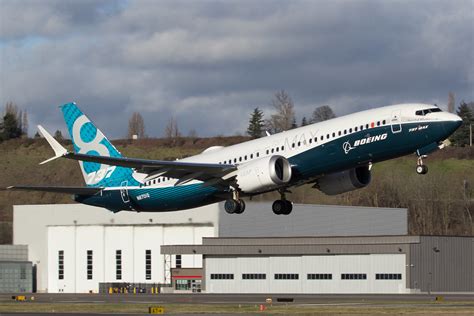
A typical flight involves frequent takeoffs, climbs, descents, and landings. Because the aircraft spends proportionally more time operating at high power settings, the thrust penalty associated with chevrons becomes more significant.
The weight savings achieved through reduced sound insulation simply do not have as much time to generate benefits during shorter flights.
As a result, the Boeing 737 MAX inherited the disadvantages of chevrons while receiving less of the operational upside that larger widebody aircraft enjoyed.
The Climb Performance Challenge
The performance penalty became particularly relevant during takeoff and climb phases.
Aircraft consume fuel at their highest rates during these portions of flight. Engines operate near maximum power, and any reduction in available thrust forces crews and systems to compensate.
The Boeing 737 family has historically faced constraints related to ground clearance and engine installation geometry. Because the aircraft traces its origins back to the 1960s, integrating larger and more powerful engines has always been a challenge.
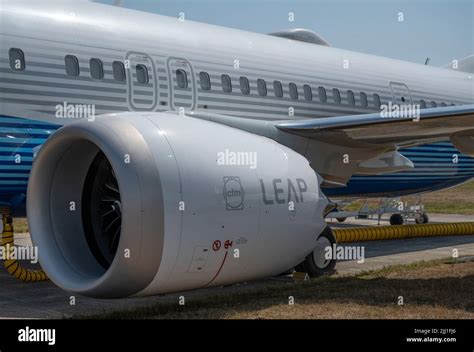
When Boeing introduced the LEAP-1B engine for the MAX program, engineers already faced strict packaging limitations. Losing even a small percentage of effective thrust was therefore far from ideal.
The consequence was not dramatic enough to compromise safety or certification requirements, but it added complexity to an aircraft whose design priorities increasingly focused on maximizing fuel efficiency during short-haul operations.
For airlines operating thousands of departures annually, even tiny increases in fuel burn accumulate into substantial operating costs.
The Role Of The CFM LEAP-1B Engine
The chevron story cannot be separated from the engine that powers the 737 MAX: the CFM LEAP-1B.
CFM International has supplied engines for Boeing’s narrowbody aircraft since the 1980s. Earlier generations of the 737 relied on variants of the highly successful CFM56 family. When Boeing launched the MAX program, selecting the LEAP engine was the logical evolution.
The LEAP family represented a major technological leap forward. Developed using advanced materials and innovative manufacturing techniques, the engine sought to deliver significant reductions in fuel consumption and emissions.
One of its most important features was the extensive use of Ceramic Matrix Composites (CMCs). These advanced materials can tolerate significantly higher temperatures than traditional metal alloys, allowing engineers to improve thermal efficiency within the engine core.
Higher operating temperatures generally translate into improved fuel economy, which became one of the LEAP’s defining advantages.
The LEAP-1B used on the 737 MAX differs from the LEAP-1A powering the Airbus A320neo family. Boeing’s version employs a smaller fan diameter, a lower bypass ratio, and reduced thrust output to accommodate the physical limitations of the 737 airframe.
Despite these differences, the engine delivers highly competitive efficiency, demonstrating how careful optimization can overcome design constraints.
Why New Aircraft Are Moving Beyond Chevrons
Interestingly, the aviation industry appears to be leaving chevrons behind.
When Boeing first unveiled concepts for the 777X, early renderings included chevron-equipped nacelles. Yet the production design ultimately abandoned the feature.
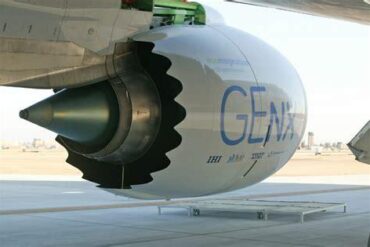
Instead, the aircraft’s massive General Electric GE9X engines utilize advanced nozzle designs and aerodynamic refinements that achieve similar noise-reduction goals without incurring the same efficiency penalties.
Airbus reached a similar conclusion years earlier. The European manufacturer examined chevron technology extensively but determined that alternative nacelle designs provided better overall results.
Rather than adopting serrated nozzles, Airbus invested heavily in acoustic liners and advanced nacelle construction methods. The Airbus A350, for example, employs sophisticated internal acoustic treatments that reduce noise while preserving aerodynamic efficiency.
These developments reflect a broader industry trend. Instead of relying on highly visible external solutions, manufacturers increasingly focus on optimizing the entire propulsion system.
The Future Of Aircraft Noise Reduction
The next generation of aircraft engines is expected to reduce noise even further without requiring chevrons.
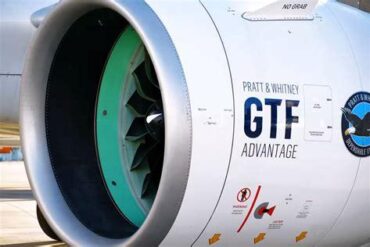
One major development is the rise of the geared turbofan. By incorporating a gearbox between the fan and turbine, these engines allow each component to operate at its most efficient speed. The result is lower fuel consumption, improved efficiency, and significantly reduced noise levels.
Pratt & Whitney pioneered this concept with the PW1000G family. Although the engine has faced reliability challenges, the gearbox itself has generally proven highly effective.
Meanwhile, engine manufacturers continue increasing bypass ratios. Larger bypass flows reduce exhaust velocity, one of the primary contributors to jet noise. Future designs such as the Rolls-Royce UltraFan are expected to push bypass ratios to unprecedented levels.
Advanced composite materials, refined fan blade designs, improved acoustic liners, and sophisticated nozzle geometries are collectively delivering noise reductions that once required visible features like chevrons.
As these technologies mature, the need for serrated nacelle edges continues to diminish.
Why The Boeing 737 MAX May Be The Last Of Its Kind
The chevrons on the Boeing 737 MAX represent an interesting chapter in commercial aviation history. They emerged during an era when manufacturers were aggressively exploring new ways to reduce environmental impact and improve passenger comfort.
The technology succeeded in lowering noise levels and became one of the most recognizable visual features of modern Boeing aircraft. Yet the solution also demonstrated the relentless trade-offs that define aircraft design.
A feature that improved acoustic performance simultaneously reduced propulsion efficiency. The compromise was acceptable on some aircraft but less attractive on others, particularly short-haul narrowbody jets like the 737 MAX.
As newer technologies provide quieter operations without sacrificing thrust or fuel economy, chevrons are gradually becoming obsolete. Future aircraft will likely achieve superior acoustic performance through advanced materials, smarter aerodynamics, and next-generation engine architectures rather than the distinctive serrated exhaust nozzles that once symbolized cutting-edge innovation.
The Boeing 737 MAX therefore stands as both a beneficiary and a reminder of aviation’s constant pursuit of perfection—a machine that demonstrates how even the smallest engineering decisions can ripple through every aspect of aircraft performance.