The F-16 Fighting Falcon, one of the most iconic multirole fighter jets, features an advanced cockpit designed to optimize pilot situational awareness, ergonomics, and combat efficiency. Over several decades, the cockpit has undergone significant technological upgrades, transitioning from mechanical instruments to state-of-the-art digital avionics. This article explores the core cockpit innovations, major model upgrades, avionics advancements, and human-factor optimizations that define the F-16’s cockpit.
Core Innovations in F-16 Cockpit Design
360-Degree Bubble Canopy
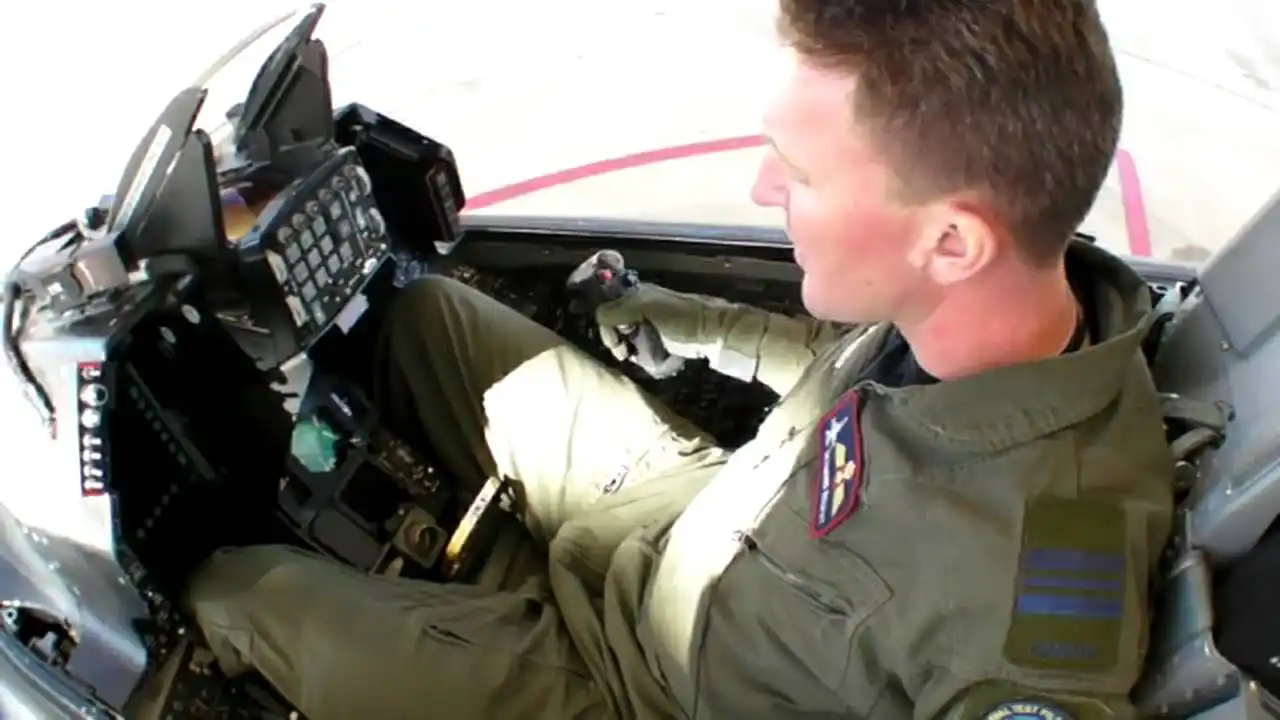
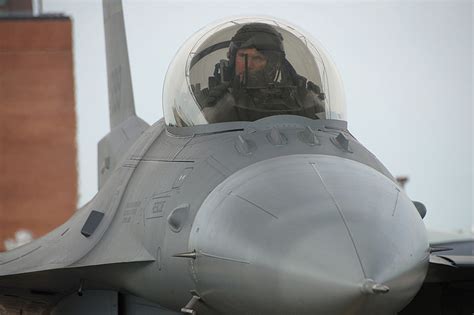
One of the F-16’s most distinctive features is its bubble canopy, offering an unobstructed 360-degree field of view, a critical advantage in air-to-air combat. The downward visibility reaches 40 degrees, allowing the pilot to spot ground targets and enemy aircraft more effectively. This design enhances battlefield situational awareness, reducing blind spots in high-stakes engagements.
Side-Stick Control System
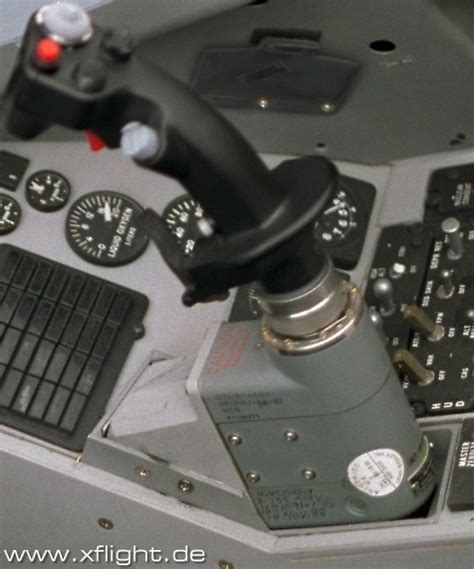
The F-16 pioneered the use of a side-stick controller, positioned on the right-hand console instead of a traditional center stick. This innovation significantly reduces pilot workload, especially during high-G maneuvers. Combined with a 30-degree reclined ejection seat, this setup mitigates fatigue and improves sustainability under extreme forces, allowing the pilot to operate at up to 9G forces without excessive strain.
Fly-By-Wire (FBW) System
Instead of mechanical linkages, the F-16 employs a full authority digital fly-by-wire (FBW) control system, which electronically transmits pilot inputs to the aircraft’s control surfaces. This not only enhances maneuverability but also introduces automatic stability corrections, enabling precise handling even in highly dynamic combat scenarios.
Cockpit Evolution Across F-16 Variants
Early Models: F-16A/B Block 5-15
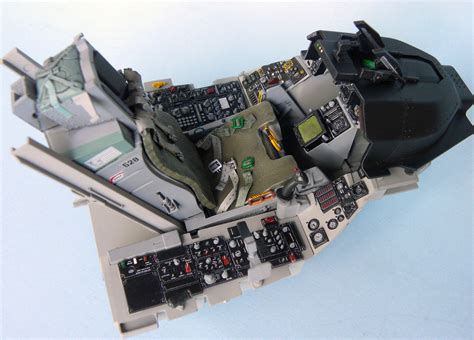
The first F-16 models, introduced in the late 1970s and early 1980s, featured primarily mechanical instrumentation with a monochrome display and a single multi-function display (MFD). These cockpits relied heavily on analog dials and traditional flight instruments, reflecting the technology of that era.
Transition to Glass Cockpit: F-16C/D Block 25 (1984)
The Block 25 variant marked the F-16’s entry into the glass cockpit era, incorporating dual MFDs and a wide-angle Head-Up Display (HUD). These upgrades significantly enhanced night and all-weather operational capabilities, making the aircraft more versatile.
Advancements in Navigation & Targeting: F-16C Block 40/42 (1988)
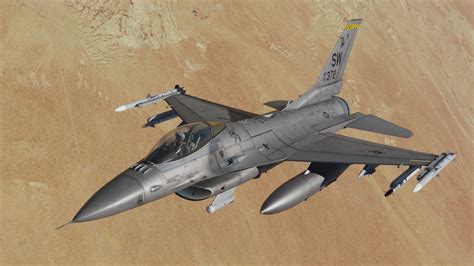
The Block 40/42 introduced Forward-Looking Infrared (FLIR) integration, displaying thermal imagery on cockpit screens. Additionally, this variant was the first to feature GPS navigation systems, enhancing precision targeting for both air-to-air and air-to-ground missions.
Multifunction Displays & AESA Radar: F-16E/F Block 60 (2000s)
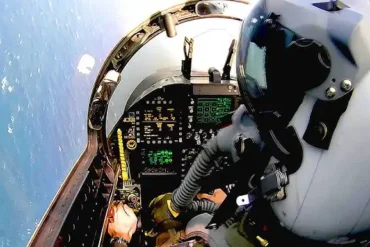
The Block 60 version of the F-16 featured a modernized cockpit with an upgraded avionics suite. A key change was the introduction of an “One-Up, Three-Down” MFD layout: one HUD above and three color MFDs below. This upgrade provided superior data fusion capabilities. Additionally, the Block 60 was the first F-16 to incorporate an Active Electronically Scanned Array (AESA) radar, significantly improving its multi-target tracking performance.
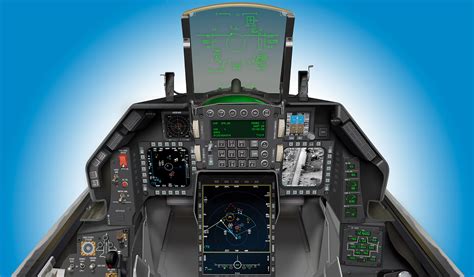
Next-Generation Cockpit: F-16V Block 70/72
The latest F-16V Block 70/72 variant features the most advanced cockpit upgrades to date, including:
- Central Pedestal Display (CPD): A large-format touchscreen consolidates sensor, navigation, and tactical data, providing a more intuitive interface.
- Enhanced Dual-Seat Operations: In twin-seat configurations, both pilots can independently control avionics, optimizing workload distribution.
- Automatic Ground Collision Avoidance System (Auto-GCAS): A critical safety feature that prevents ground crashes by automatically recovering the aircraft if the pilot loses situational awareness.
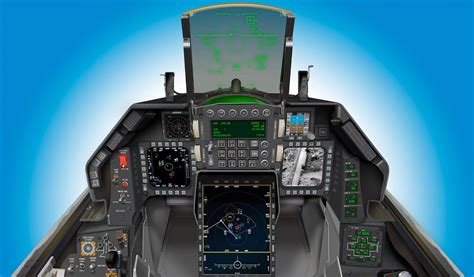
Avionics & Display Technology Evolution
High-Resolution Multifunction Displays
Over the years, F-16 cockpits transitioned from monochrome CRT displays to full-color LCD and OLED panels, allowing for layered tactical information display. Modern MFDs support touch interaction, increasing combat effectiveness and ease of use.
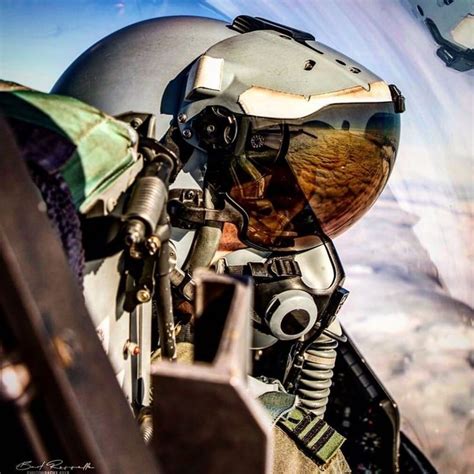
Joint Helmet-Mounted Cueing System (JHMCS)
The JHMCS allows pilots to aim weapons simply by looking at a target. Integrated into the pilot’s helmet, this system projects targeting data directly onto the visor, enabling off-boresight missile engagement for weapons like the AIM-9X Sidewinder.
Modular Mission Computers
The latest mission computers in the F-16V support rapid software upgrades, allowing the aircraft to adapt to new combat scenarios, sensors, and weapons without requiring extensive hardware modifications.
Human Factors & Ergonomics in the F-16 Cockpit
G-Force Mitigation
To help pilots withstand the 9G force environment, the 30-degree reclined seat reduces the cardiovascular strain associated with high-speed maneuvers. Additionally, pilots wear G-suits that compress the body, preventing blood pooling and loss of consciousness.
Environmental Control & Life Support
The F-16’s cockpit climate system maintains optimal temperature, oxygen levels, and cabin pressure, ensuring pilot comfort and sustained operational effectiveness in extreme conditions.
Global Use & Future Enhancements
With over 4,600 units produced and operational in 25 countries, the F-16 cockpit continues to evolve. The latest F-16V model incorporates digital manufacturing techniques, reducing production cycles to 12 months. Future enhancements may integrate AI-assisted avionics and improved pilot-vehicle interfaces to keep the F-16 combat-relevant for decades.
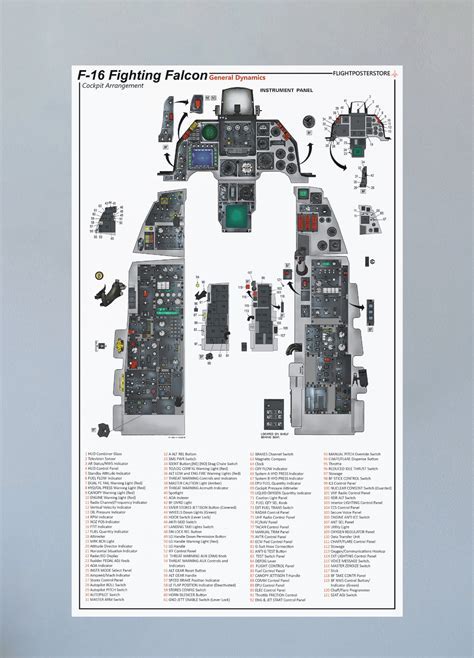
FAQ: Common Questions About the F-16 Cockpit
How does the F-16’s cockpit improve pilot performance?
The ergonomic design, advanced avionics, and intuitive controls reduce pilot workload and enhance situational awareness, allowing for quicker reaction times in combat.
What are the key differences between older and newer F-16 cockpits?
Older models relied on analog gauges and simple displays, whereas modern variants incorporate high-resolution digital MFDs, touchscreen interfaces, and advanced targeting systems like the JHMCS.
Can the F-16 cockpit be upgraded?
Yes, many F-16s undergo avionics upgrades, integrating modern sensors, radars, and mission computers to keep them competitive against fifth-generation threats.
The F-16 cockpit stands as a testament to continuous technological evolution, ensuring pilot effectiveness and survivability in modern warfare environments.