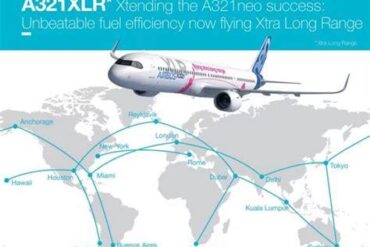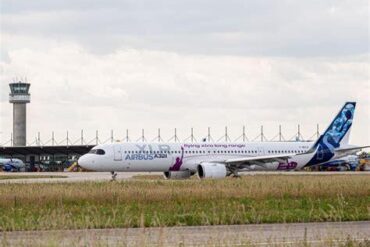
The Airbus A321XLR represents one of the most significant developments in modern commercial aviation. Built as the longest-range member of the Airbus A320neo family, this aircraft is designed to redefine how airlines approach long-haul travel using a single-aisle platform. With a maximum range of approximately 4,700 nautical miles (8,700 kilometers), the A321XLR allows airlines to operate routes that were once only feasible for widebody aircraft.
This capability opens entirely new possibilities for global air travel. Airlines can now connect smaller cities across continents, bypassing major hubs and offering travelers more direct routes. Flights between the United States and Europe, Europe and Asia, and North America and South America are now possible with a narrowbody aircraft that prioritizes both efficiency and passenger comfort.
However, long-haul flights on a narrowbody aircraft create a unique challenge: passenger comfort becomes far more critical. Spending eight or nine hours inside a single-aisle cabin requires thoughtful design, improved ergonomics, and a more refined passenger environment than earlier narrowbody aircraft ever offered. Airbus recognized this challenge and introduced several innovations that dramatically improve the onboard experience.
The result is a cabin that feels more spacious, more modern, and more suited to intercontinental travel than any narrowbody aircraft before it.
Below are five standout cabin design features that make the Airbus A321XLR one of the most exciting passenger aircraft currently entering airline fleets.
1. Lie-Flat Business Class Seats Bringing Widebody Comfort to a Narrowbody
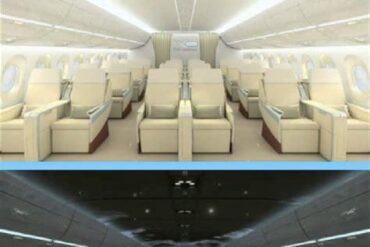
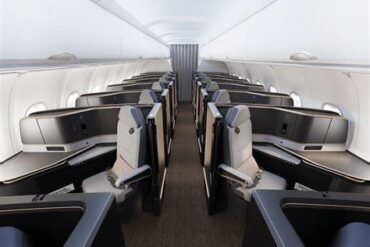
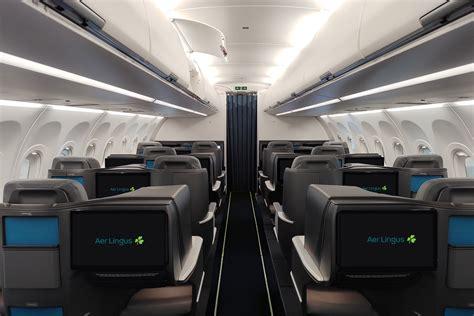
One of the most noticeable upgrades on many Airbus A321XLR aircraft is the introduction of fully lie-flat business class seats. While Airbus itself does not mandate specific seat types, airlines operating the aircraft on long-haul routes have recognized that premium passengers expect a sleeping surface comparable to widebody flights.
Because the A321XLR can operate nine-hour intercontinental routes, airlines are designing premium cabins that rival those found on aircraft like the Airbus A330 or Boeing 787. Instead of traditional recliner seats historically used on narrowbodies, modern A321XLR cabins feature sophisticated business-class suites.
Several advanced seating products have emerged specifically for this aircraft category. Among the most prominent are:
- Thompson VantageSOLO, a herringbone seat offering direct aisle access
- Collins Aerospace Aurora, first introduced with American Airlines
- Elevate Altitude, designed for next-generation narrowbody premium cabins
These seats typically feature direct aisle access for every passenger, eliminating the inconvenience of climbing over neighboring travelers. This configuration mirrors the premium layouts used on widebody aircraft, ensuring business travelers receive a comparable experience.
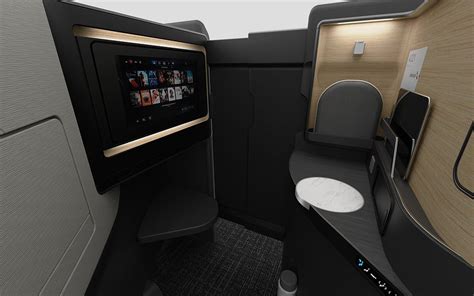
Another emerging trend is the inclusion of privacy doors, transforming seats into mini-suites. American Airlines, for example, has adopted enclosed business-class pods on its A321XLR aircraft. This design creates a sense of personal space that was once considered impossible inside a single-aisle jet.
For airlines, this premium configuration enables high-yield long-haul routes with fewer passengers, allowing profitable service between smaller cities. For travelers, it means enjoying true long-haul comfort on routes traditionally flown by larger aircraft.
2. Enlarged Interior Window Panels That Brighten the Cabin
Aircraft windows play a surprisingly important role in how passengers perceive space and comfort inside an aircraft cabin. Historically, Airbus narrowbody aircraft featured smaller windows compared to Boeing designs, which sometimes made cabins feel slightly darker or more confined.
Rather than redesigning the fuselage — an extremely expensive engineering change — Airbus introduced an elegant solution with the Airspace interior window design.
Instead of enlarging the structural window cutouts in the fuselage, Airbus increased the size of the interior window frames and panels. This design trick creates the visual illusion of larger windows while keeping the underlying structure unchanged.
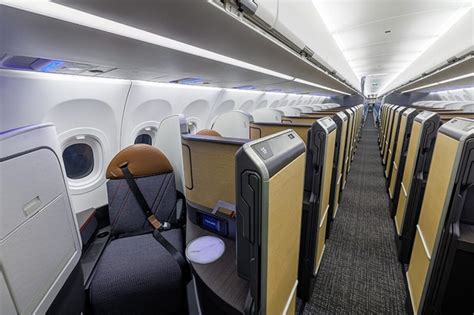
The practical effect is impressive. Passengers perceive larger windows and increased natural light, which contributes to a more open and comfortable cabin atmosphere.
Modern aircraft cabins rely heavily on psychology. When passengers see brighter interiors and larger window panels, the aircraft feels less cramped and more modern, even if the structural dimensions remain the same.
Another benefit is improved light distribution. Sunlight entering through the larger interior panels spreads more effectively across the cabin walls and ceiling, helping reduce the closed-in feeling that older narrowbody aircraft sometimes created.
Considering that the A320 family originally entered service in the late 1980s, this relatively simple design change helps bring the cabin experience closer to newer aircraft such as the Airbus A220 or Boeing 787.
3. The Airspace Cabin: Modern Sidewalls, Ceilings, and Ambient Lighting
Perhaps the most dramatic interior transformation on the Airbus A321XLR is the introduction of the Airspace cabin concept. This design philosophy originated with the Airbus A350, where it helped redefine passenger comfort through modern architecture, mood lighting, and improved spatial perception.
Airbus later refined the concept on the A330neo, and it has now been adapted for the entire A320neo family, including the A321XLR.
The Airspace interior focuses on several design improvements simultaneously:
- Updated sidewall panels that increase shoulder space
- More elegant ceiling architecture
- Advanced LED mood lighting systems
- Redesigned window trim panels
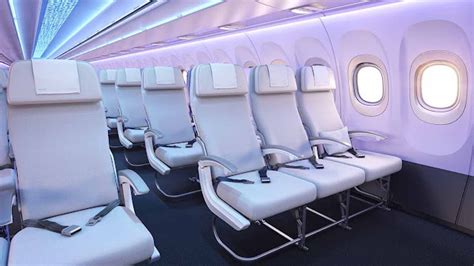
One of the most visually striking features is the LED mood lighting system, which allows airlines to adjust the cabin atmosphere throughout the flight. Lighting can shift gradually from boarding brightness to calming tones during cruise and warmer shades before landing.
This lighting flexibility helps reduce passenger fatigue and jet lag, especially on overnight routes.
Another unique feature is the optional “hero light” ceiling panel, a geometric lighting installation running along the aisle. Airlines can customize its color patterns to match branding or create visually engaging cabin environments.
Beyond aesthetics, the Airspace interior also improves ergonomics. The redesigned sidewalls subtly increase shoulder room for passengers, making the seating area feel less restrictive. While the physical change may only amount to a few centimeters, it significantly improves comfort perception during long flights.
The overall effect is a cabin that feels modern, calming, and technologically advanced, transforming the A321XLR into a true long-haul aircraft.
4. Airspace XL Overhead Bins: The Largest in Any Narrowbody Aircraft
Carry-on baggage has become one of the biggest logistical challenges in modern air travel. Overhead bin space often runs out before boarding finishes, forcing flight attendants to gate-check bags and delay departures.
To address this issue, Airbus introduced the Airspace XL overhead bin, the largest storage compartments found on any single-aisle aircraft.
Unlike the pivot-style bins commonly seen on the Boeing 737, Airbus retained a shelf-style design but dramatically expanded its capacity.
Each Airspace XL bin can accommodate four carry-on bags, compared with the three typically allowed in older A320 designs.
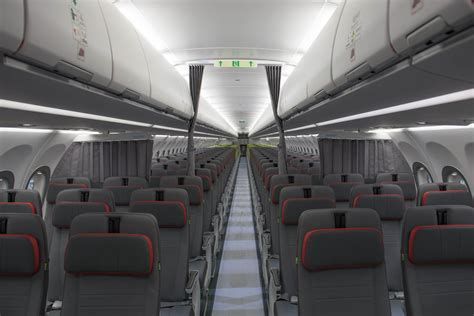
The bins support luggage dimensions up to:
- 24 inches (60.96 cm) long
- 16 inches (40.64 cm) wide
- 10 inches (25.4 cm) high
This means passengers can store bags on their sides, maximizing available space.
For airlines operating long-haul narrowbody flights, this upgrade has several benefits. First, it significantly reduces boarding delays caused by limited bin capacity. Second, it allows most passengers to keep their carry-on bags in the cabin, improving overall travel convenience.
For flight crews, the larger bins simplify boarding operations and allow attendants to focus more on passenger service rather than luggage management.
The increased efficiency also frees up space in the aircraft’s cargo hold, enabling airlines to carry additional freight or passenger baggage, which improves route profitability.
5. The Widest Narrowbody Cabin in Commercial Aviation
Perhaps the most fundamental design advantage of the Airbus A321XLR lies in something passengers immediately notice once seated: cabin width.
The A321XLR shares the same fuselage design as the rest of the A320 family, which features an interior width of 12 feet 2 inches (3.70 meters).
By comparison:
- Boeing 737 interior width: 11 feet 7 inches (3.54 meters)
- Boeing 757 interior width: 11 feet 7 inches (3.54 meters)
While this difference may appear small on paper, it allows Airbus to offer wider seats and a wider aisle, both of which significantly affect passenger comfort.
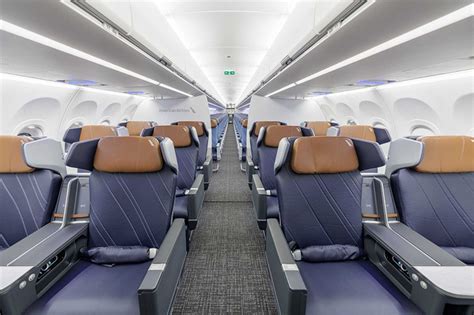
In economy class, the A321XLR can accommodate 18-inch wide seats, while most Boeing narrowbody aircraft feature seats around 17 inches wide.
That single extra inch per seat becomes surprisingly important during longer flights. Over the course of eight or nine hours, the additional width improves posture, reduces shoulder contact between passengers, and makes the cabin feel less cramped.
The wider fuselage also benefits aisle width, allowing flight attendants to move service carts more efficiently. This improves meal service and reduces congestion during boarding and deplaning.
Combined with the redesigned sidewalls of the Airspace interior, passengers enjoy noticeably improved shoulder room, making the A321XLR one of the most comfortable narrowbody cabins currently flying.
How the Airbus A321XLR Is Redefining Long-Haul Narrowbody Travel
The Airbus A321XLR represents a pivotal moment in aviation design. For decades, long-haul travel was dominated by widebody aircraft, which required large passenger numbers and major hub airports to remain profitable.
The A321XLR changes that equation.
With its exceptional range, fuel efficiency, and upgraded passenger cabin, airlines can operate long-distance routes with fewer passengers while maintaining a high level of onboard comfort.
Cabin features such as lie-flat business class suites, larger windows, advanced lighting, spacious overhead bins, and the widest narrowbody fuselage combine to create a travel experience that rivals many widebody aircraft.
For passengers, the benefits are clear:
- More direct international routes
- Fewer layovers at congested hubs
- Improved comfort on long flights
For airlines, the aircraft unlocks new possibilities for route planning, cost efficiency, and premium passenger experiences.
As more airlines introduce the aircraft into their fleets, the Airbus A321XLR is poised to become the benchmark for long-haul narrowbody travel, proving that single-aisle aircraft can successfully handle journeys once reserved for much larger jets.