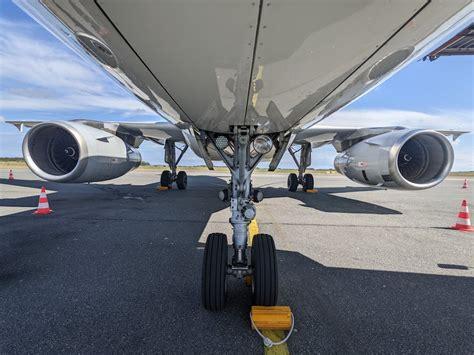
Modern aviation hides some of its most ingenious engineering breakthroughs in plain sight—tucked beneath fuselages, only revealed for minutes during takeoff and landing. Yet these systems endure immense forces, extreme heat, and relentless repetition. Today’s landing gear, especially on aircraft like the Boeing 787 Dreamliner and Airbus A350, represents a pinnacle of precision engineering, safety redundancy, and material science innovation.
Behind every smooth touchdown lies a symphony of hydraulics, sensors, and mechanical ingenuity working in perfect coordination. These systems can absorb nearly 90% of landing energy, tolerate temperatures beyond 1,000°C, and react to changing conditions multiple times per second—all without passengers ever noticing.
This deep dive explores six of the most remarkable design features shaping modern landing gear systems, revealing how they quietly ensure every landing is controlled, safe, and efficient.
The Oleo Strut: Precision Energy Absorption in Motion
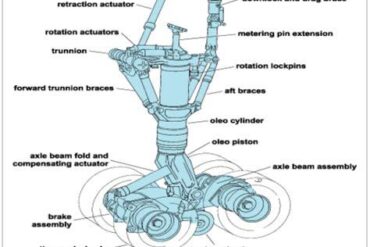
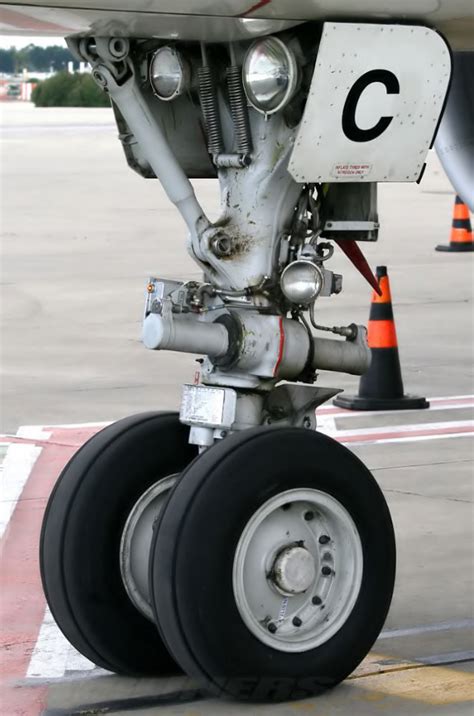
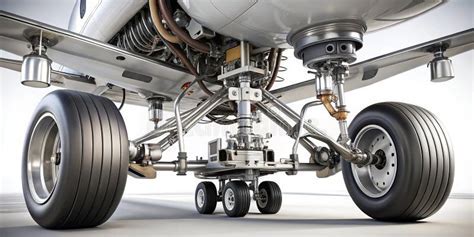
The oleo strut is the unsung hero of aircraft landings, a deceptively simple mechanism responsible for transforming violent impact forces into manageable energy. At its core, it operates using a combination of hydraulic fluid and compressed nitrogen gas, forming a highly efficient shock absorber.
When an aircraft touches down, the upward force pushes hydraulic fluid through a precisely calibrated orifice into a chamber filled with nitrogen. This process compresses the gas while simultaneously converting kinetic energy into heat. The result is a controlled deceleration that prevents structural damage and enhances passenger comfort.
Modern refinements have elevated this system into a highly optimized energy-dissipation device. A tapered metering pin dynamically adjusts fluid flow as the strut compresses, ensuring a consistent resistance profile rather than a sudden spike. This innovation alone significantly boosts efficiency, allowing systems to absorb between 80% and 90% of landing forces.
The use of nitrogen instead of air is equally critical. Its inert properties prevent corrosion and maintain consistent performance over thousands of cycles, ensuring reliability under extreme operational stress.
Carbon Brakes: Performance That Improves Under Heat
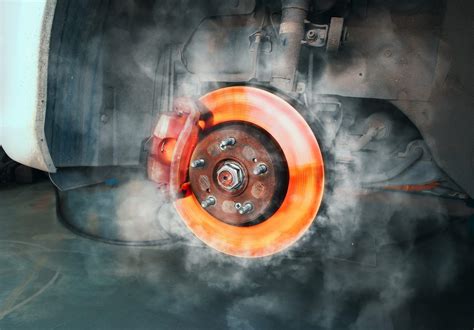
In most engineering scenarios, heat is the enemy. In modern aviation braking systems, it becomes a performance advantage. Carbon brakes, now standard on aircraft like the Boeing 787 Dreamliner and Airbus A350, redefine how stopping power behaves under extreme conditions.
Unlike traditional steel brakes, which suffer from thermal fade at high temperatures, carbon brakes thrive when things heat up. Their superior specific heat capacity allows them to absorb enormous amounts of thermal energy without degrading performance. Additionally, their thermal conductivity ensures rapid heat distribution, preventing localized hotspots.
This results in a counterintuitive but crucial advantage: braking efficiency often improves as temperatures rise. Even during high-energy rejected takeoffs or short runway landings, carbon brakes maintain consistent friction levels where steel systems would fail.
Weight reduction is another game-changing factor. Carbon brake assemblies are significantly lighter, contributing to improved fuel efficiency and reduced wear on landing gear structures. Systems like Safran’s Sepcarb III deliver three times the lifespan and energy absorption of traditional alternatives.
However, this advanced performance comes with trade-offs. Carbon brakes are expensive to manufacture and experience the majority of their wear during taxi operations rather than landing itself, highlighting the nuanced balance engineers must achieve.
Anti-Skid Systems: Microsecond Precision Control
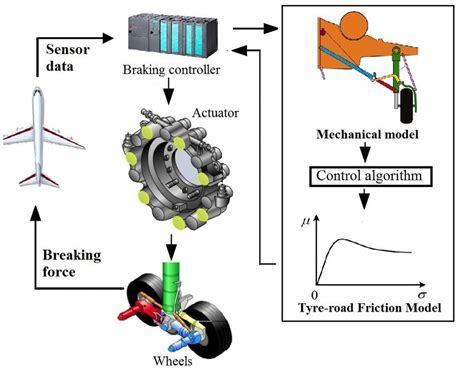
Maintaining traction during landing is a complex challenge, particularly on wet or short runways. Modern anti-skid systems act as the aircraft’s equivalent of reflexes, constantly adjusting braking forces to prevent wheel lock-up.
These systems operate by comparing wheel rotational speed with the aircraft’s ground speed. If a discrepancy suggests a skid is beginning, brake pressure is instantly reduced on that specific wheel. Once traction is restored, pressure is reapplied—all within fractions of a second.
What distinguishes today’s systems is their incredible responsiveness. Modern anti-skid technology can modulate brake pressure up to 20 times per second per wheel, enabling an unprecedented level of control. This rapid feedback loop ensures optimal braking efficiency while maintaining directional stability.
Such precision becomes especially critical during rejected takeoffs, where aircraft must decelerate from high speeds within limited runway distances. In these moments, anti-skid systems are not just helpful—they are essential for safety.
Hydraulic Tiller Steering: Mastering Ground Maneuverability
Taxiing a widebody aircraft through a busy airport is an exercise in controlled precision. Unlike smaller planes that rely on rudder-linked steering, large commercial jets depend on a hydraulic tiller system for accurate ground maneuvering.
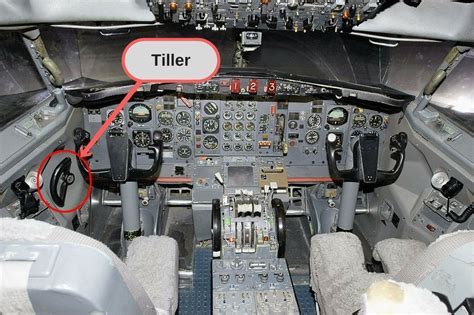
The tiller, located in the cockpit side console, allows pilots to control the nosewheel with remarkable authority—often up to 70 degrees of rotation in either direction. This enables massive aircraft to execute tight turns, navigate narrow taxiways, and even perform 180-degree runway turnarounds.
What makes this system particularly sophisticated is its integration with rudder inputs. At low speeds, the tiller provides primary steering control. As speed increases, rudder pedals gradually take over, ensuring smooth and intuitive handling throughout the taxi phase.
Additional mechanical features, such as centering cams, ensure the landing gear aligns perfectly for retraction after takeoff. This seamless transition from ground maneuverability to aerodynamic efficiency highlights the system’s dual-purpose design philosophy.
Squat Switch: The Silent Guardian of Ground Safety
Among the many layers of safety embedded in modern aircraft, the squat switch stands out for its simplicity and importance. This small device determines whether the aircraft is on the ground or airborne, acting as a gatekeeper for multiple critical systems.
Mounted on the landing gear strut, the squat switch responds to compression caused by the aircraft’s weight. When compressed, it signals that the aircraft is on the ground, preventing actions such as gear retraction that could lead to catastrophic failure.
Its role extends far beyond landing gear control. The squat switch feeds data into systems governing thrust reversers, cabin pressurization, warning alerts, and braking logic. Essentially, it acts as a central reference point for aircraft state awareness.
To enhance reliability, modern systems incorporate both electrical and mechanical safeguards. Even if a pilot attempts to retract the gear on the ground, a physical locking mechanism—controlled by the squat switch—prevents movement.
Despite its simplicity, failure of this component can trigger cascading issues across multiple systems, underscoring its critical importance in aircraft safety architecture.
Emergency Free-Fall Extension: Gravity as the Ultimate Backup
Redundancy is a cornerstone of aviation safety, and nowhere is this more evident than in landing gear extension systems. In the rare event of hydraulic failure, aircraft are equipped with emergency free-fall mechanisms that rely on gravity to deploy the gear.
By pulling a cockpit handle, pilots mechanically release the gear locks, allowing the landing gear to drop into position under its own weight. Once extended, it locks securely, ensuring a safe landing even without hydraulic assistance.
While this method may appear rudimentary, it is remarkably effective. Certification standards require that such systems function reliably even in the complete absence of hydraulic pressure, providing a fail-safe solution under worst-case scenarios.
After deployment, gear doors often remain open due to the lack of hydraulic power, creating additional aerodynamic drag. However, in emergency situations, this penalty is negligible compared to the importance of achieving a stable landing configuration.
Many aircraft incorporate additional backup layers, including secondary hydraulics or electric systems, reinforcing the principle that no single failure should compromise safety.
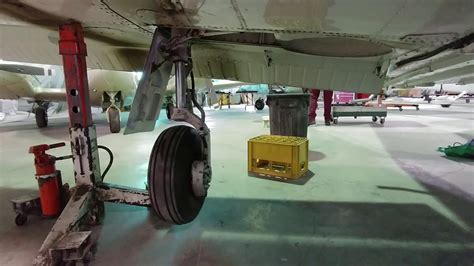
Engineering Excellence Beneath Every Landing
Modern landing gear systems represent a masterclass in multidisciplinary engineering, combining fluid dynamics, thermodynamics, materials science, and real-time control systems into a cohesive whole. Each component, from the oleo strut to the squat switch, plays a vital role in ensuring that aircraft can operate safely under extreme conditions.
What makes these systems truly remarkable is not just their performance, but their resilience and adaptability. They function flawlessly across thousands of cycles, in diverse climates, and under varying loads—often without a single visible sign of the complexity within.
The next time an aircraft touches down smoothly, it’s worth remembering that beneath the cabin floor lies a network of precision-engineered systems working tirelessly to make that moment possible.