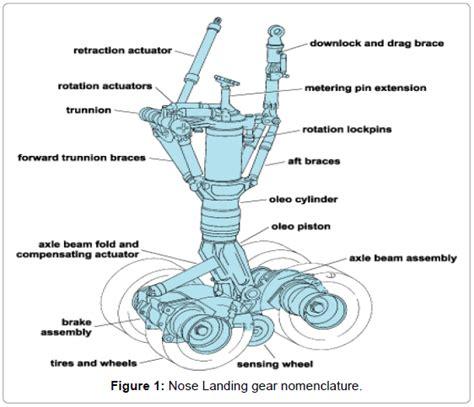
The nose landing gear (NLG) is one of the most vital components in the overall architecture of an aircraft’s undercarriage. Positioned at the forward section of the fuselage, the nose gear ensures ground maneuverability, absorbs the impact of landing, and contributes to the stability of the aircraft during takeoff, taxiing, and landing phases. As aircraft systems continue to evolve with innovations in lightweight materials, automation, and safety engineering, the nose landing gear remains an irreplaceable mechanism engineered with precision.
NLG is far more than a support strut—it is a complex interplay of mechanical robustness, hydraulic precision, and dynamic response to the stresses of flight and ground operations. Its significance is amplified in every phase of flight, from the initial taxi roll to the final stop on the runway.
Anatomy of the Nose Landing Gear: Core Components and Functions
Every modern aircraft’s NLG comprises several subcomponents engineered to meet the dual demands of aerodynamic efficiency and mechanical strength. These include:
- Shock Absorber (Strut): This element is central to impact dissipation. Often composed of oleo-pneumatic cylinders, it compresses upon touchdown, converting kinetic energy into heat, thereby protecting the fuselage and cockpit.
- Wheel Assembly: The nose wheel is typically smaller than main landing gear wheels and is constructed from high-strength, low-weight alloys like aluminum or titanium.
- Tire: Nose gear tires are built from high-pressure rubber, capable of enduring rapid directional changes and varying runway textures.
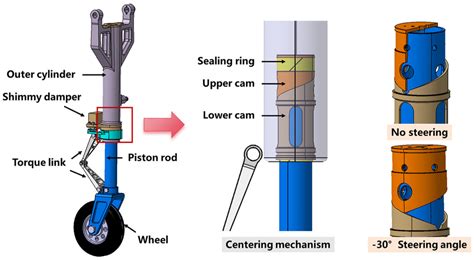
- Steering Mechanism: A combination of hydraulic actuators and mechanical linkages allows precise directional control during taxiing and pushback.
- Retraction System: Comprising electric or hydraulic actuators, the retraction system stows the nose gear into the fuselage, reducing drag during flight.
Operational Role: How the NLG Impacts Aircraft Handling and Safety
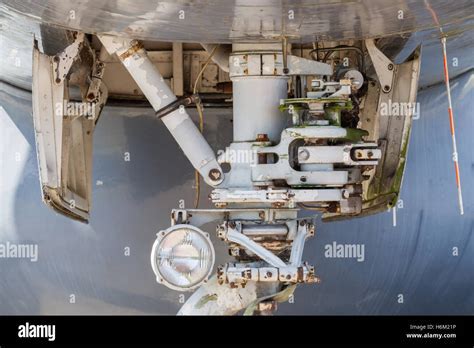
The nose landing gear plays a pivotal role in ground handling and safety. Its ability to maintain directional stability is especially crucial when operating on congested airport ramps or during complex taxiway maneuvers. Because it is often linked to the aircraft’s tiller and rudder pedals, pilots can make sharp directional adjustments with high precision.
Upon landing, after the main landing gear has made initial contact with the runway, the aircraft’s weight shifts forward, engaging the nose gear. At this moment, the shock absorber becomes the first line of defense, absorbing the vertical loads transferred through the fuselage. This prevents dangerous oscillations, protects avionics and cockpit equipment, and enhances passenger comfort.
Moreover, by being placed forward of the pilot’s position, the NLG gives clear visibility during takeoff and landing rolls, significantly enhancing situational awareness, especially under low-visibility or night-time operations.
Engineering Challenges in Nose Landing Gear Design
Designing the NLG involves numerous compromises between strength, weight, and functionality. A well-designed NLG must:
- Support significant loads while remaining lightweight to avoid penalizing aircraft performance.
- Endure thousands of landing cycles without fatigue failure.
- Absorb variable impact forces during hard or uneven landings.
- Retract seamlessly to avoid aerodynamic penalties.
- Allow smooth and responsive steering under variable ground friction conditions.
One of the most difficult tasks in NLG design is achieving torsional rigidity while maintaining flexibility for vertical movement. To address this, modern aircraft use composite materials in non-load-bearing areas and rely on precision-machined alloys for load-bearing struts.
Retraction and Extension Systems: Hydraulic and Electric Innovations
Retraction mechanisms are critical for aerodynamic efficiency. In traditional aircraft, hydraulic systems dominate, leveraging high-pressure fluid to extend or retract the gear. However, with the aviation industry pushing toward More Electric Aircraft (MEA) paradigms, electromechanical actuators are increasingly being deployed.
The European Clean Aviation initiative, for instance, is investing in electrical nose landing gear systems, which reduce hydraulic complexity and allow for predictive maintenance through digital sensors. These systems improve energy efficiency, reduce the aircraft’s overall weight, and offer improved safety diagnostics.
Maintenance Demands and Reliability Considerations
Despite its smaller size relative to the main landing gear, the nose landing gear requires meticulous maintenance. Routine checks include:
- Strut integrity inspections for leaks, deformation, or abnormal compression.
- Steering actuator performance tests to ensure responsiveness.
- Wheel bearing lubrication and tire pressure monitoring.
- Visual and non-destructive testing (NDT) of the retraction linkage systems.
Due to the gear’s frequent engagement with rough tarmac surfaces, abrasion and fatigue are critical concerns. Failures in the NLG can lead to nose wheel collapse, loss of directional control, or gear-up landings, all of which are catastrophic scenarios.
Evolution of Nose Gear in Commercial and Military Aircraft
Historically, aircraft used taildragger configurations, where the nose remained elevated. This design was eventually replaced in most commercial and military applications by the tricycle landing gear layout for better forward visibility and ground maneuvering stability.
Modern jetliners such as the Boeing 777, Airbus A350, and military platforms like the F-35 Lightning II all incorporate highly advanced NLG systems. These not only support high takeoff weights but also include feedback-driven steering, anti-skid braking systems, and redundant retraction controls.
Material Science: Balancing Strength and Weight
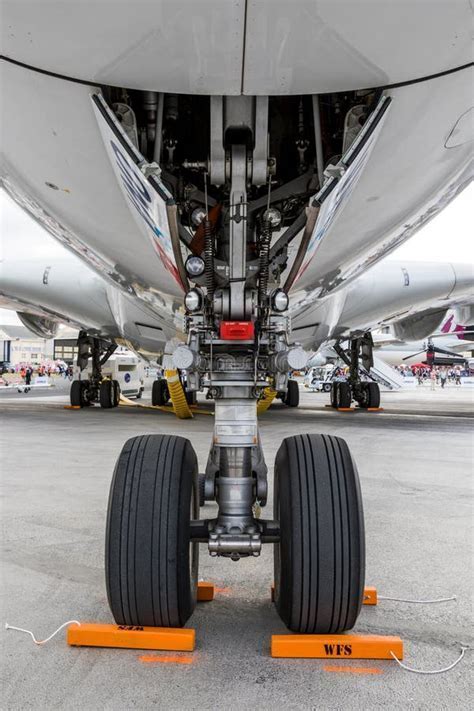
NLG components must resist not just compression forces but also bending, torsional, and shearing loads. Aerospace engineers utilize a mix of:
- Titanium alloys for their excellent strength-to-weight ratio.
- Aluminum-lithium alloys for their lightness and corrosion resistance.
- Carbon-fiber composites in structural fairings and non-load-bearing parts.
The wheels themselves are often forged aluminum, while critical pivot points are manufactured with hardened steel bushings for wear resistance.
Advancements in surface treatments such as anodizing, plasma nitriding, and ceramic coatings are now standard in order to resist corrosion and mechanical wear over thousands of cycles.
Safety Protocols and Redundancies in NLG Systems
In commercial aviation, the NLG system is equipped with multiple redundancies. These include:
- Backup hydraulic loops or manual extension overrides in case of primary system failure.
- Proximity sensors to confirm gear position (up, down, or in transit).
- Anti-shimmy dampers to prevent rapid side-to-side oscillation of the nose wheel at high speeds.
- Temperature and pressure sensors for real-time diagnostics of actuator performance.
These safety systems are tested regularly as part of the aircraft’s line and base maintenance schedules, ensuring continued airworthiness.
The Future: Smart NLG Systems and Digital Twin Integration
As aerospace technology moves toward autonomous and semi-autonomous systems, the nose landing gear is also being enhanced with IoT-based monitoring systems, digital twin models, and AI-driven predictive maintenance platforms.
Airbus and Boeing are integrating smart sensors directly into landing gear struts and joints, allowing engineers to remotely monitor gear condition in real time. This enables:
- Early detection of microfractures or hydraulic leakage.
- Optimization of maintenance intervals.
- Enhanced pilot alerts during flight via cockpit display systems.
Conclusion: Engineering Mastery Beneath the Nose
The nose landing gear is an unsung hero in aviation engineering, balancing the contradictory demands of lightweight design and extreme load resistance. From its role in ground control to its intricate retraction systems, NLG represents a fusion of aerospace innovation, mechanical resilience, and safety-critical design.
As aircraft platforms become more electric, intelligent, and autonomous, the future of nose landing gear is expected to shift toward fully digital systems with self-diagnosing capabilities and zero-maintenance architectures. However, the foundational principles of precision machining, material excellence, and structural integrity will continue to define its relevance for generations to come.