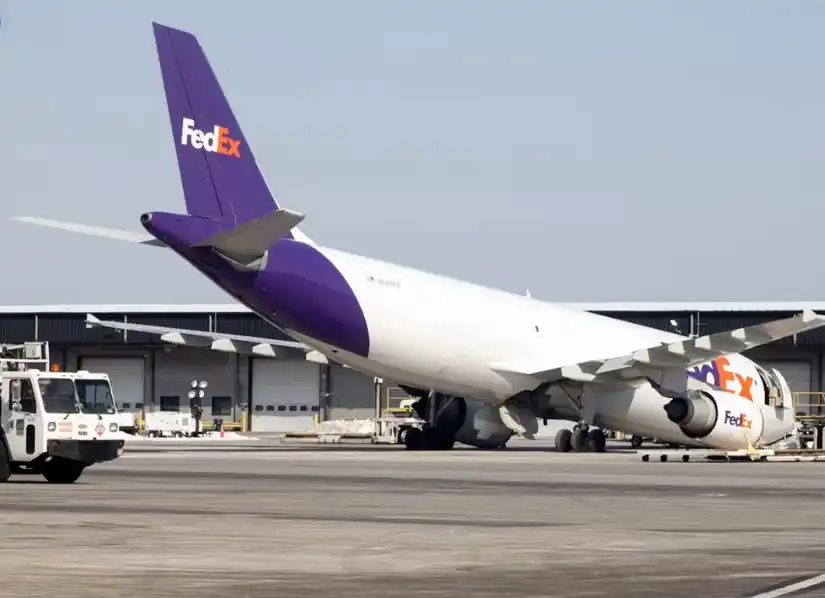
The quiet rhythm of routine maintenance at Baltimore/Washington International Thurgood Marshall Airport was abruptly broken when a FedEx Airbus A300-600F suffered an unexpected nose landing gear collapse while parked on the ramp. The aircraft, grounded and not in active service at the time, suddenly pitched forward as the front strut gave way, drawing immediate attention from airport personnel and emergency responders. While no injuries were reported, the incident has reignited industry-wide discussion about aging freighter fleets, maintenance intensity, and long-term cargo aircraft strategy.
This particular aircraft, registered N682FE and known within FedEx as Gabrial, is approaching its 27th year of service. According to fleet records, it has no prior accident history, making the mechanical failure all the more striking. Initial reports indicate the jet was positioned outside a hangar undergoing maintenance when the collapse occurred, suggesting a structural or hydraulic failure rather than operational stress. The Federal Aviation Administration (FAA) has confirmed that inspectors will conduct a detailed assessment to determine the precise cause.
The event unfolded swiftly but without chaos. Baltimore fire and medical units were dispatched as a precaution, securing the area and ensuring no secondary hazards emerged. FedEx, in a brief statement released through WBAL-TV 11 News, emphasized that all personnel were safe and credited the fast response of its teams and local first responders. The absence of injuries prevented the incident from escalating beyond equipment damage, yet the visual of a widebody freighter resting on its nose resonated strongly across aviation circles.
A Grounded Giant at BWI
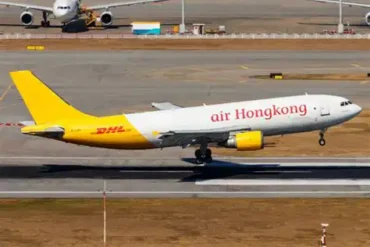
The Airbus A300-600F remains a familiar sight at cargo hubs across North America, particularly for short- to medium-haul freight operations that underpin the e-commerce economy. Within FedEx’s fleet of 473 aircraft, the A300 series plays a pivotal role in high-frequency regional logistics. The sudden failure of such a critical component on a parked aircraft underscores how time, metal fatigue, and complex hydraulics can converge without warning.
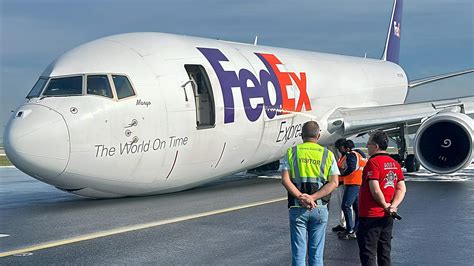
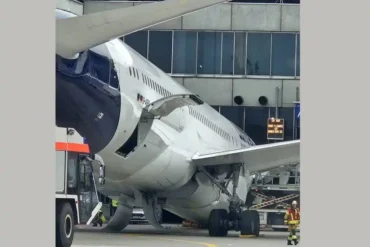
Photographs from the scene, later shared by the Ramp Life Facebook page, show the aircraft’s nose section lowered onto the tarmac as emergency vehicles surround it. The imagery is stark, not because of dramatic destruction, but because it highlights vulnerability in machines long regarded as rugged and dependable. For FedEx, the optics matter almost as much as the mechanics.
Context Matters: Recent Freighter Incidents
This nose gear collapse arrives amid heightened sensitivity following recent cargo aviation tragedies. Just two months earlier, a UPS McDonnell Douglas MD-11 freighter crash resulted in significant loss of life and prompted the grounding of the MD-11 fleets operated by both UPS and FedEx. Although the Baltimore incident is entirely unrelated and occurred on the ground, the timing inevitably amplifies scrutiny.
In the FedEx A300’s recent history, the last notable mishap was a tail strike at Louisville International Airport in late 2024. That event, like this one, did not undermine the broader safety record of the type, but it reinforced the reality that these aircraft are now operating deep into what engineers call the “intensive maintenance phase” of their lifecycle.
Aging Workhorses and Maintenance Realities
The Airbus A300-600 first flew nearly three decades ago, earning respect for its fuel efficiency and structural durability at a time when tri-jets and quad-jets dominated long-haul cargo. Many FedEx A300s, including Gabrial, were purpose-built freighters, not converted from passenger aircraft, giving them stronger floors and optimized cargo systems from birth. That pedigree has allowed them to remain economically viable long after passenger variants disappeared from commercial service.
Yet age is indifferent to reputation. Components such as landing gear assemblies endure immense cyclical stress, and even with rigorous inspection regimes, unforeseen failures can occur. Industry analysts note that incidents like this often serve as catalysts for fleet-wide inspections, ensuring that isolated faults do not hint at systemic issues.
Fleet Renewal and the Road Ahead
FedEx is already well into a fleet modernization strategy. At the end of 2024, the carrier retired seven A300-600Fs, signaling a gradual drawdown rather than abrupt withdrawal. The primary successor is the Boeing 767-300F, an aircraft offering roughly 20% better fuel efficiency and significantly lower maintenance costs. With more than 150 examples already in service, FedEx is the world’s largest operator of the type, and additional deliveries are scheduled through 2026.
Unlike some competitors, FedEx has shown restraint toward next-generation ultra-large freighters. It has opted not to commit to the Boeing 777-8F or the Airbus A350F, instead continuing with the proven 777F alongside its expanding 767 fleet. This conservative approach prioritizes operational certainty over early adoption, particularly as global cargo demand fluctuates.
The Baltimore nose gear collapse, while minor in outcome, is symbolically significant. It illustrates the delicate balance between extracting value from reliable aging assets and recognizing when time demands transition. For FedEx, the incident offers an opportunity to reaffirm its maintenance rigor, accelerate inspections, and quietly remind the industry that even the most dependable workhorses eventually ask for retirement.