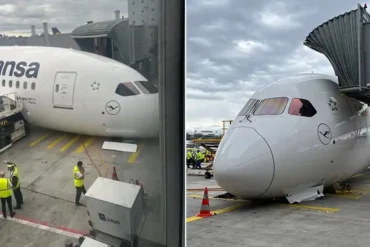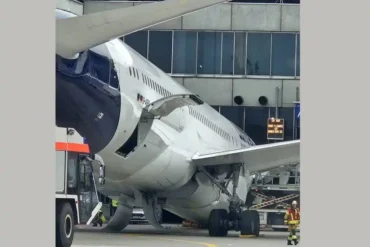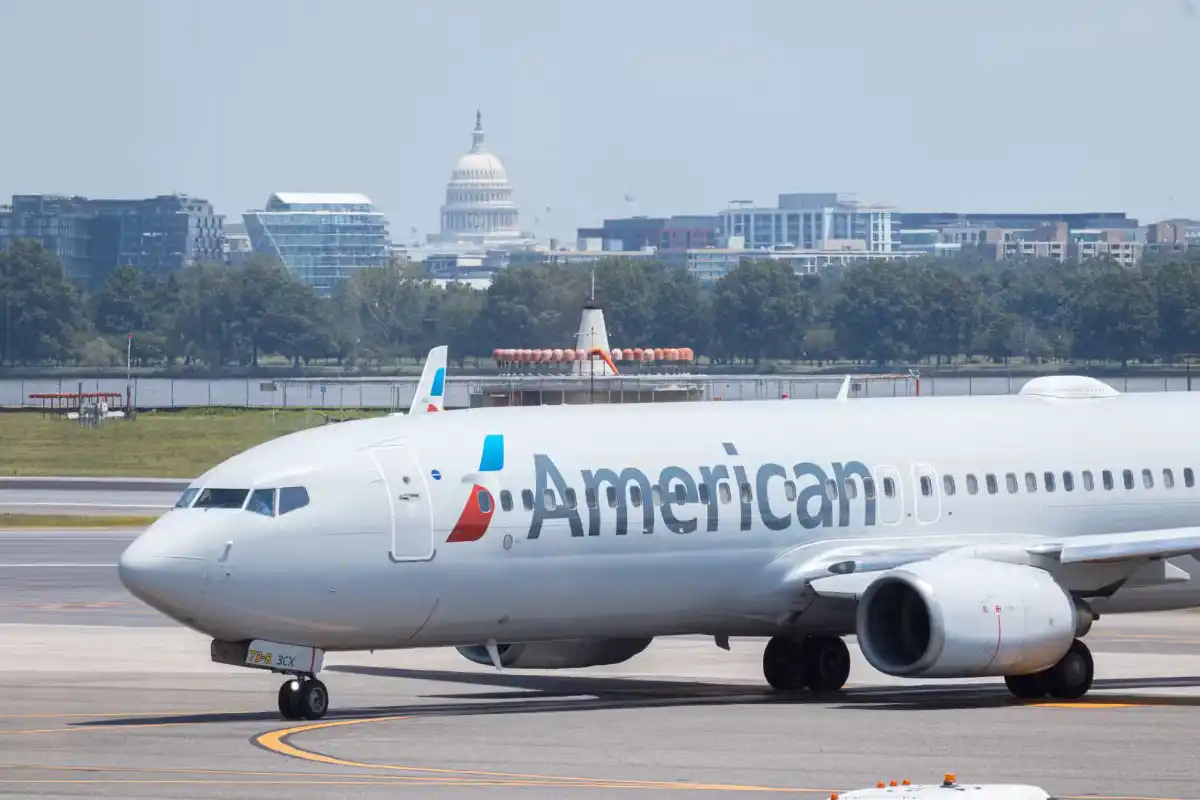
The American Airlines Boeing 787-8 Dreamliner that suffered damage during an incident in Madrid has now remained out of commercial service for more than a month, highlighting another unfortunate episode in what has recently been a difficult operational period for the airline. The aircraft, identified as tail number N820AL, was initially grounded on February 3, 2026, at Adolfo Suárez Madrid-Barajas Airport, where it remained parked while engineers conducted extensive inspections.
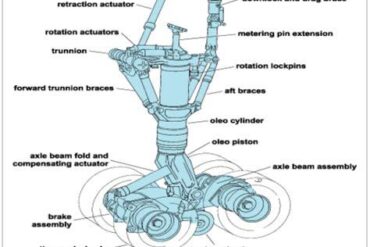
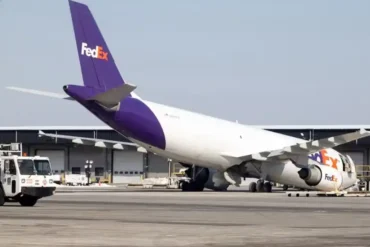
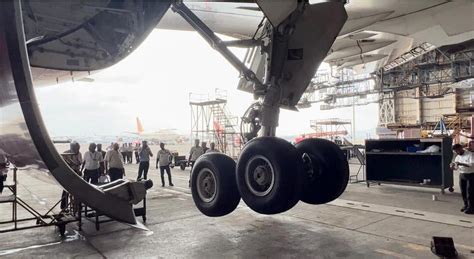
The incident reportedly involved damage to the aircraft’s nose landing gear, a critical component responsible for supporting the forward fuselage during taxi, takeoff, and landing. While no passengers or crew were injured, the aircraft was immediately removed from service. Maintenance teams began assessing the structural condition of the landing gear assembly, hydraulic systems, and surrounding fuselage components to determine the extent of the damage.
The aircraft spent most of February stationary in Madrid as technicians evaluated whether temporary repairs could allow the jet to safely travel to a larger maintenance facility. After more than two weeks of inactivity, the Dreamliner eventually departed Spain on a ferry flight to Tulsa International Airport, home to one of American Airlines’ largest Tech Ops maintenance centers.
The Madrid Incident That Grounded the Dreamliner
The affected aircraft is a ten-year-old Boeing 787-8, the smallest member of Boeing’s Dreamliner family. Delivered to American Airlines in 2016, the jet typically operates long-haul routes from the carrier’s Dallas–Fort Worth hub, serving destinations across Europe, Asia, and South America.
Details surrounding the exact circumstances of the Madrid incident remain limited. Reports suggest the nose gear assembly may have been damaged during ground operations, though the airline has not publicly confirmed the precise cause. Such damage can arise from several scenarios: excessive load during taxi, contact with ground equipment, or a mechanical fault in the landing gear mechanism itself.
The nose landing gear system is more complex than it appears from the outside. Inside the assembly are hydraulic actuators, steering linkages, shock absorbers, and electronic sensors that communicate with the aircraft’s flight control and braking systems. Even minor structural damage can require extensive inspection, because any failure in this system during takeoff or landing would present significant safety risks.
Because of these risks, aircraft with suspected landing gear damage typically undergo non-destructive testing, including ultrasonic scans and detailed structural inspections before being cleared for flight. The ferry flight to Tulsa suggests technicians installed interim replacement parts or performed temporary stabilization repairs sufficient for a safe repositioning flight.
Tulsa: The Heart of American Airlines Maintenance
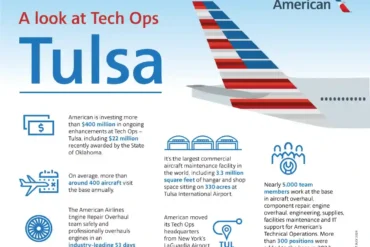
Once the aircraft reached Tulsa International Airport (TUL), it entered one of the largest airline maintenance complexes in the world. The American Airlines Tech Ops facility in Tulsa employs thousands of technicians and handles everything from routine inspections to major structural repairs and aircraft overhauls.
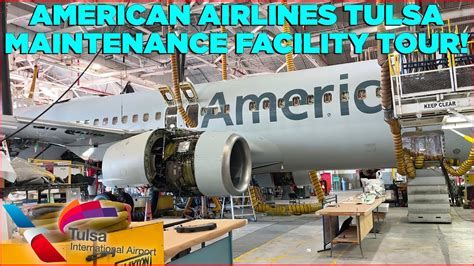
At Tulsa, engineers can perform deeper structural work that would be difficult to complete at an overseas airport. This includes:
- Landing gear replacement or rebuild
- Hydraulic system testing and recalibration
- Fuselage structural inspection
- Avionics diagnostics and software checks
The presence of specialized equipment and engineering teams makes Tulsa the logical location for resolving complex technical issues involving wide-body aircraft such as the 787 Dreamliner.
While the airline has not disclosed the projected timeline for repairs, structural landing gear damage often requires extensive component replacement and testing before regulators allow the aircraft to return to service.
A String of Unfortunate Events for American Airlines
The Madrid grounding arrived during a period when several American Airlines aircraft experienced unusual incidents, creating a sense of persistent bad luck for the carrier’s fleet.
In late February 2026, another aircraft attracted attention when inspectors in Miami International Airport discovered bullet holes in the wing and aileron of a jet arriving from Medellín, Colombia. The damage had gone unnoticed during flight and was discovered only during routine post-flight inspection.
Authorities suspect the gunfire may have occurred during takeoff from Medellín, possibly linked to rising tensions in the region following geopolitical developments in Venezuela. The aircraft was later ferried to Dallas–Fort Worth for major structural repairs.
Another incident involved a Boeing 737-800 departing Tampa International Airport. During takeoff, the aircraft suffered a tail strike, where the rear fuselage contacted the runway. Pilots diverted to Jacksonville International Airport, climbing to 26,000 feet before turning toward the alternate airport.
Unlike the Dreamliner cases, the damage was relatively minor. After inspections and repairs, the aircraft returned to service in roughly 11 hours, demonstrating how dramatically repair timelines can vary depending on the severity of structural damage.
The “Unlucky Dreamliner” History
American Airlines’ recent issues with the 787 fleet are not entirely new. In 2025, another 787-8 Dreamliner, registered N819AN, experienced a series of technical setbacks that caught the attention of aviation observers.
The aircraft’s problems began when flight AA203 from Philadelphia encountered a wing flap malfunction shortly after takeoff. The crew diverted to Amsterdam Schiphol Airport, dumping fuel over the North Sea before performing a high-speed landing to reduce aerodynamic risks associated with partially deployed flaps.
The situation became stranger in the following weeks. While attempting to return the aircraft to service, technicians discovered a hydraulic problem during pre-flight checks, forcing another cancellation. After repairs, a scheduled Barcelona–Philadelphia flight was cancelled again days later.
Only five days afterward, the same aircraft returned to Barcelona just 11 minutes after takeoff, creating an unusual chain of diversions and cancellations within a 25-day period. Aviation communities quickly gave the aircraft an informal nickname: “the unlucky Dreamliner.”
What Happens Next for N820AL
For the grounded N820AL, the path back to service now depends on the outcome of deep structural inspections in Tulsa. Engineers will likely examine the landing gear attachment points, hydraulic lines, and surrounding fuselage frames to confirm that no hidden damage occurred during the initial incident.
The Boeing 787 Dreamliner is designed with extensive redundancy and monitoring systems, meaning problems rarely escalate into serious safety threats. However, when critical components such as landing gear assemblies are involved, airlines adopt a conservative approach.
Until repairs are complete and the aircraft passes regulatory airworthiness checks, the Dreamliner will remain grounded. For American Airlines, the episode serves as another reminder that even modern, technologically advanced aircraft occasionally encounter very old-fashioned problems: metal, stress, and the relentless physics of flight.