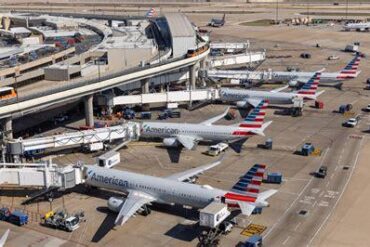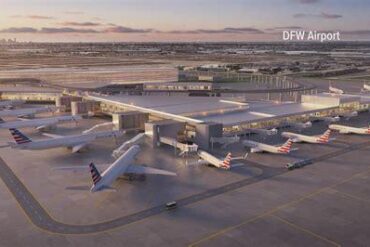
Modern airline operations are built on far more than busy terminals, crowded gates, and perfectly timed departures. Behind every aircraft that pushes back from the gate lies an enormous technical infrastructure responsible for ensuring every system, engine, and structural component meets the highest safety standards. While passengers naturally associate American Airlines with massive hubs like Dallas/Fort Worth International Airport (DFW), much of the airline’s operational strength actually comes from a sprawling maintenance complex located approximately 250 miles away in Tulsa, Oklahoma.
At first glance, placing the airline’s largest maintenance center so far from its primary hub may seem counterintuitive. Conventional business thinking suggests that major support facilities should sit adjacent to operational headquarters. Yet American Airlines has spent eight decades proving that geography alone does not determine operational efficiency.
Instead, Tech Ops Tulsa has evolved into one of the airline industry’s greatest strategic assets. Its enormous scale, specialized workforce, engineering expertise, and continuous modernization efforts allow the carrier to keep one of the world’s largest commercial fleets flying safely while reducing dependence on outside maintenance providers. Rather than being an inconveniently distant facility, Tulsa has become the industrial backbone that supports virtually every part of American’s network.
After celebrating its 80th anniversary in 2026, Tech Ops Tulsa continues to demonstrate why location is only one piece of a much larger operational equation.
Why Distance Is Not A Disadvantage For American Airlines
When people think about airline hubs, they often imagine aircraft constantly arriving and departing throughout the day. Maintenance, however, operates according to an entirely different rhythm.
Heavy aircraft maintenance does not occur between flights at airport gates. Instead, aircraft requiring extensive inspections are deliberately removed from passenger service for several days or even weeks. During these scheduled visits, technicians dismantle major sections of the airplane, inspect internal structures, replace worn components, overhaul mechanical systems, and perform thousands of detailed engineering tasks before certifying the aircraft for service again.
Because these projects require substantial time, enormous hangars, highly specialized equipment, and thousands of skilled technicians, there is little operational advantage to placing such facilities directly beside a major passenger hub.
Instead, airlines prioritize factors such as:
- Available land for future expansion
- Lower construction and operating costs
- Access to skilled technical labor
- Efficient transportation networks
- Long-term infrastructure development
Tulsa satisfies all of these requirements exceptionally well, making its 250-mile distance from Dallas/Fort Worth almost irrelevant in day-to-day maintenance planning.
After all, aircraft scheduled for heavy maintenance are intentionally routed into the maintenance program rather than remaining available for revenue flights.
From A World War II Aircraft Factory To An Aviation Giant
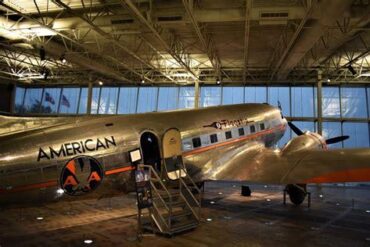
American Airlines’ relationship with Tulsa dates back to the closing stages of World War II.
Following the war, the United States possessed numerous surplus military production facilities that no longer served wartime needs. In 1945, American Airlines acquired one of these former aircraft manufacturing plants in Tulsa before officially opening it as a maintenance base in June 1946.
Initially, the operation covered roughly 260 acres and included four large hangars capable of servicing the airline’s growing postwar fleet.
Its mission was relatively straightforward:
Provide centralized maintenance capable of supporting expanding commercial air travel.
Over the following decades, however, both commercial aviation and American Airlines expanded dramatically.
Aircraft became:
- Larger
- Faster
- More technologically advanced
- More fuel efficient
- Increasingly computerized
Maintenance complexity increased alongside these technological advances, transforming Tulsa from a repair facility into a sophisticated engineering and industrial operation.
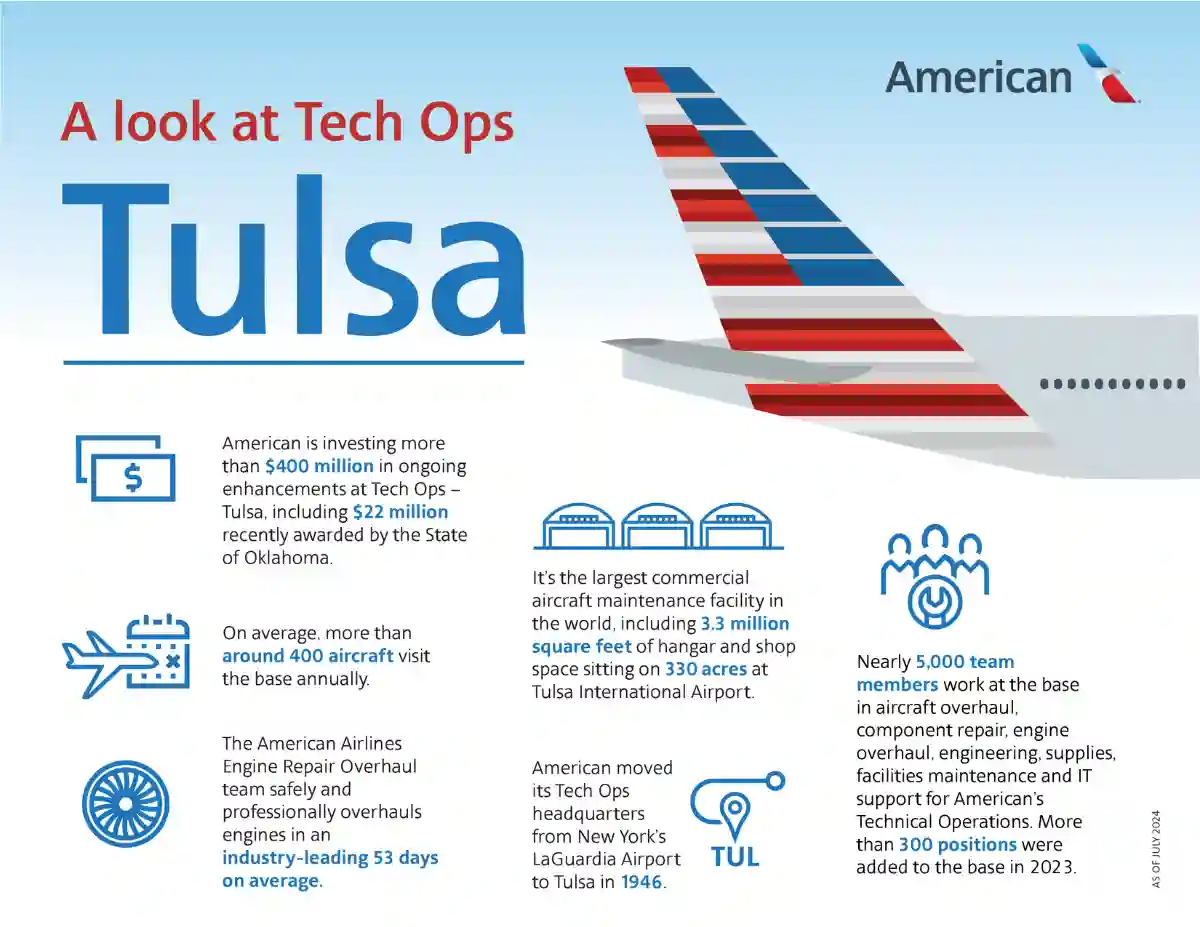
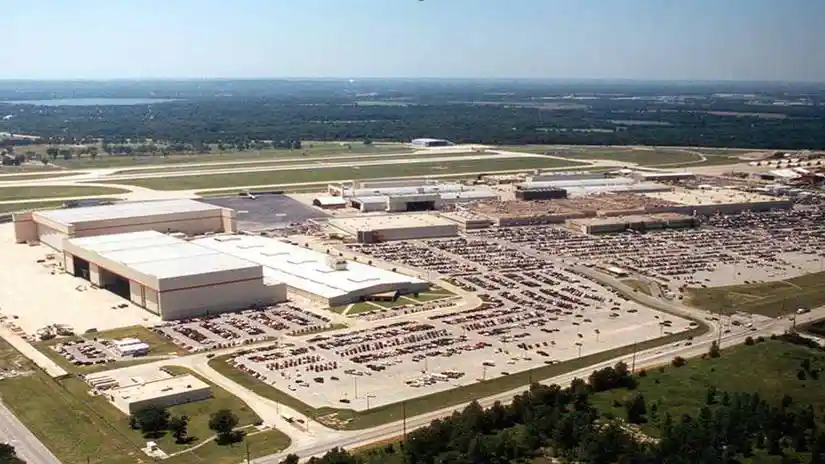
Today, Tech Ops Tulsa occupies approximately 330 acres while offering nearly 3.3 million square feet of hangar, workshop, warehouse, laboratory, and engineering space.
Its footprint resembles a manufacturing campus more than a conventional airport maintenance hangar.
The Largest Commercial Airline Maintenance Base In The World
Few aviation facilities anywhere approach the scale of Tech Ops Tulsa.
The complex employs nearly 5,000 personnel, including over 2,300 FAA-licensed aviation maintenance technicians responsible for keeping American Airlines’ fleet operating safely.
Unlike routine overnight maintenance performed at airport gates, Tulsa specializes in comprehensive maintenance activities including:
- Heavy maintenance checks
- Structural inspections
- Engine overhauls
- Landing gear servicing
- Component rebuilding
- Avionics troubleshooting
- Cabin refurbishment
- Engineering modifications
Every year, approximately 400 aircraft visit the facility for scheduled maintenance events.
Each aircraft undergoes an extraordinarily detailed inspection process.
Large interior sections may be removed.
Cabin flooring can be lifted.
Control surfaces are inspected.
Hydraulic systems are pressure tested.
Electrical wiring is examined.
Corrosion is identified and repaired before it can become a larger problem.
Even tiny structural defects can require hundreds of labor hours to resolve properly.
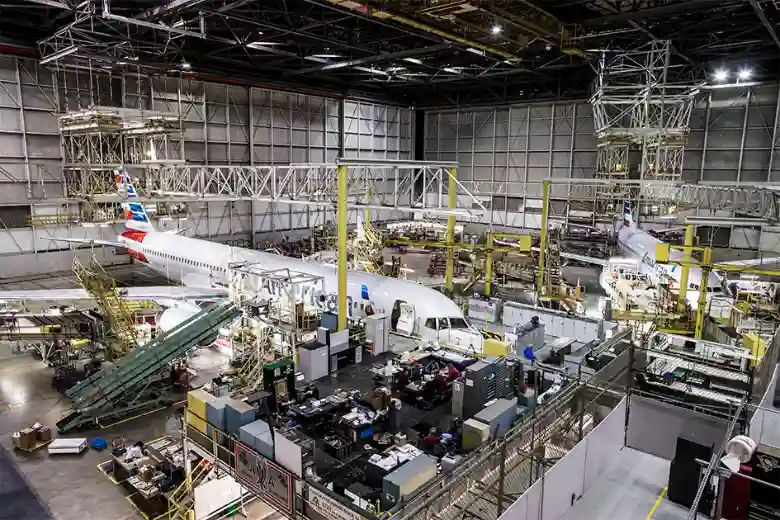
These inspections frequently involve multiple technical teams working simultaneously across numerous aircraft systems.
The coordination required rivals that of advanced manufacturing operations rather than conventional automotive repair.
Heavy Maintenance Keeps Aircraft Flying Longer
Commercial aircraft represent investments worth tens or even hundreds of millions of dollars.
Replacing them prematurely makes little financial sense.
Instead, airlines maximize aircraft lifespans through rigorous maintenance programs designed to preserve structural integrity throughout decades of operation.
Heavy maintenance forms the foundation of this strategy.
Unlike simple overnight inspections, heavy maintenance examines virtually every critical component throughout an aircraft.
Technicians carefully inspect:
- Fuselage structures
- Wings
- Landing gear assemblies
- Flight controls
- Fuel systems
- Electrical wiring
- Hydraulic systems
- Pressurization equipment
- Emergency systems
Some maintenance visits require thousands of individual inspection items before engineers approve an aircraft for return to passenger service.
The efficiency with which these inspections are completed directly affects airline profitability.
Every additional day an aircraft remains inside a maintenance hangar represents one fewer aircraft available to generate revenue.
Consequently, facilities capable of performing high-quality maintenance quickly become enormous competitive advantages.
AAERO: The Engine Shop Powering Fleet Reliability
Among the most strategically valuable sections inside Tech Ops Tulsa is AAERO, American Airlines’ dedicated engine maintenance division.
Modern turbofan engines rank among the most sophisticated machines ever built.
Operating continuously under:
- Extreme temperatures
- Massive internal pressures
- High rotational speeds
- Continuous vibration
they require exceptionally precise maintenance procedures.
Every engine overhaul involves meticulous inspections of:
- Compressor blades
- Turbine disks
- Bearings
- Combustion chambers
- Rotating assemblies
- Cooling systems
- Digital engine controls
Specialized tooling, precision measurement equipment, and highly trained technicians work together to restore engines to operational standards.
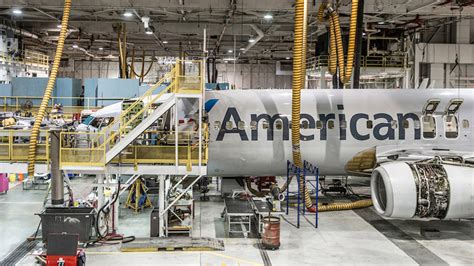
American Airlines has invested heavily in expanding this capability.
Engine overhaul throughput has reportedly increased by nearly 60 percent, allowing approximately 150 engines annually to pass through the facility.
That increase carries significant strategic importance.
Global airlines continue facing engine maintenance bottlenecks caused by supply chain disruptions, manufacturing delays, and shortages of replacement components.
Many carriers have temporarily grounded aircraft simply because replacement engines were unavailable.
By strengthening its in-house overhaul capabilities, American Airlines reduces dependence on external maintenance organizations while improving operational flexibility.
A $400 Million Investment Signals Long-Term Commitment
Rather than treating Tech Ops Tulsa as legacy infrastructure, American Airlines continues investing aggressively in its future.
The company has launched an extensive modernization program valued at approximately $400 million, making it one of the largest investments ever directed toward the facility.
This initiative extends far beyond simple building renovations.
Modern airline maintenance increasingly relies upon advanced digital technologies including:
- Predictive maintenance software
- Digital aircraft inspections
- Artificial intelligence-assisted diagnostics
- Automated inventory systems
- Engineering simulation tools
- Enhanced maintenance planning software
The modernization program aims to integrate these technologies throughout the Tulsa campus while increasing operational efficiency.
Infrastructure improvements also support future aircraft generations whose maintenance requirements continue becoming more technologically sophisticated.
Rather than merely maintaining existing capabilities, American Airlines intends to strengthen Tulsa as one of its greatest competitive advantages.
Why Keeping Maintenance In-House Matters More Than Ever
Many airlines outsource portions of their heavy maintenance work to third-party maintenance providers located both domestically and overseas.
While outsourcing can reduce costs under certain circumstances, it also introduces additional complexity.
External providers create potential challenges involving:
- Scheduling flexibility
- Transportation logistics
- Capacity limitations
- Supply chain coordination
- Quality control consistency
American Airlines has instead maintained substantial internal maintenance capabilities.
Owning one of the world’s largest maintenance facilities gives the carrier greater operational control over fleet availability.
Aircraft can be scheduled more efficiently.
Engineering teams remain closely integrated with airline operations.
Technical knowledge stays within the company.
During periods of global maintenance shortages, this independence becomes even more valuable.
Rather than competing with numerous airlines for outside maintenance slots, American retains significant self-sufficiency through Tulsa.
Supporting One Of The World’s Largest Airline Fleets
American Airlines operates hundreds of aircraft across an enormous domestic and international network.
Supporting such a fleet demands far more than routine inspections.
Every aircraft type introduces unique maintenance requirements.
Technicians in Tulsa maintain extensive expertise across multiple aircraft families while continuously updating procedures as manufacturers introduce new technologies.
The facility supports maintenance activities involving structural engineering, cabin systems, avionics, propulsion systems, landing gear, composite materials, and countless individual aircraft components.
Because aircraft remain in service for decades, technicians frequently work on several generations of aviation technology simultaneously.
Older aircraft may require traditional mechanical expertise, while newer models increasingly demand advanced digital diagnostic capabilities.
Tulsa successfully bridges both worlds.
Building Tomorrow’s Aviation Maintenance Workforce
Facilities alone cannot maintain aircraft.
People remain the industry’s greatest resource.
One of aviation’s most pressing challenges involves replacing experienced maintenance technicians approaching retirement while preparing a new generation for increasingly sophisticated aircraft.
American Airlines has responded by investing heavily in workforce development.
A particularly important initiative involves its partnership with Tulsa Tech, creating educational pathways for students pursuing aviation maintenance careers.
The collaboration offers aspiring technicians opportunities including professional mentoring, industry exposure, and employment interviews for high-performing graduates.
These partnerships create benefits for everyone involved.
Students gain direct access to one of the industry’s largest maintenance organizations.
American Airlines gains access to highly trained candidates already familiar with aviation maintenance standards.
As aircraft become increasingly digital, tomorrow’s technicians will require expertise spanning traditional mechanical repair, advanced electronics, software diagnostics, and predictive maintenance systems.
Preparing that workforce begins long before graduates enter the hangar.
Tulsa’s Economic Importance Extends Beyond American Airlines
Tech Ops Tulsa is not simply an airline maintenance center.
It has become one of Oklahoma’s most significant industrial employers.
Thousands of high-skilled technical jobs support families throughout the region while generating substantial economic activity across manufacturing, logistics, education, engineering, and supply chains.
Recognizing this importance, public-sector partners have also supported continued development.
A recent $22 million state grant has contributed toward expansion and modernization initiatives designed to strengthen the facility’s long-term competitiveness.
The relationship benefits both parties.
American Airlines receives infrastructure support that enhances operational resilience.
Oklahoma retains one of its largest advanced manufacturing employers while reinforcing its reputation as an aviation maintenance center.
Why American Airlines Never Needed To Move Maintenance To Dallas/Fort Worth
Considering the tremendous importance of Dallas/Fort Worth International Airport within American Airlines’ network, it is natural to wonder why the company never relocated heavy maintenance closer to its headquarters.
The answer lies in decades of accumulated infrastructure and expertise.
Relocating Tech Ops Tulsa would require replacing:
- Millions of square feet of specialized facilities
- Thousands of experienced technicians
- Extensive engineering laboratories
- Engine overhaul shops
- Component repair centers
- Warehouses
- Training facilities
- Logistics systems
Such a move would cost billions of dollars while disrupting decades of operational knowledge.
More importantly, it would provide relatively little additional operational benefit because heavy maintenance schedules are planned months in advance rather than responding to daily passenger operations.
Tulsa already delivers precisely what American Airlines requires: enormous maintenance capacity, technical expertise, room for expansion, and operational reliability.
The location has proven its value for eighty years.
Tech Ops Tulsa Remains The Hidden Backbone Of American Airlines
Most passengers will never visit Tech Ops Tulsa.
They will not see technicians inspecting wing spars, rebuilding turbine engines, testing hydraulic systems, or replacing thousands of aircraft components deep inside cavernous maintenance hangars.
Yet virtually every successful departure across American Airlines’ global network depends in some way on the expertise concentrated within this remarkable facility.
From its origins as a surplus wartime aircraft factory to its current role as the largest commercial airline maintenance base in the world, Tech Ops Tulsa has become indispensable to the airline’s operations. With nearly 5,000 employees, approximately 400 aircraft maintenance visits each year, expanded engine overhaul capabilities, and a $400 million modernization program underway, the facility represents far more than a maintenance center—it is a strategic asset that enhances safety, improves reliability, and strengthens operational resilience.
Its location, roughly 250 miles from Dallas/Fort Worth, has never been a disadvantage. Instead, that separation has allowed American Airlines to build a vast, specialized maintenance ecosystem with room to grow, access to skilled talent, and the flexibility needed to support one of the world’s largest fleets. Every aircraft returned to service from Tulsa reflects thousands of hours of engineering expertise and meticulous craftsmanship. While travelers rarely think about the work happening behind the scenes, every on-time departure is a reminder that the airline’s greatest operational strength is often found far from the terminal.